What does Genesis 26:11 mean?
"And Abimelech charged all his people, saying, He that toucheth this man or his wife shall surely be put to death." - Genesis 26:11
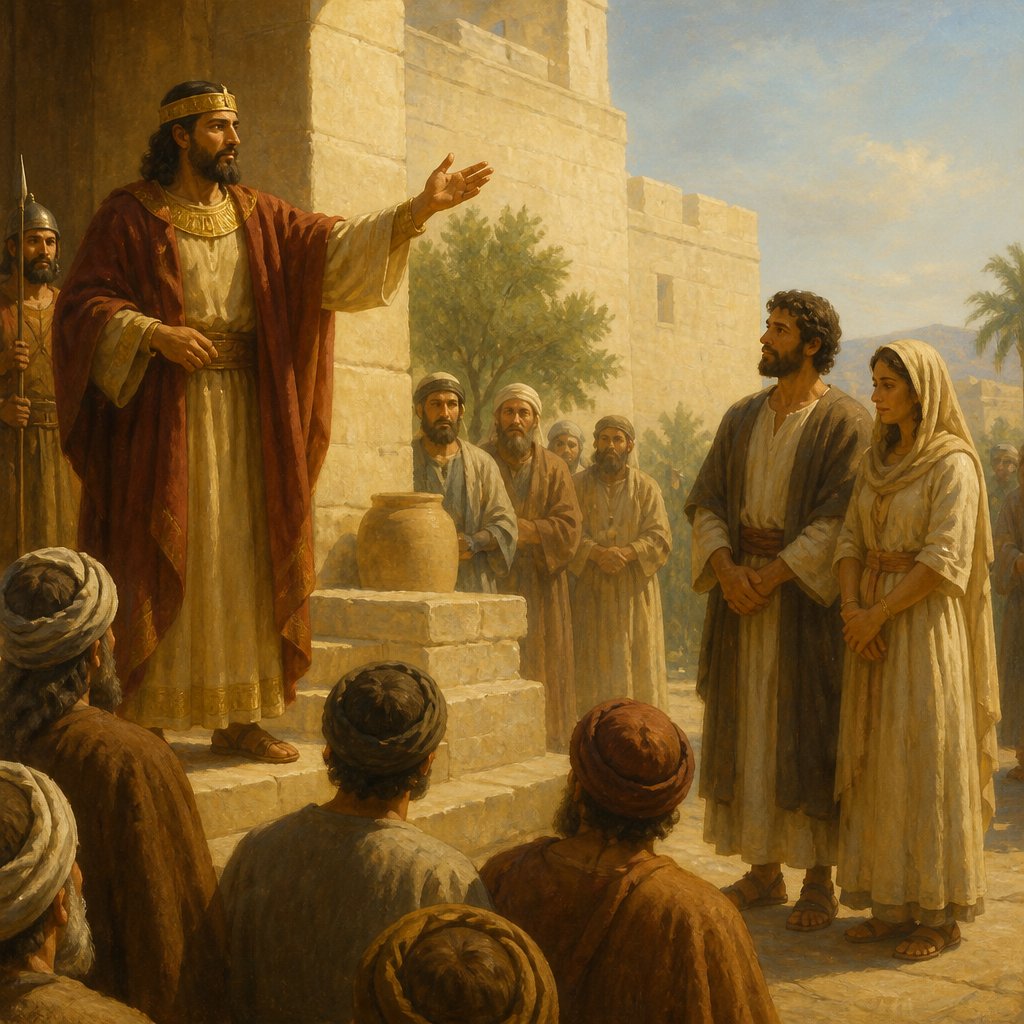
Genesis 26:11 in the King James Version of the Bible reads, "And Abimelech charged all his people, saying, He that toucheth this man or his wife shall surely be put to death." This verse takes place in the story of Isaac and Rebekah, and it holds several important themes, context, and symbolism that add depth and meaning to the overall narrative of the Book of Genesis.
Contextually, this passage occurs after Isaac has settled in Gerar due to a famine in the land of Canaan. Isaac, like his father Abraham, fears that the inhabitants of the land will kill him in order to take his beautiful wife Rebekah for themselves. This fear leads Isaac to falsely claim that Rebekah is his sister rather than his wife, in an attempt to protect himself. However, his deceit is soon discovered by Abimelech, the king of the Philistines. Abimelech, despite being deceived, still recognizes the integrity of Isaac's relationship with Rebekah, and he warns his people not to harm the couple under penalty of death.
The theme of integrity and honoring marriage vows is central to this passage. Despite Isaac's deception, Abimelech recognizes the sanctity of marriage and extends protection to the couple. This reinforces the biblical theme of the importance of honesty and faithfulness in relationships. It also serves as a reminder of the consequences of deceit and the value of upholding marital commitments.
Furthermore, the passage reflects the broader context of God's faithfulness and protection. While Isaac's deception could have led to dire consequences, God works through Abimelech to ensure the safety of Isaac and Rebekah. This underscores the biblical theme of God's sovereignty and his ability to bring about good even in the midst of human failings and shortcomings.
Symbolically, this verse serves as a representation of God's protection and provision for his people. The actions of Abimelech, in charging his people to protect Isaac and Rebekah, can be seen as a parallel to God's protection of his children. In a broader sense, it can be interpreted as a demonstration of the principle of "reaping what you sow." Despite Isaac's initial deception, he is ultimately protected and blessed due to his lineage and God's covenant with Abraham.
The verse also carries a message about the consequences of disobedience and the importance of upholding moral standards. Abimelech's warning to his people highlights the severity of the consequences for disregarding the sanctity of marriage and harming others. This serves as a reminder of the biblical principle of accountability and the importance of respecting God's commandments.
In conclusion, Genesis 26:11 holds significant thematic, contextual, and symbolic implications within the broader narrative of the Book of Genesis. It underscores the themes of integrity, faithfulness, and God's protection, while also conveying a message about the consequences of deceit and the importance of upholding moral standards. Overall, this passage serves as a testament to God's faithfulness and sovereignty, as well as a reminder of the values and principles that are foundational to the Christian faith.
Have questions about Genesis 26:11?
Dive deeper into this scripture with Bible Chat — an AI-powered tool for exploring God's Word through conversation. Ask questions, get context, and grow in your understanding of the Bible.
Get Our Apps


Genesis 26:11 Artwork
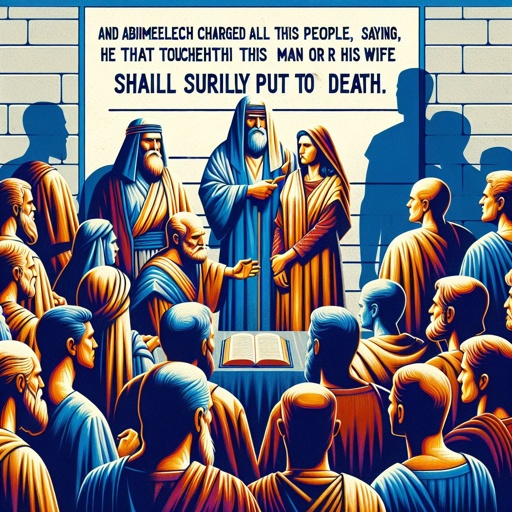
Genesis 26:11 - "And Abimelech charged all his people, saying, He that toucheth this man or his wife shall surely be put to death." respectful, symbolic bible verse art
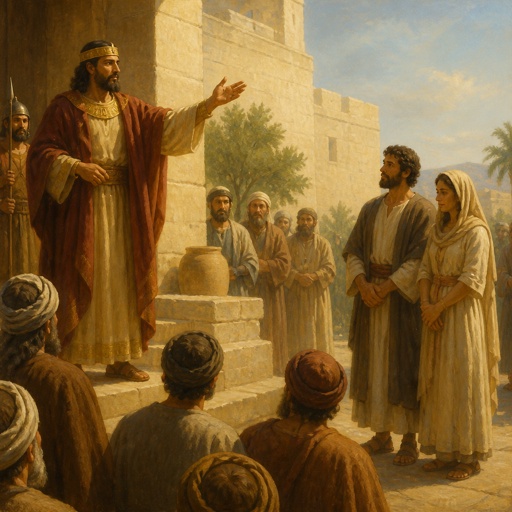
"And Abimelech charged all his people, saying, He that toucheth this man or his wife shall surely be put to death." - Genesis 26:11

Genesis 11:26 - "And Terah lived seventy years, and begat Abram, Nahor, and Haran."
"And Terah lived seventy years, and begat Abram, Nahor, and Haran." - Genesis 11:26

Genesis 1:26

Genesis 1:26

Genesis 1:26

Genesis 1:26

Genesis 24-26

Genesis 26:35

Genesis 50:26

Genesis 26:25

Genesis 25-26

Genesis 21-26

Genesis 50:26

Genesis 50:26

Genesis 26:29

Genesis 18-26

Genesis 19-26

Genesis 26:18

Genesis 50:26

Genesis 26:9

Genesis 17-26

Genesis 26 1 famine

Genesis 26:6 - "¶ And Isaac dwelt in Gerar:"

genesis 26:1-35

Genesis 26:26 - "¶ Then Abimelech went to him from Gerar, and Ahuzzath one of his friends, and Phichol the chief captain of his army."

Genesis 42:26 - "And they laded their asses with the corn, and departed thence."

Numbers 11:16-26

Genesis 36:26 - "And these are the children of Dishon; Hemdan, and Eshban, and Ithran, and Cheran."