What does Genesis 26:22 mean?
"And he removed from thence, and digged another well; and for that they strove not: and he called the name of it Rehoboth; and he said, For now the LORD hath made room for us, and we shall be fruitful in the land." - Genesis 26:22
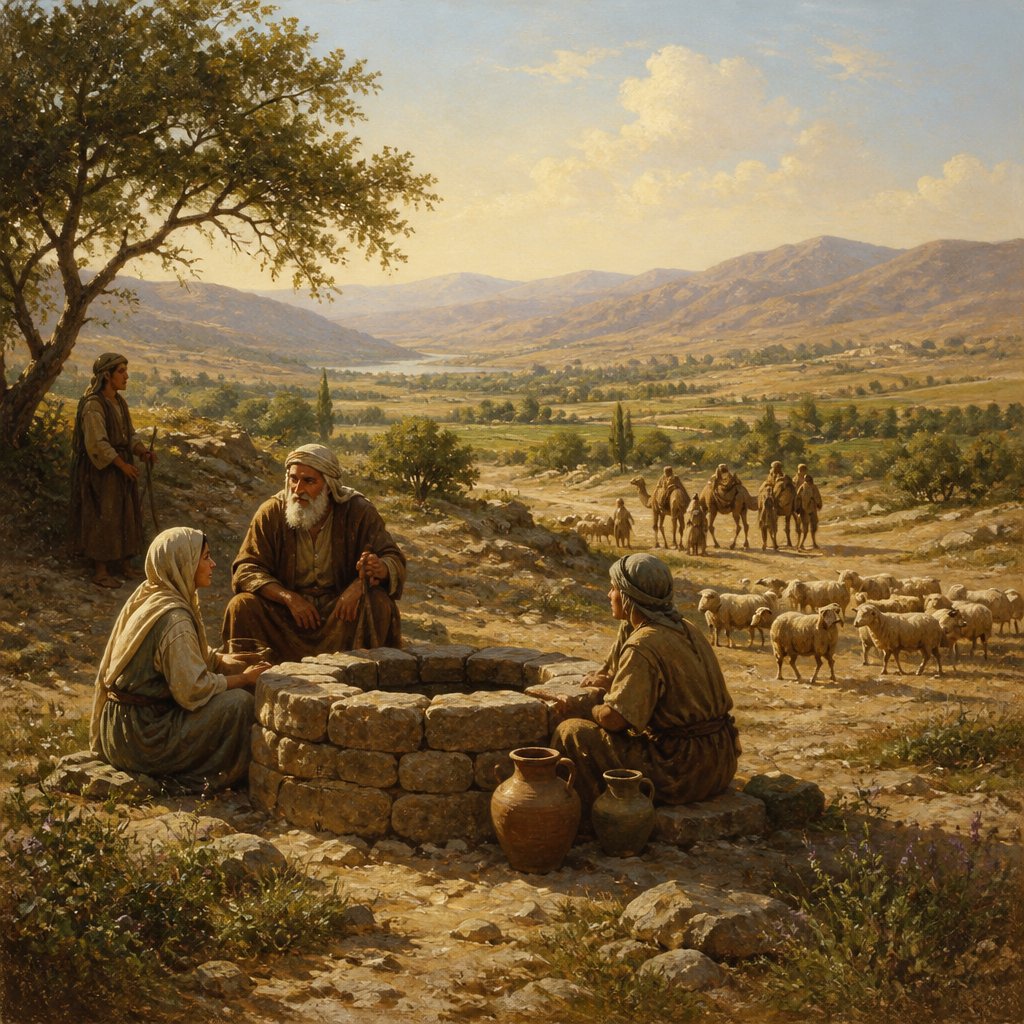
Genesis 26:22 (KJV) states, "And he removed from thence, and digged another well; and for that they strove not: and he called the name of it Rehoboth; and he said, For now the Lord hath made room for us, and we shall be fruitful in the land."
This verse comes from the Book of Genesis, which is the first book of the Bible and serves as the foundation of the Christian faith. In this particular passage, we witness the story of Isaac, the son of Abraham, and his journey in the land of Gerar. This story is part of a larger narrative that encompasses the themes of faith, obedience, and God's providence.
The context of Genesis 26:22 begins with Isaac's decision to settle in the land of Gerar, which was experiencing a famine at the time. Despite the challenging circumstances, Isaac obeyed God's command and stayed in the land, where he sowed seeds and reaped a hundredfold harvest. This success led to envy and hostility from the inhabitants of Gerar, who eventually filled up the wells that Isaac's father, Abraham, had previously dug. As a result, Isaac had to leave and seek out new sources of water for himself and his family.
The verse itself recounts Isaac's perseverance in the face of adversity. After each well he dug was contested and filled, he continued to dig new wells, seeking resources to sustain his community. The significance of this act lies in the symbolism of water, which represents life, sustenance, and prosperity. By persistently seeking water, Isaac demonstrates his commitment to providing for his family and his faith in God's provision.
The naming of the new well as "Rehoboth" is also significant. The name Rehoboth translates to "room" or "spaciousness" and reflects Isaac's belief that God has provided a place of abundance for him and his people. The act of naming the well serves as a declaration of faith and gratitude, acknowledging God's role in making room for them in the land and ensuring their future fruitfulness.
The thematic elements within Genesis 26:22 revolve around the concepts of perseverance, faith, and God's providence. Isaac's unwavering determination to find water mirrors the broader theme of perseverance in the face of adversity. Despite facing resistance and conflict, he continues to seek out new opportunities for sustenance, embodying the spirit of resilience and endurance.
Additionally, the verse underscores the importance of faith in God's provision. By naming the well Rehoboth and acknowledging God's role in making room for them, Isaac demonstrates his trust in God's plan and his gratitude for the blessings bestowed upon him. This act of gratitude and humility aligns with the broader theme of faith and obedience found throughout the Book of Genesis.
Furthermore, the verse emphasizes God's providence and His ability to provide for His people. Through Isaac's journey, we witness God's ongoing care and support, as he ensures that Isaac and his family have access to the resources they need to thrive. This theme of God's providence serves as a reminder of His faithfulness and commitment to His people, even in the midst of trials and tribulations.
In conclusion, Genesis 26:22 offers a profound commentary on the themes of perseverance, faith, and God's providence. Through the story of Isaac's unwavering determination and his acknowledgment of God's provision, the verse conveys a timeless message of hope and assurance in the face of adversity. As believers, we can draw strength from Isaac's example and trust in God's faithfulness to provide for us, even in the most challenging circumstances.
Have questions about Genesis 26:22?
Dive deeper into this scripture with Bible Chat — an AI-powered tool for exploring God's Word through conversation. Ask questions, get context, and grow in your understanding of the Bible.
Get Our Apps


Genesis 26:22 Artwork
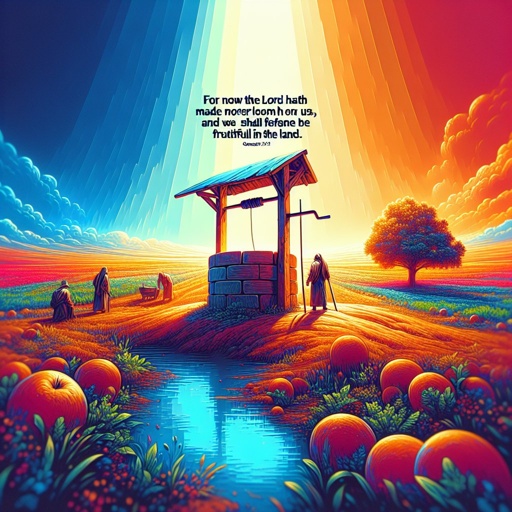
Genesis 26:22 - "And he removed from thence, and digged another well; and for that they strove not: and he called the name of it Rehoboth; and he said, For now the LORD hath made room for us, and we shall be fruitful in the land."
"And he removed from thence, and digged another well; and for that they strove not: and he called the name of it Rehoboth; and he said, For now the LORD hath made room for us, and we shall be fruitful in the land." - Genesis 26:22

Genesis 22-22

Genesis 1:26

Genesis 1:26

Genesis 1:26

Genesis 1:26

Jonah 2:2-6 Jonah sinking down in the deep blue water, with the whale about to swallow him.

Genesis 24-26

Genesis 26:35

Genesis 50:26

Genesis 26:25

Genesis 25-26

Genesis 21-26

Genesis 50:26

Genesis 22:22 - "And Chesed, and Hazo, and Pildash, and Jidlaph, and Bethuel."

Genesis 50:26

Genesis 26:29

Genesis 18-26

Genesis 19-26

Genesis 26:18

Genesis 50:26

Genesis 26:9

Genesis 17-26

Luke 16:22-26

Genesis 22

Genesis 26 1 famine

Genesis 26:6 - "¶ And Isaac dwelt in Gerar:"

genesis 26:1-35

Leviticus 22:26 - "¶ And the LORD spake unto Moses, saying,"