What does Genesis 27:2 mean?
"And he said, Behold now, I am old, I know not the day of my death:" - Genesis 27:2
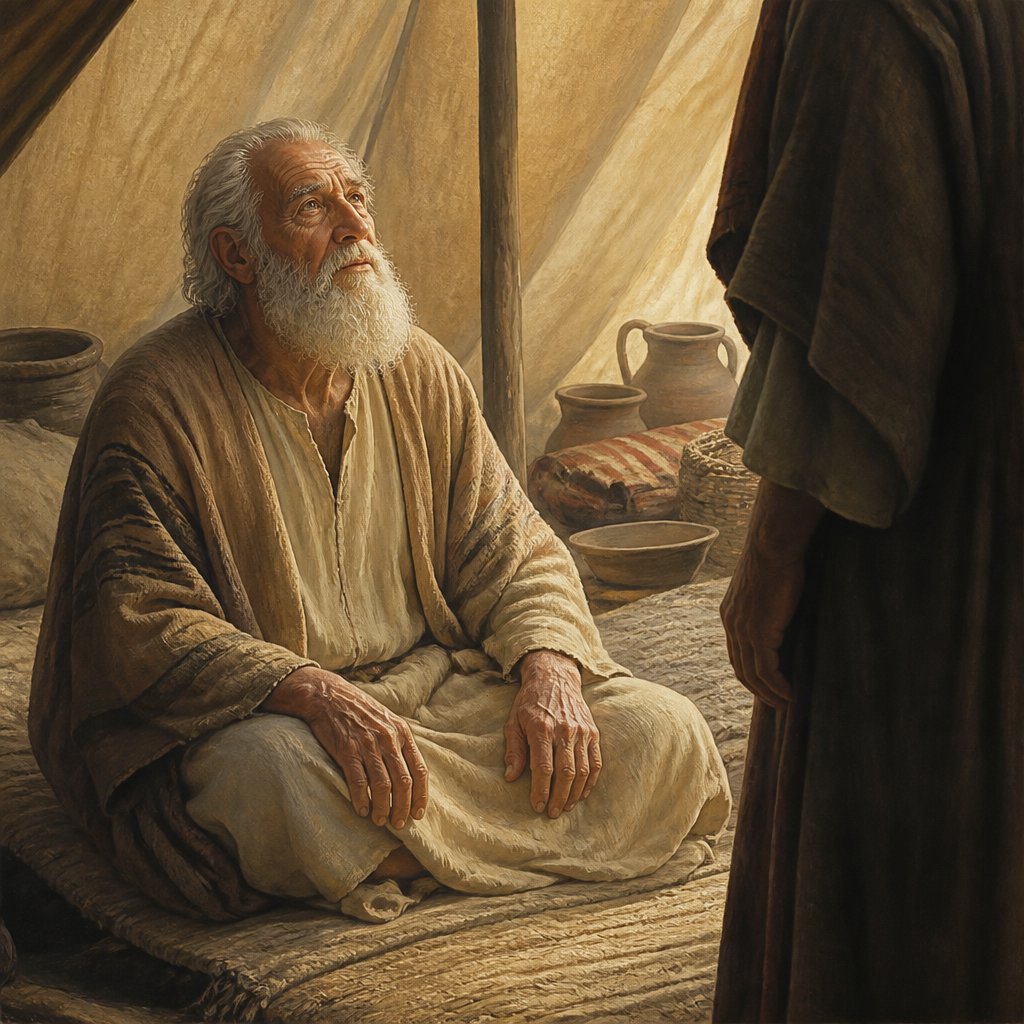
Genesis 27:2 (KJV) reads, "And he said, Behold now, I am old, I know not the day of my death." This verse is part of the story of Isaac blessing his sons, Esau and Jacob, and it captures the essence of mortality and uncertainty. In order to fully understand the meaning and significance of this verse, it is important to explore the themes, context, and symbolism found within this passage.
The theme of mortality and uncertainty is prevalent in this verse. The statement, "I know not the day of my death," reflects Isaac's acknowledgment of the finite nature of life. This acknowledgement of mortality is a common theme throughout the Bible, as it serves as a reminder of the transient nature of human existence and the importance of living a life that is pleasing to God. Additionally, the uncertainty surrounding the timing of one's death is a universal aspect of the human experience, reinforcing the need for faith and reliance on God's timing and providence.
In terms of context, Genesis 27 is centered around the story of Isaac blessing his two sons, Esau and Jacob. The chapter begins with Isaac, who is advanced in age and nearly blind, summoning Esau, his eldest son, to request a meal before blessing him. Rebekah, Isaac's wife, overhears this conversation and devises a plan to have Jacob, her favorite son, receive the blessing instead. This sets the stage for a series of events that culminate in Jacob receiving the blessing meant for Esau. The verse in question occurs as Isaac reflects on his old age and the uncertainty of his remaining days, serving as a prelude to the events that unfold in the subsequent verses.
Symbolism can be found within this verse as well. Isaac's acknowledgement of his old age and uncertainty regarding his time of death serves as a metaphor for the broader human condition. The frailty and transience of human life are symbolized by Isaac's reflection, highlighting the universal truth that all individuals must confront their mortality. Additionally, the uncertainty of knowing the day of one's death can be seen as a symbolic representation of the unpredictability of life, urging individuals to live each day with purpose and intention.
Ultimately, Genesis 27:2 captures the themes of mortality and uncertainty, and its significance is amplified within the context of the larger narrative of Isaac blessing his sons. This verse serves as a reminder of the fleeting nature of life and the need for faith in God's providence. The symbolism inherent in this passage further emphasizes the universal truths it conveys, making it a poignant reflection on the human experience.
In conclusion, Genesis 27:2 (KJV) offers a profound reflection on mortality and uncertainty within the context of Isaac's blessing of his sons. Through its themes, context, and symbolism, this verse provides a timeless reminder of the transient nature of human life and the importance of living with faith and purpose. Its enduring significance makes it a meaningful reflection on the human experience and the need for reliance on God's timing and providence.
Have questions about Genesis 27:2?
Dive deeper into this scripture with Bible Chat — an AI-powered tool for exploring God's Word through conversation. Ask questions, get context, and grow in your understanding of the Bible.
Get Our Apps


Genesis 27:2 Artwork

Genesis 27:2 - "And he said, Behold now, I am old, I know not the day of my death:"
"And he said, Behold now, I am old, I know not the day of my death:" - Genesis 27:2

Genesis 27:5

Genesis 27:32

Genesis 25-27

Genesis 17-27

Genesis 18-27

Genesis 24-27

Genesis 21-27

Genesis 19-27

Genesis 10:27 - "And Hadoram, and Uzal, and Diklah,"

Genesis 27:10 KJV

Genesis 27:18-19

Genesis 27:1-3

Genesis 36:27 - "The children of Ezer are these; Bilhan, and Zaavan, and Akan."

"And Hadoram, and Uzal, and Diklah," - Genesis 10:27

Genesis 38:27 - "¶ And it came to pass in the time of her travail, that, behold, twins were in her womb."

Genesis 27:44 - "And tarry with him a few days, until thy brother's fury turn away;"

Genesis 32:27 - "And he said unto him, What is thy name? And he said, Jacob."

Genesis 27:27 - "And he came near, and kissed him: and he smelled the smell of his raiment, and blessed him, and said, See, the smell of my son is as the smell of a field which the LORD hath blessed:"

Genesis 34:27 - "The sons of Jacob came upon the slain, and spoiled the city, because they had defiled their sister."

Genesis 27:35 - "And he said, Thy brother came with subtilty, and hath taken away thy blessing."

Genesis 5:27 - "And all the days of Methuselah were nine hundred sixty and nine years: and he died."

Genesis 19:27 - "¶ And Abraham gat up early in the morning to the place where he stood before the LORD:"

Genesis 27:28 - "Therefore God give thee of the dew of heaven, and the fatness of the earth, and plenty of corn and wine:"

Genesis 11:27 - "¶ Now these are the generations of Terah: Terah begat Abram, Nahor, and Haran; and Haran begat Lot."

"The children of Ezer are these; Bilhan, and Zaavan, and Akan." - Genesis 36:27

Genesis 25:27 - "And the boys grew: and Esau was a cunning hunter, a man of the field; and Jacob was a plain man, dwelling in tents."
Genesis 17:27 - "And all the men of his house, born in the house, and bought with money of the stranger, were circumcised with him."

Genesis 47:27 - "¶ And Israel dwelt in the land of Egypt, in the country of Goshen; and they had possessions therein, and grew, and multiplied exceedingly."