What does Genesis 28:15 mean?
“And, behold, I am with thee, and will keep thee in all places whither thou goest, and will bring thee again into this land; for I will not leave thee, until I have done that which I have spoken to thee of.” — Genesis 28:15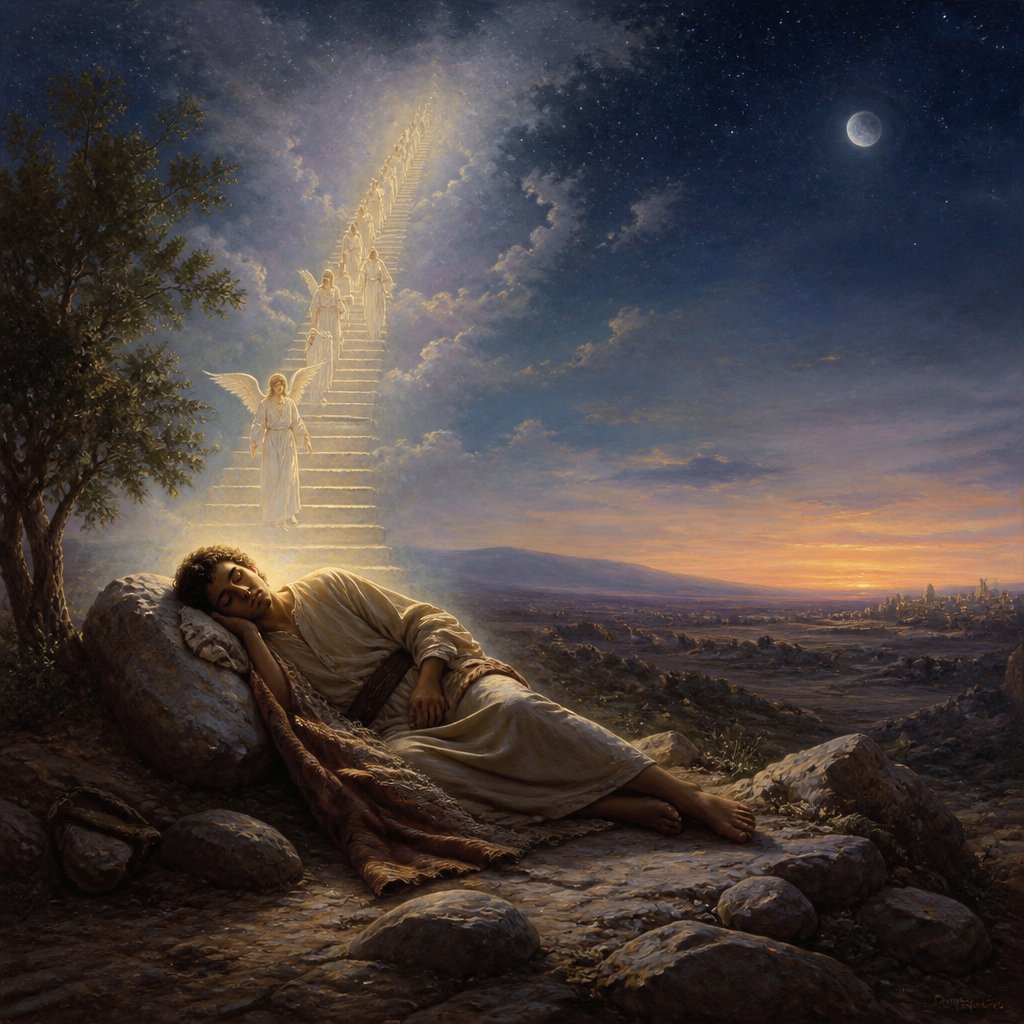
Genesis 28:15 in the King James Version (KJV) of the Bible states: "And, behold, I am with thee, and will keep thee in all places whither thou goest, and will bring thee again into this land; for I will not leave thee, until I have done that which I have spoken to thee of."
This verse is part of the larger story of Jacob's dream at Bethel, where he experiences a vision of a ladder reaching into heaven with angels ascending and descending on it. This powerful encounter with God marks a turning point in Jacob's life, as he receives a divine promise and blessing that sets the stage for his future.
The verse begins with "And, behold," which signals a significant moment in the narrative, drawing the reader's attention to the profound nature of what is about to be revealed. The phrase "I am with thee" establishes a profound sense of God's presence and protection, assuring Jacob that he is not alone in his journey. This promise of divine companionship is a recurring theme throughout the Bible, as it signifies God's faithfulness and care for his people.
The verse continues with the assurance that God will "keep thee in all places whither thou goest," emphasizing the extent of God's guardianship over Jacob. This promise speaks to the universal nature of God's protection, transcending geographical boundaries and encompassing every step of Jacob's journey. It echoes the sentiment found in Psalm 121:8, which declares that "the Lord shall preserve thy going out and thy coming in from this time forth, and even for evermore."
The next part of the verse states, "and will bring thee again into this land," referencing the land that God had promised to Jacob and his descendants. This promise not only serves as a reassurance of God's faithfulness, but it also foreshadows the fulfillment of God's covenant with Abraham, Isaac, and Jacob. The land is a symbol of inheritance, blessing, and God's providential care, and the promise of returning to it holds deep significance for Jacob and his future descendants.
The verse concludes with the powerful declaration, "for I will not leave thee, until I have done that which I have spoken to thee of," reinforcing the steadfastness of God's commitment to Jacob. This unwavering assurance signifies God's sovereignty and faithfulness to fulfill his promises. It echoes the sentiment found in Hebrews 13:5, where God declares, "I will never leave thee, nor forsake thee," emphasizing the enduring nature of God's presence and provision.
The themes present in Genesis 28:15 are rich and layered, touching on the profound truths of God's presence, protection, and faithfulness. These themes resonate throughout the biblical narrative, underscoring the timeless nature of God's promises and their relevance to the lives of believers. In the context of Jacob's journey, this verse serves as a source of hope and encouragement, as he faces uncertainty and challenges. It reminds readers of God's unchanging character and his willingness to accompany his people through every season of life.
Symbolically, Genesis 28:15 can be seen as a foreshadowing of God's ultimate promise of salvation and restoration through Jesus Christ. The promise of God's presence and protection finds its ultimate fulfillment in the person of Jesus, who embodies God's faithfulness and serves as the ultimate expression of God's love for humanity. In this sense, the verse points to the overarching theme of redemption and restoration that runs through the entire Bible, culminating in the redemptive work of Christ on the cross.
Overall, Genesis 28:15 is a profound declaration of God's unwavering faithfulness and commitment to his people. It serves as a powerful reminder of the enduring nature of God's promises and his abiding presence in the lives of believers. As readers engage with this verse, they are invited to reflect on the unchanging character of God and find hope and reassurance in his steadfast love.
Get our apps


Artwork for Genesis 28:15

Genesis 28-15

Genesis 28:15 - "And, behold, I am with thee, and will keep thee in all places whither thou goest, and will bring thee again into this land; for I will not leave thee, until I have done that which I have spoken to thee of."
"And, behold, I am with thee, and will keep thee in all places whither thou goest, and will bring thee again into this land; for I will not leave thee, until I have done that which I have spoken to thee of." - Genesis 28:15

Genesis 28-22

Genesis 28-12

Genesis 28-21

Genesis 28-16

Genesis 28-17

Genesis 28:18

Genesis 24:28

Genesis 28:18

Genesis 21:28

Genesis 28-20

Genesis 28-19

Genesis 28-11

Genesis 28-14

Genesis 28-13

Genesis 19-28

Genesis 28:10

Genesis 18-28

Genesis 10:28 - "And Obal, and Abimael, and Sheba,"

Genesis 15:15

Genesis 36:28 - "The children of Dishan are these; Uz, and Aran."

1 Samuel 28:15

Exodus 28:15-30

Genesis 35:28 - "And the days of Isaac were an hundred and fourscore years."

Joshua 15:28 - "And Hazar-shual, and Beer-sheba, and Bizjothjah,"

1 Samuel 28:15-20

Genesis 21:28 - "And Abraham set seven ewe lambs of the flock by themselves."

1 Samuel 28:15-19