What does Genesis 28:5 mean?
“And Isaac sent away Jacob: and he went to Padan-aram unto Laban, son of Bethuel the Syrian, the brother of Rebekah, Jacob’s and Esau’s mother.” — Genesis 28:5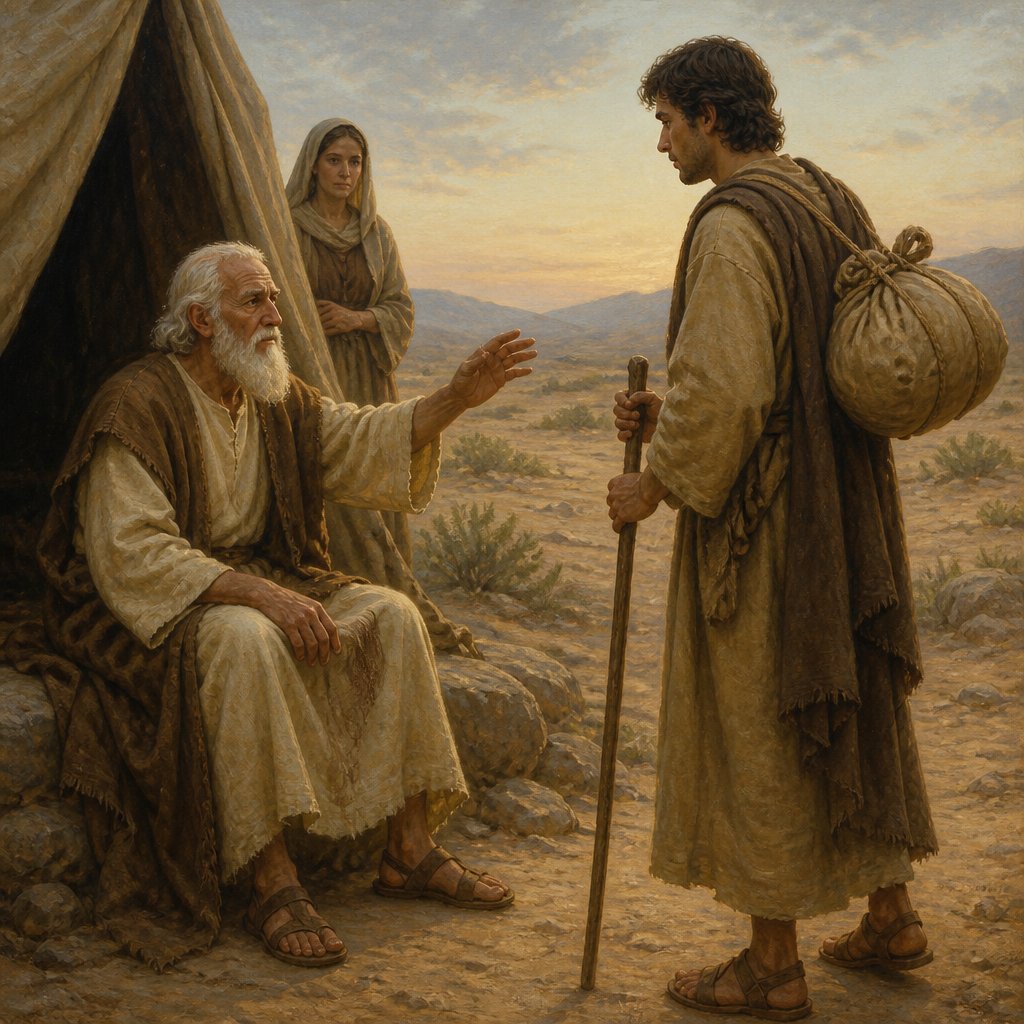
Genesis 28:5 (KJV) says, "And Isaac sent away Jacob: and he went to Padanaram unto Laban, son of Bethuel the Syrian, the brother of Rebekah, Jacob’s and Esau’s mother."
This verse from the book of Genesis is part of the larger narrative of Jacob's journey to his mother's family in Padanaram. The context of this verse is important to understand the significance of Jacob's journey and the themes it represents. In the broader context of the book of Genesis, this verse is part of the story of the patriarchs and their families, as well as the fulfillment of God's promises to them.
The story of Jacob's journey to Padanaram begins with his departure from his home to find a wife from among his relatives. In verses leading up to this one, Jacob had received a blessing from his father Isaac, but he was also forced to flee from his brother Esau, who was angry at him for obtaining the blessing that was intended for him. In sending Jacob to Padanaram, Isaac was also following the advice of his wife Rebekah, who wanted to protect her son from retaliation by Esau.
The journey of Jacob to Padanaram can be seen as a significant turning point in his life. It marks the beginning of a new chapter for Jacob, as he moves from his secure and familiar surroundings into the unknown. This journey is not only physical but also spiritual, as Jacob is seeking God's guidance and protection as he embarks on this new phase of his life.
One of the key themes in this verse is the theme of family and lineage. The genealogy and family connections described in this verse are significant because they establish Jacob's connection to the larger narrative of God's promise to Abraham and his descendants. Jacob's journey to Padanaram and his subsequent interactions with Laban, his uncle, are crucial in the development of the lineage that will lead to the fulfillment of God's covenant with Abraham.
Another important theme in this verse is the theme of obedience and trust in God's plan. Jacob's journey to Padanaram is part of God's larger plan for him and his descendants. Isaac's decision to send Jacob to Padanaram can be seen as a result of his trust in God's guidance and providence. Similarly, Jacob's willingness to undertake this journey reflects his obedience to his father's instructions and, ultimately, to God's plan for his life.
The symbolism in this verse is also significant. The journey to Padanaram represents a spiritual and emotional journey for Jacob, as he leaves behind the familiar and ventures into the unknown. The physical distance between Canaan and Padanaram is also symbolic of the emotional and spiritual distance that Jacob must travel in order to mature and become the person God wants him to be.
In conclusion, Genesis 28:5 (KJV) is a crucial part of the larger narrative of Jacob's journey to Padanaram. The verse carries important themes of family, lineage, obedience, and trust in God's plan. It also holds symbolic significance as a representation of Jacob's spiritual and emotional journey. Understanding the context and themes of this verse can help readers appreciate the larger significance of Jacob's journey and its place in the unfolding story of God's plan for his people.
Get our apps


Artwork for Genesis 28:5

Genesis 28:5 - "And Isaac sent away Jacob: and he went to Padan-aram unto Laban, son of Bethuel the Syrian, the brother of Rebekah, Jacob's and Esau's mother."

Genesis 28:5 KJV And Isaac sent away Jacob: and he went to Padan–aram unto Laban, son of Bethuel the Syrian, the brother of Rebekah, Jacob's and Esau's mother.

Genesis 28:5 KJV And Isaac sent away Jacob: and he went to Padan–aram unto Laban, son of Bethuel the Syrian, the brother of Rebekah, Jacob's and Esau's mother.
"And Isaac sent away Jacob: and he went to Padan-aram unto Laban, son of Bethuel the Syrian, the brother of Rebekah, Jacob's and Esau's mother." - Genesis 28:5

Genesis 5:28 - "¶ And Lamech lived an hundred eighty and two years, and begat a son:"
"¶ And Lamech lived an hundred eighty and two years, and begat a son:" - Genesis 5:28

Genesis 28-15

Genesis 28-22

Genesis 28-12

Genesis 28-21

Genesis 28-16

Genesis 28-17

Genesis 28:18

Genesis 24:28

Genesis 28:18

Genesis 21:28

Genesis 28-20

Genesis 28-19

Genesis 28-11

Genesis 28-14

Genesis 28-13

Genesis 19-28

Genesis 28:10

Genesis 18-28

Genesis 10:28 - "And Obal, and Abimael, and Sheba,"

Genesis 36:28 - "The children of Dishan are these; Uz, and Aran."

John 5:28

John 5:28

John 5:28

Genesis 35:28 - "And the days of Isaac were an hundred and fourscore years."