What does Genesis 2:14 mean?
"And the name of the third river is Hiddekel: that is it which goeth toward the east of Assyria. And the fourth river is Euphrates." - Genesis 2:14
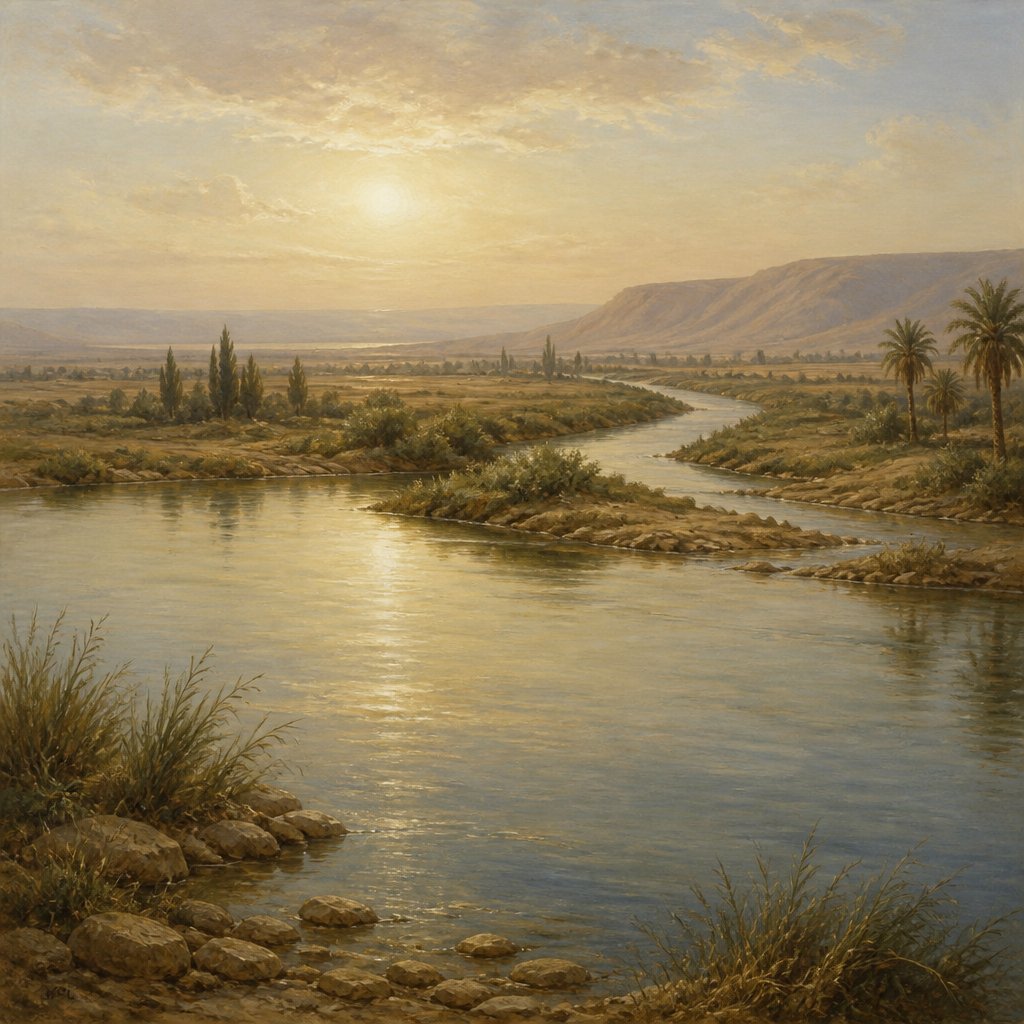
Genesis 2:14 in the King James Version of the Bible reads: "And the name of the third river is Hiddekel: that is it which goeth toward the east of Assyria. And the fourth river is Euphrates."
This verse is part of the creation story in the book of Genesis, which is the first book of the Bible. The creation story tells the account of how God created the world and everything in it in six days. This verse specifically refers to the formation of the rivers in the Garden of Eden.
In this verse, the Hiddekel river is mentioned as one of the rivers that flowed out of the Garden of Eden. It is said to go east of Assyria, and the fourth river mentioned is the Euphrates. The mention of these rivers is significant, as they were well-known and important rivers in the ancient world. The Euphrates, in particular, was a major river in Mesopotamia and is frequently mentioned in the Bible.
The rivers mentioned in this verse hold both literal and symbolic meanings. On a literal level, they are a part of the geography of the Garden of Eden. In a symbolic sense, they can represent the distribution of resources and the flow of life-giving waters. Some interpretations suggest that the four rivers represent the four cardinal directions, emphasizing the idea of the Garden of Eden as the center of the world.
The naming of the rivers also carries significance. The name "Hiddekel" is believed to refer to the Tigris River, which was well-known in ancient Mesopotamia. The Tigris River was important for irrigation and transportation in the region, and its mention in the Bible would have been familiar to the original audience. The Euphrates River, the fourth river mentioned, was also a well-known and significant river in the ancient world.
In a broader context, the mention of these rivers in the creation story ties the biblical narrative to the ancient world. It connects the events of the Bible to real geographic locations and historical settings, grounding the story in a specific place and time. This helps to situate the Biblical narrative within a historical and cultural context, making it relevant to the people who originally heard and read these stories.
The mention of the rivers in the Garden of Eden also has symbolic and metaphorical significance. Water is often used as a symbol of life, purity, and renewal in the Bible. The rivers in the Garden of Eden could be seen as representing the life-giving and nourishing properties of water, as well as the abundance and fertility of the land. In this sense, the rivers can be seen as a symbol of God's provision and blessing, as well as a reminder of the abundance and beauty of the natural world.
Overall, Genesis 2:14 is a verse that adds depth and richness to the creation story in the Bible. It provides geographical and historical context, connecting the biblical narrative to the real world. The mention of the rivers in the Garden of Eden also carries symbolic significance, representing the life-giving properties of water and the abundance of God's provision. This verse serves as a reminder of the interconnectedness of the natural world and the spiritual realm, and the importance of recognizing and appreciating the beauty and resources of God's creation.
Have questions about Genesis 2:14?
Dive deeper into this scripture with Bible Chat — an AI-powered tool for exploring God's Word through conversation. Ask questions, get context, and grow in your understanding of the Bible.
Get Our Apps


Genesis 2:14 Artwork

Genesis 2:14 - "And the name of the third river is Hiddekel: that is it which goeth toward the east of Assyria. And the fourth river is Euphrates."
"And the name of the third river is Hiddekel: that is it which goeth toward the east of Assyria. And the fourth river is Euphrates." - Genesis 2:14

Genesis 14:1-2

Genesis 14:2 - "That these made war with Bera king of Sodom, and with Birsha king of Gomorrah, Shinab king of Admah, and Shemeber king of Zeboiim, and the king of Bela, which is Zoar."

Genesis 22 14

Genesis 19-14

Genesis 21:14

Genesis 15:14

Genesis 22-14

Genesis 25-14

Genesis 23-14

Genesis 24-14

Genesis 17-14

Genesis 16:14

Genesis 20-14

Genesis 28-14

Genesis 18-14

Genesis 25:14 - "And Mishma, and Dumah, and Massa,"

Genesis 18:9-14

Genesis 1:10-14

Genesis 18:1-14

Genesis 14:2 That these made war with Bera king of Sodom, and with Birsha king of Gomorrah, Shinab king of Admah, and Shemeber king of Zeboiim, and the king of Bela, which is Zoar.

Genesis 18:11-14

Genesis 22:1-14

Genesis 46:14 - "¶ And the sons of Zebulun; Sered, and Elon, and Jahleel."

Genesis 23:14 - "And Ephron answered Abraham, saying unto him,"

Genesis 11:14 - "And Salah lived thirty years, and begat Eber:"

Genesis 14:4 - "Twelve years they served Chedorlaomer, and in the thirteenth year they rebelled."

Genesis 10:14 - "And Pathrusim, and Casluhim, (out of whom came Philistim,) and Caphtorim."

Genesis 14:6 - "And the Horites in their mount Seir, unto El-paran, which is by the wilderness."