What does Genesis 30:14 mean?
"And Reuben went in the days of wheat harvest, and found mandrakes in the field, and brought them unto his mother Leah. Then Rachel said to Leah, Give me, I pray thee, of thy son’s mandrakes." - Genesis 30:14
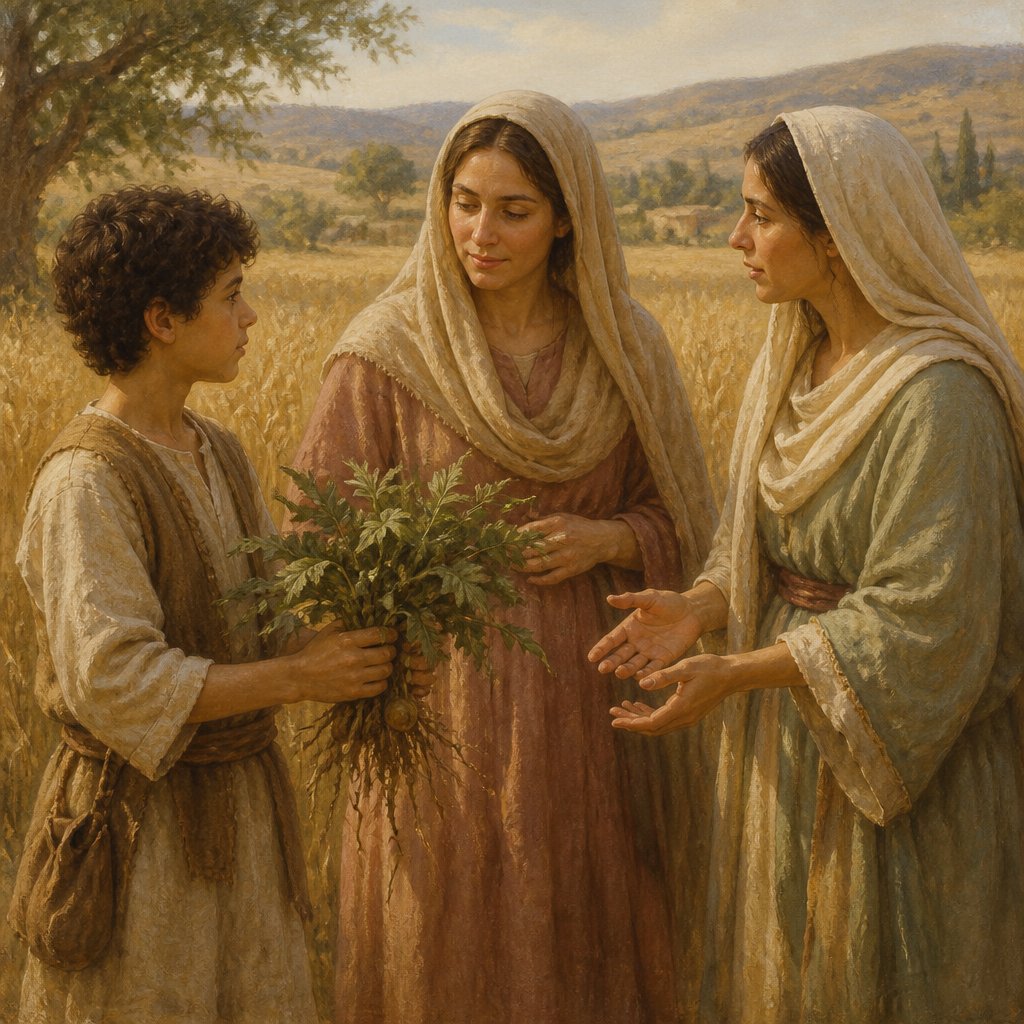
Genesis 30:14 (KJV) says, "And Reuben went in the days of wheat harvest, and found mandrakes in the field, and brought them unto his mother Leah. Then Rachel said to Leah, Give me, I pray thee, of thy son's mandrakes."
This particular verse from the book of Genesis is significant in understanding the dynamics of the relationship between the two sisters, Leah and Rachel, as well as the larger theme of fertility and the struggle for power and influence within the family.
To provide some context, the story of the mandrakes takes place within the broader narrative of the complex family dynamics of Jacob and his two wives, Leah and Rachel. Rachel, who is Jacob's beloved wife, is unable to conceive children, while Leah, who is not loved by Jacob, is able to bear him sons. This creates a sense of rivalry and competition between the two sisters, as they vie for Jacob's affection and strive to bear him children.
In this verse, Reuben, the eldest son of Leah, brings mandrakes to his mother. Mandrakes were believed to be an aphrodisiac and were associated with fertility in ancient times. The fact that Reuben finds them during the wheat harvest, a time of abundance and prosperity, is significant as it suggests a sense of renewal and potential for new life.
When Rachel sees the mandrakes, she immediately asks Leah for some, indicating her belief in their supposed fertility-enhancing properties. This exchange highlights the desperation of Rachel, who is willing to seek help from her sister in order to conceive a child. It also underscores the power dynamics at play within the family, as Rachel is essentially asking for what she believes will give her an advantage in her struggle to conceive.
The theme of fertility is central to this verse, as it reflects the deeply held desire of the women in this story to bear children and secure their status within the family and society. It also speaks to the cultural and religious significance of fertility in the ancient world, where a woman's worth was often measured by her ability to produce offspring.
Furthermore, the mandrakes themselves can be seen as symbolic of the lengths to which people will go in order to fulfill their deepest desires. Rachel's willingness to seek out the mandrakes reflects her desperation and her determination to do whatever it takes to conceive a child. It also speaks to the power of belief and superstition in shaping people's actions and decisions.
Ultimately, this verse offers a glimpse into the complex dynamics of the family and the deep-seated longing for fertility and fulfillment. It also sheds light on the struggles and rivalries that can arise within relationships, as well as the lengths to which individuals will go in pursuit of their deepest desires. The story of the mandrakes is a poignant reminder of the power of longing and the ways in which it can shape our relationships and our lives.
Have questions about Genesis 30:14?
Dive deeper into this scripture with Bible Chat — an AI-powered tool for exploring God's Word through conversation. Ask questions, get context, and grow in your understanding of the Bible.
Get Our Apps


Genesis 30:14 Artwork

Genesis 30:14 - "¶ And Reuben went in the days of wheat harvest, and found mandrakes in the field, and brought them unto his mother Leah. Then Rachel said to Leah, Give me, I pray thee, of thy son's mandrakes."
"¶ And Reuben went in the days of wheat harvest, and found mandrakes in the field, and brought them unto his mother Leah. Then Rachel said to Leah, Give me, I pray thee, of thy son's mandrakes." - Genesis 30:14

John 14:30

Genesis 19-30

Genesis 24-30

Genesis 18-30

Genesis 21-30

Genesis 30:10-11

Genesis 29:15-30

Genesis 30:5 - "And Bilhah conceived, and bare Jacob a son."

Genesis 11:30 - "But Sarai was barren; she had no child."

Genesis 30:10 - "And Zilpah Leah's maid bare Jacob a son."

Genesis 30:19 - "And Leah conceived again, and bare Jacob the sixth son."

Genesis 26:30 - "And he made them a feast, and they did eat and drink."

Genesis 30:12 - "And Zilpah Leah's maid bare Jacob a second son."

Luke 14:30 - "Saying, This man began to build, and was not able to finish."

Genesis 30:28 - "And he said, Appoint me thy wages, and I will give it."

Genesis 30:21 - "And afterwards she bare a daughter, and called her name Dinah."

1 Kings 14:30 - "And there was war between Rehoboam and Jeroboam all their days."

Proverbs 14:30 - "A sound heart is the life of the flesh: but envy the rottenness of the bones."

Genesis 30:34 - "And Laban said, Behold, I would it might be according to thy word."

Genesis 30:22 - "¶ And God remembered Rachel, and God hearkened to her, and opened her womb."

Genesis 30:7 - "And Bilhah Rachel's maid conceived again, and bare Jacob a second son."

Genesis 10:30 - "And their dwelling was from Mesha, as thou goest unto Sephar a mount of the east."

Genesis 30:11 - "And Leah said, A troop cometh: and she called his name Gad."

Genesis 30:39 - "And the flocks conceived before the rods, and brought forth cattle ringstraked, speckled, and spotted."

Genesis 30:17 - "And God hearkened unto Leah, and she conceived, and bare Jacob the fifth son."

Genesis 30:43 - "And the man increased exceedingly, and had much cattle, and maidservants, and menservants, and camels, and asses."

Ezekiel 30:14 - "And I will make Pathros desolate, and will set fire in Zoan, and will execute judgments in No."

Genesis 30:23 - "And she conceived, and bare a son; and said, God hath taken away my reproach:"