What does Genesis 30:15 mean?
"And she said unto her, Is it a small matter that thou hast taken my husband? and wouldest thou take away my son’s mandrakes also? And Rachel said, Therefore he shall lie with thee to night for thy son’s mandrakes." - Genesis 30:15
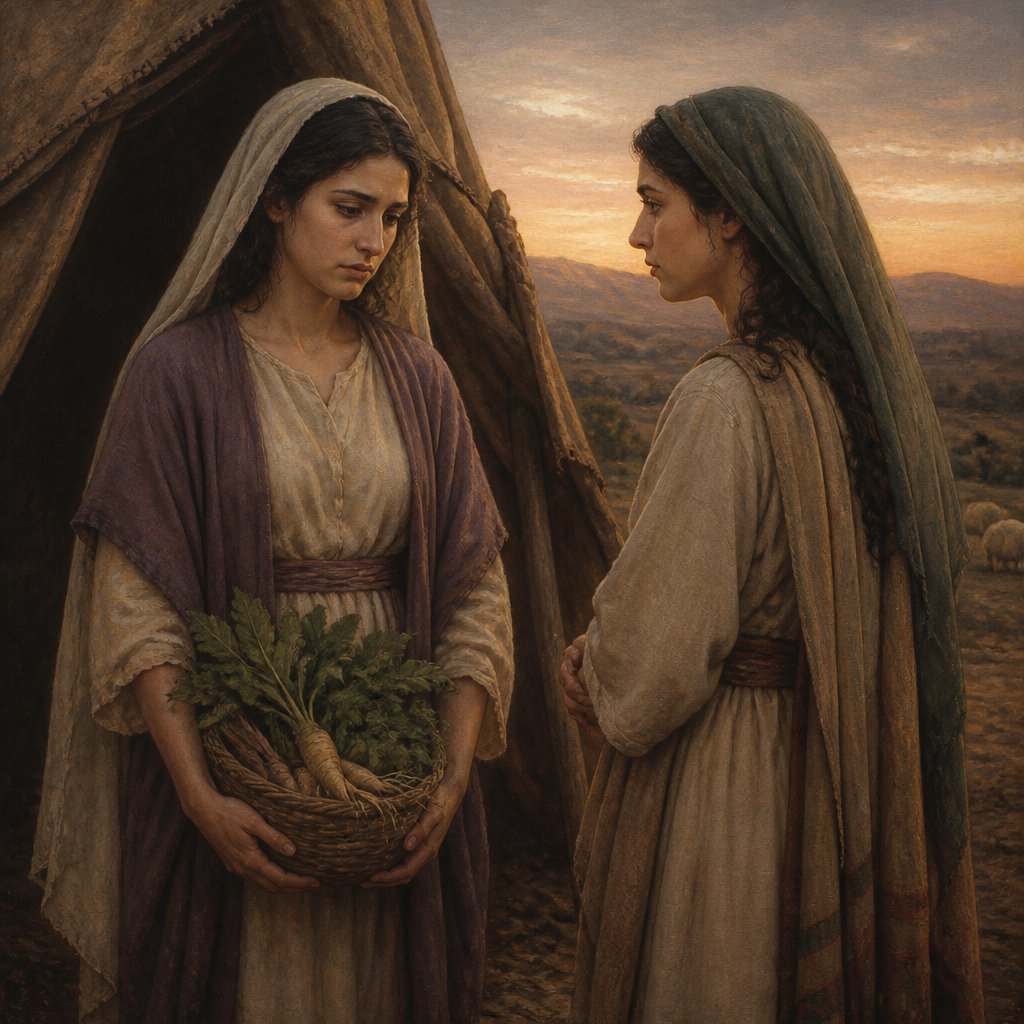
Genesis 30:15 (KJV) - "And she said unto her, Is it a small matter that thou hast taken my husband? and wouldest thou take away my son's mandrakes also? And Rachel said, Therefore he shall lie with thee to night for thy son's mandrakes."
In this verse, we see the story of Rachel and Leah, who are both wives of Jacob. The context of this verse is essential to understanding its deeper meaning. Rachel and Leah were sisters, and they were married to the same man, Jacob. In this verse, Rachel is expressing her frustration and jealousy towards her sister Leah, who had taken her husband and now seemed to be taking her son's mandrakes as well.
One of the significant themes in this verse is the theme of jealousy and rivalry. Throughout the story of Rachel and Leah, we see how their jealousy and rivalry create tension and conflict. Rachel's jealousy towards Leah for having children with Jacob, and now for taking her son's mandrakes, illustrates the destructive nature of jealousy. It causes division and strife in their family and disrupts the harmony between the two sisters.
Another theme in this verse is the theme of power dynamics within relationships. Rachel's statement to Leah, "Is it a small matter that thou hast taken my husband?" highlights the imbalance of power and control in their relationship. Rachel feels that her sister has taken something important away from her, and she is trying to assert her power by using her son's mandrakes as leverage.
The mention of mandrakes in this verse holds significant symbolism. Mandrakes were believed to be an aphrodisiac in ancient times and were associated with fertility. Rachel's desire for the mandrakes can be seen as her longing for fertility and the ability to have children, which she saw as a source of power and fulfillment. The mandrakes also symbolize the unspoken competition between Rachel and Leah to have more children and secure their position as the favored wife.
This verse also sheds light on the cultural and societal norms of the time. The practice of polygamy was accepted in the ancient Near East, and it was not uncommon for women to compete for the attention and affection of their husband. The tension between Rachel and Leah reflects the complexities and challenges of living in a polygamous marriage and the emotional toll it can take on the wives involved.
The language used in this verse also points to the desperation and intense emotions that Rachel is experiencing. Her plea to Leah and her willingness to allow Jacob to lie with Leah in exchange for the mandrakes shows the depth of her desire for children and her determination to gain an advantage over her sister.
In conclusion, Genesis 30:15 offers a glimpse into the complexities of human relationships, particularly in the context of polygamy. The verse highlights the themes of jealousy, power dynamics, and the longing for fertility, while also providing insight into the cultural and societal norms of the time. It serves as a reminder of the destructive nature of jealousy and the importance of healthy and harmonious relationships. Ultimately, this verse invites readers to consider the implications of our actions and desires on our relationships with others.
Have questions about Genesis 30:15?
Dive deeper into this scripture with Bible Chat — an AI-powered tool for exploring God's Word through conversation. Ask questions, get context, and grow in your understanding of the Bible.
Get Our Apps


Genesis 30:15 Artwork

Genesis 30:15 - "And she said unto her, Is it a small matter that thou hast taken my husband? and wouldest thou take away my son's mandrakes also? And Rachel said, Therefore he shall lie with thee to night for thy son's mandrakes." respectful, symbolic bible verse art
"And she said unto her, Is it a small matter that thou hast taken my husband? and wouldest thou take away my son's mandrakes also? And Rachel said, Therefore he shall lie with thee to night for thy son's mandrakes." - Genesis 30:15

Genesis 29:15-30

Genesis 19-30

Genesis 24-30

Genesis 18-30

Genesis 21-30

Genesis 30:10-11

Joshua 15:30 - "And Eltolad, and Chesil, and Hormah,"

1.samuel 15:30

1.samuel 15:30

Exodus 28:15-30

Genesis 15:15

Genesis 30:5 - "And Bilhah conceived, and bare Jacob a son."

Genesis 11:30 - "But Sarai was barren; she had no child."

Genesis 30:10 - "And Zilpah Leah's maid bare Jacob a son."

Genesis 30:19 - "And Leah conceived again, and bare Jacob the sixth son."

Genesis 26:30 - "And he made them a feast, and they did eat and drink."

Genesis 30:12 - "And Zilpah Leah's maid bare Jacob a second son."

Mark 15:30 - "Save thyself, and come down from the cross."

Genesis 30:28 - "And he said, Appoint me thy wages, and I will give it."

Genesis 30:21 - "And afterwards she bare a daughter, and called her name Dinah."

1 Corinthians 15:30 - "And why stand we in jeopardy every hour?"

Genesis 30:34 - "And Laban said, Behold, I would it might be according to thy word."

Genesis 30:22 - "¶ And God remembered Rachel, and God hearkened to her, and opened her womb."

"And Eltolad, and Chesil, and Hormah," - Joshua 15:30

Genesis 30:7 - "And Bilhah Rachel's maid conceived again, and bare Jacob a second son."

Genesis 10:30 - "And their dwelling was from Mesha, as thou goest unto Sephar a mount of the east."

Genesis 30:11 - "And Leah said, A troop cometh: and she called his name Gad."

Genesis 30:39 - "And the flocks conceived before the rods, and brought forth cattle ringstraked, speckled, and spotted."