What does Genesis 30:17 mean?
“And God hearkened unto Leah, and she conceived, and bare Jacob the fifth son.” — Genesis 30:17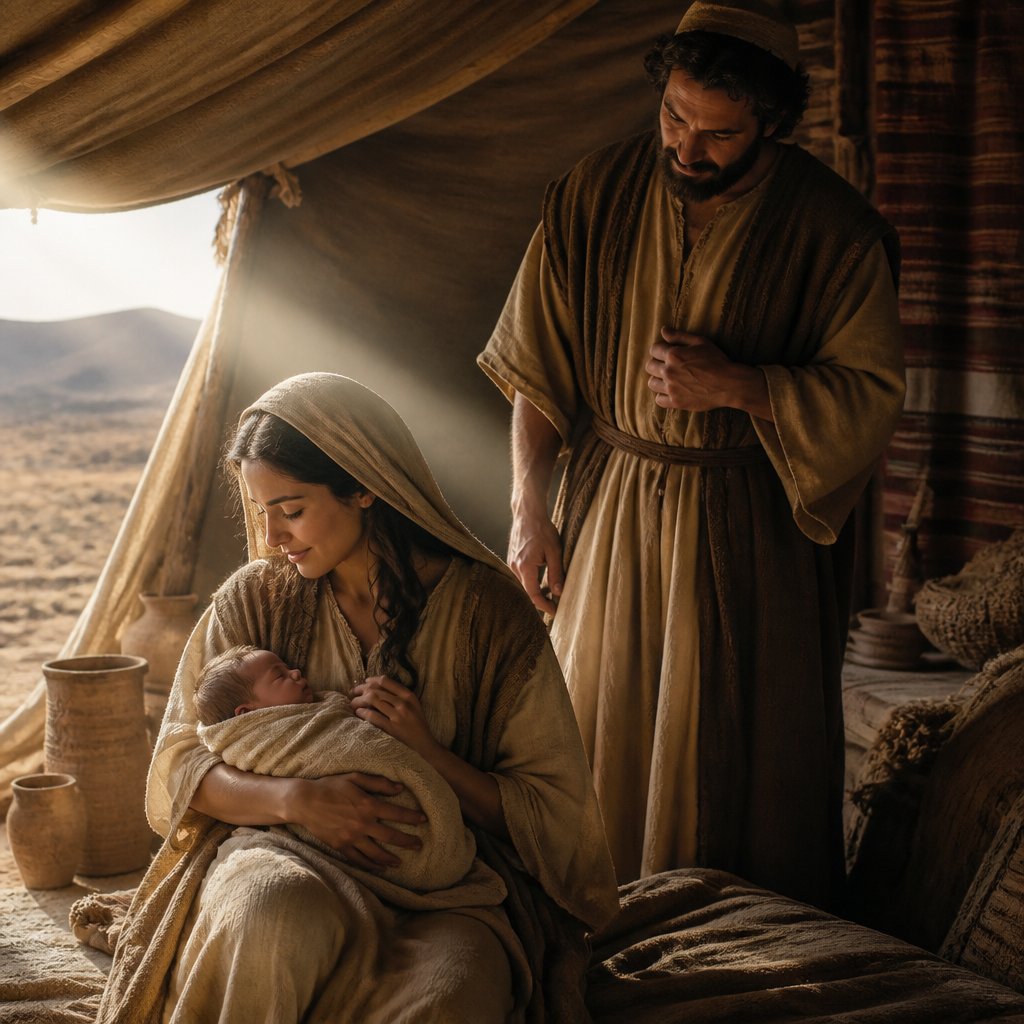
Genesis 30:17 in the King James Version reads, "And God hearkened unto Leah, and she conceived, and bare Jacob the fifth son." This verse comes from the book of Genesis, which is the first book of the Bible. In this particular passage, we see Leah, one of Jacob's wives, giving birth to her fifth son, and it is noted that God listened to her prayers and enabled her to conceive.
The story of Leah and her sister Rachel is a complex and emotionally charged narrative within the larger context of the biblical account of the patriarch Jacob. Leah's marriage to Jacob was not based on love; instead, it was the result of trickery and deception on the part of their father, Laban. Jacob had intended to marry Rachel, but Laban switched Leah for Rachel on the wedding night, and Jacob unknowingly consummated his marriage with Leah. This act of deception set the stage for a lifelong struggle between Leah and Rachel for Jacob's affection and attention.
Genesis 30:17 is a significant verse in the story of Leah because it highlights her desire to win Jacob's favor through the bearing of sons. In the cultural context of that time, a woman's worth was often measured by her ability to bear children, particularly sons who could carry on the family name and lineage. Leah, feeling unloved and unvalued by Jacob, hoped that by giving birth to more sons, she could finally earn his love and attention.
The fact that the verse mentions that "God hearkened unto Leah" implies that God saw Leah's plight and answered her prayers for conception. This emphasizes the theme of God's providence and intervention in the lives of His people. Even though Leah's circumstances were born out of deception and her desire for Jacob's love, God heard her cries and blessed her with fertility.
The birth of each of Leah's sons carries with it a symbolic significance. Each son's name reflects the emotional and spiritual journey Leah was on. For example, her first son was named Reuben, which means "behold, a son," expressing her hope that Jacob would finally love her because she had borne him a son. Her second son was named Simeon, which means "heard," indicating that God had seen her affliction and heard her cry. This pattern continues with the subsequent births of Levi (meaning "attached") and Judah (meaning "praise"), each name reflecting Leah's emotional state and the shifting dynamics within her marriage.
In the broader theological context, the story of Leah and her sons serves as a reminder of God's faithfulness and His ability to bring about His purposes despite the flawed and sinful actions of individuals. It also highlights the theme of God's preferential treatment of the marginalized and overlooked, as He shows compassion and care for Leah, who was in a position of disadvantage within her own family.
Ultimately, Genesis 30:17 and the surrounding narrative also point to the redemptive power of God's love. Despite the turmoil and hardship that Leah faced, God saw her, heard her, and blessed her with children. In doing so, He transformed her pain and rejection into a source of blessing and purpose. This serves as a powerful example of God's ability to bring beauty out of brokenness and to use the most unlikely and overlooked individuals to accomplish His divine plan.
In conclusion, Genesis 30:17 is a poignant and richly layered verse within the biblical narrative, reflecting themes of providence, redemption, and the transformative power of God's love. It serves as a reminder of the profound ways in which God intervenes in the lives of His people, bringing hope and healing in the midst of pain and adversity.
Get our apps


Artwork for Genesis 30:17

Genesis 30:17 - "And God hearkened unto Leah, and she conceived, and bare Jacob the fifth son."
"And God hearkened unto Leah, and she conceived, and bare Jacob the fifth son." - Genesis 30:17

Genesis 19-30

Genesis 24-30

Genesis 18-30

Genesis 21-30

Mark 10:17-30

Genesis 17-17

Mark 10:17-30

Genesis 30:10-11

Genesis 29:15-30

Exodus 30:17 - "¶ And the LORD spake unto Moses, saying,"

Genesis 30:5 - "And Bilhah conceived, and bare Jacob a son."

Genesis 11:30 - "But Sarai was barren; she had no child."

Genesis 30:10 - "And Zilpah Leah's maid bare Jacob a son."

Genesis 30:19 - "And Leah conceived again, and bare Jacob the sixth son."

Genesis 26:30 - "And he made them a feast, and they did eat and drink."

Genesis 30:12 - "And Zilpah Leah's maid bare Jacob a second son."

Genesis 30:28 - "And he said, Appoint me thy wages, and I will give it."

Luke 17:30 - "Even thus shall it be in the day when the Son of man is revealed."

Genesis 30:21 - "And afterwards she bare a daughter, and called her name Dinah."

Genesis 17-15

Genesis 17-23

Genesis 18-17

Genesis 17-27

Genesis 17-21

Genesis 17:2

Genesis 17:6

Genesis 17:4

Genesis 20-17