What does Genesis 31:1 mean?
"And he heard the words of Laban’s sons, saying, Jacob hath taken away all that was our father’s; and of that which was our father’s hath he gotten all this glory." - Genesis 31:1
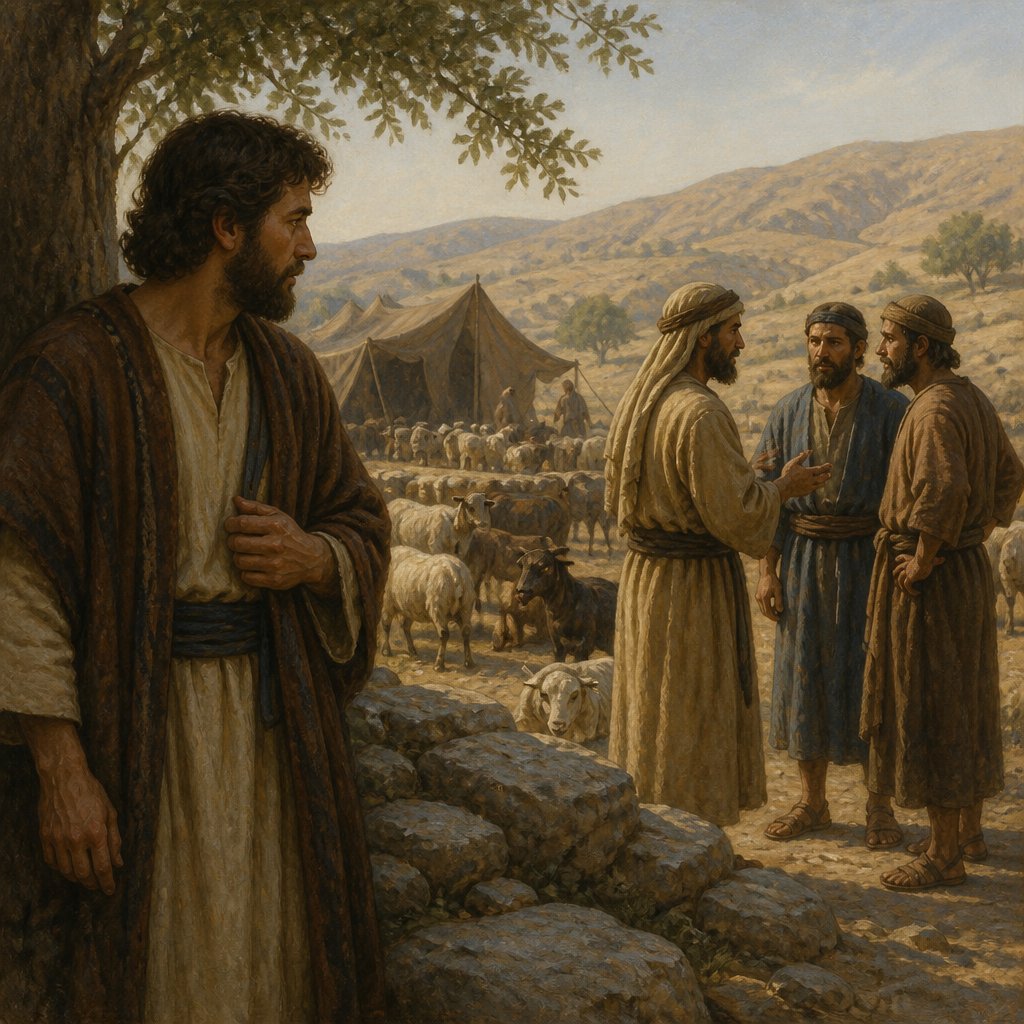
Genesis 31:1 (KJV) states, "And he heard the words of Laban's sons, saying, Jacob hath taken away all that was our father's; and of that which was our father's hath he gotten all this glory."
This verse comes at a crucial moment in the story of Jacob, a central figure in the book of Genesis. To truly understand the profound meaning of Genesis 31:1, we must delve into the larger narrative that surrounds it.
Jacob, the grandson of Abraham and son of Isaac, has found himself entangled in a complex web of family dynamics and deception. He has been working for his uncle, Laban, for many years, and during this time, he has endured great hardships. Laban had tricked Jacob into marrying his daughter Leah instead of Rachel, whom Jacob loved deeply. Jacob also endured deceit and manipulation in his business dealings with Laban, who changed his wages multiple times. Despite these challenges, Jacob persevered and grew rich in his uncle's service.
As the verse commences, Jacob hears the murmurs of Laban's sons, who accuse him of taking their father's possessions and gaining glory at their expense. From a thematic perspective, this verse highlights the themes of jealousy, accusations, and conflict within families. The resentment of Laban's sons towards Jacob is a stark reminder of the destructive power of envy and greed. Furthermore, this verse underscores the pervasive nature of familial discord, a theme that resonates with many readers.
Contextually, this verse serves as a pivotal moment in Jacob's journey. It marks the beginning of his decision to leave Laban's household and return to his homeland. The accusations and animosity from Laban's sons propel Jacob to reassess his situation and seek a new path forward. Therefore, Genesis 31:1 marks a turning point in the narrative, signaling a shift in Jacob's destiny and setting the stage for the subsequent events in the story.
Symbolically, this verse captures the essence of human frailty and the perennial struggle for power and possessions. Laban's sons' accusatory words reflect the insidious nature of human greed and the propensity to cast blame on others. Furthermore, the notion of "glory" in this verse underscores the futility of worldly wealth and the transient nature of material success. Through these symbols, Genesis 31:1 serves as a cautionary tale, reminding readers of the pitfalls of pride and materialism.
In sum, Genesis 31:1 encapsulates profound themes of familial discord, jealousy, and the transient nature of worldly possessions. Within the larger narrative, this verse serves as a critical juncture in Jacob's journey and sets the stage for his departure from Laban's household. Symbolically, this verse offers timeless insights into the human condition and the perennial struggles that afflict families and individuals. As readers engage with Genesis 31:1, they are confronted with the enduring truths of human nature and the moral complexities of the human experience.
Have questions about Genesis 31:1?
Dive deeper into this scripture with Bible Chat — an AI-powered tool for exploring God's Word through conversation. Ask questions, get context, and grow in your understanding of the Bible.
Get Our Apps


Genesis 31:1 Artwork

Genesis 31:1 - "And he heard the words of Laban's sons, saying, Jacob hath taken away all that was our father's; and of that which was our father's hath he gotten all this glory."
"And he heard the words of Laban's sons, saying, Jacob hath taken away all that was our father's; and of that which was our father's hath he gotten all this glory." - Genesis 31:1

Genesis 31:35

Genesis 1:31 - "And God saw every thing that he had made, and, behold, it was very good. And the evening and the morning were the sixth day."

Genesis 21-31

Genesis 18-31

Genesis 19-31

Genesis 24-31

Genesis 31:22 - "And it was told Laban on the third day that Jacob was fled."

Genesis 31:45 - "And Jacob took a stone, and set it up for a pillar."

Genesis 31:47 - "And Laban called it Jegarsahadutha: but Jacob called it Galeed."

Genesis 31:31 - "And Jacob answered and said to Laban, Because I was afraid: for I said, Peradventure thou wouldest take by force thy daughters from me."

Genesis 34:31 - "And they said, Should he deal with our sister as with an harlot?"

Genesis 25:31 - "And Jacob said, Sell me this day thy birthright."

Genesis 31:2 - "And Jacob beheld the countenance of Laban, and, behold, it was not toward him as before."

Genesis 37:31 - "And they took Joseph's coat, and killed a kid of the goats, and dipped the coat in the blood;"

Genesis 31:4 - "And Jacob sent and called Rachel and Leah to the field unto his flock,"

Genesis 42:31 - "And we said unto him, We are true men; we are no spies:"
Genesis 10:31 - "These are the sons of Shem, after their families, after their tongues, in their lands, after their nations."

Genesis 41:31 - "And the plenty shall not be known in the land by reason of that famine following; for it shall be very grievous."

Genesis 21:31 - "Wherefore he called that place Beer-sheba; because there they sware both of them."

Genesis 31:17 - "¶ Then Jacob rose up, and set his sons and his wives upon camels;"

Genesis 31:6 - "And ye know that with all my power I have served your father."

Genesis 31:9 - "Thus God hath taken away the cattle of your father, and given them to me."

Genesis 5:31 - "And all the days of Lamech were seven hundred seventy and seven years: and he died."

Genesis 31:20 - "And Jacob stole away unawares to Laban the Syrian, in that he told him not that he fled."

Genesis 36:31 - "¶ And these are the kings that reigned in the land of Edom, before there reigned any king over the children of Israel."

Genesis 43:31 - "And he washed his face, and went out, and refrained himself, and said, Set on bread."

Genesis 29:31 - "¶ And when the LORD saw that Leah was hated, he opened her womb: but Rachel was barren."

Genesis 31:48 - "And Laban said, This heap is a witness between me and thee this day. Therefore was the name of it called Galeed;"