What does Genesis 31:13 mean?
"I am the God of Beth-el, where thou anointedst the pillar, and where thou vowedst a vow unto me: now arise, get thee out from this land, and return unto the land of thy kindred." - Genesis 31:13
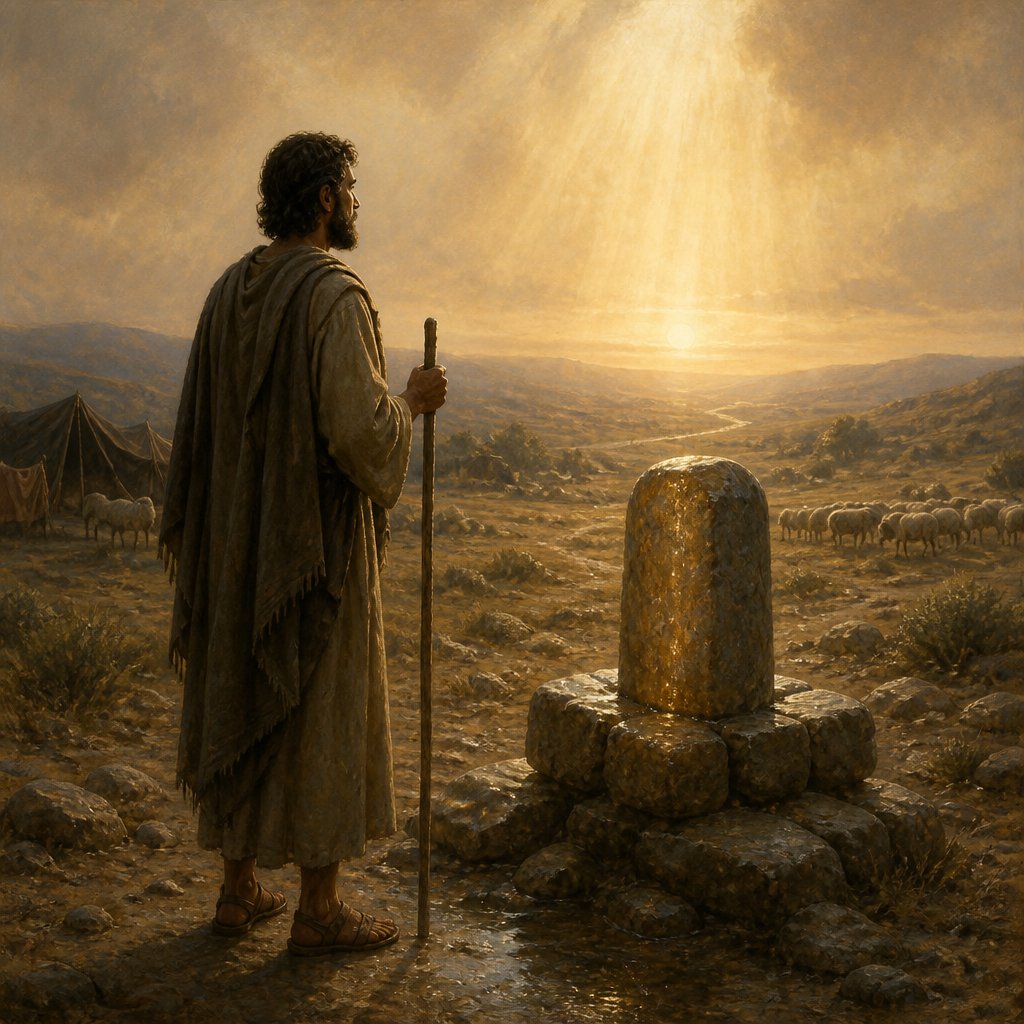
Genesis 31:13 (KJV) - I am the God of Bethel, where thou anointedst the pillar, and where thou vowedst a vow unto me: now arise, get thee out from this land, and return unto the land of thy kindred.
In this verse, the Lord is speaking to Jacob, reminding him of the vow he made to God at Bethel and instructing him to return to the land of his kindred. This verse carries significant meaning, as it encompasses themes of faith, obedience, and divine guidance.
The context of this verse begins with Jacob fleeing from his father-in-law Laban, as tensions between them had reached a boiling point. Jacob had come to Laban seeking refuge after fleeing from his brother Esau, whom he had deceived and whom he feared would seek revenge. However, after years of serving Laban and enduring mistreatment, Jacob sought to return to the land of his kindred, as the Lord had commanded him to do.
Before he departs, the Lord appears to Jacob in a dream, reassuring him of His presence and faithfulness. The Lord reminds Jacob of the vow he made at Bethel, where he anointed a pillar and promised to serve and honor God. Now, the Lord instructs Jacob to fulfill his vow and return to the land of his kindred.
The significance of the God of Bethel identifying Himself as the one to whom Jacob had vowed a vow is profound. It serves as a reminder of the covenant between Jacob and God, and the faithfulness of God to His promises. This theme of covenant and faithfulness runs throughout the Bible, as God repeatedly demonstrates His faithfulness to His people despite their shortcomings.
The theme of obedience is also evident in this verse. Jacob is being obedient to the Lord's command to return to the land of his kindred, despite the challenges and uncertainties he may face. This obedience reflects a deep trust in God's guidance and providence, as Jacob willingly submits to the Lord's will.
There is also a theme of divine guidance present in this verse. The Lord's specific instruction to Jacob to "arise, get thee out from this land, and return unto the land of thy kindred" is a clear demonstration of God's guidance and provision. God not only assures Jacob of His presence but also provides clear direction for his next steps.
The symbolism in this verse is found in the reference to Bethel, where Jacob had anointed a pillar and made a vow to God. Bethel, which means "house of God," holds spiritual significance as a place of encounter with the divine. The anointing of the pillar and the making of a vow at Bethel symbolize Jacob's commitment to God and his acknowledgment of God's sovereignty.
Overall, Genesis 31:13 (KJV) captures the essence of faith, obedience, and divine guidance. It serves as a powerful reminder of God's faithfulness to His promises and His ability to guide and direct His people. The themes and symbolism in this verse provide profound insight into the nature of God and His relationship with His people.
Have questions about Genesis 31:13?
Dive deeper into this scripture with Bible Chat — an AI-powered tool for exploring God's Word through conversation. Ask questions, get context, and grow in your understanding of the Bible.
Get Our Apps


Genesis 31:13 Artwork

Genesis 31:13 - "I am the God of Beth-el, where thou anointedst the pillar, and where thou vowedst a vow unto me: now arise, get thee out from this land, and return unto the land of thy kindred."
"I am the God of Beth-el, where thou anointedst the pillar, and where thou vowedst a vow unto me: now arise, get thee out from this land, and return unto the land of thy kindred." - Genesis 31:13

1 John 3:1-3

Altar rebuilt in Jerusalem. Ezra 3:1-3

Genesis 21-31

Genesis 18-31

Genesis 31:35

Genesis 19-31

Genesis 24-31

John 13:31-35

Genesis 31:22 - "And it was told Laban on the third day that Jacob was fled."

Genesis 31:45 - "And Jacob took a stone, and set it up for a pillar."

Genesis 31:47 - "And Laban called it Jegarsahadutha: but Jacob called it Galeed."

Genesis 31:31 - "And Jacob answered and said to Laban, Because I was afraid: for I said, Peradventure thou wouldest take by force thy daughters from me."

Genesis 34:31 - "And they said, Should he deal with our sister as with an harlot?"

Genesis 25:31 - "And Jacob said, Sell me this day thy birthright."

1 Sam 31: 12-13

Genesis 31:2 - "And Jacob beheld the countenance of Laban, and, behold, it was not toward him as before."

Genesis 37:31 - "And they took Joseph's coat, and killed a kid of the goats, and dipped the coat in the blood;"

Genesis 31:4 - "And Jacob sent and called Rachel and Leah to the field unto his flock,"

Genesis 42:31 - "And we said unto him, We are true men; we are no spies:"
Genesis 10:31 - "These are the sons of Shem, after their families, after their tongues, in their lands, after their nations."

Genesis 41:31 - "And the plenty shall not be known in the land by reason of that famine following; for it shall be very grievous."

Genesis 21:31 - "Wherefore he called that place Beer-sheba; because there they sware both of them."

Proverbs 31:13 - "She seeketh wool, and flax, and worketh willingly with her hands."

Genesis 31:17 - "¶ Then Jacob rose up, and set his sons and his wives upon camels;"

Genesis 31:6 - "And ye know that with all my power I have served your father."

Genesis 31:9 - "Thus God hath taken away the cattle of your father, and given them to me."

Genesis 5:31 - "And all the days of Lamech were seven hundred seventy and seven years: and he died."

Genesis 31:20 - "And Jacob stole away unawares to Laban the Syrian, in that he told him not that he fled."