What does Genesis 31:20 mean?
“And Jacob stole away unawares to Laban the Syrian, in that he told him not that he fled.” — Genesis 31:20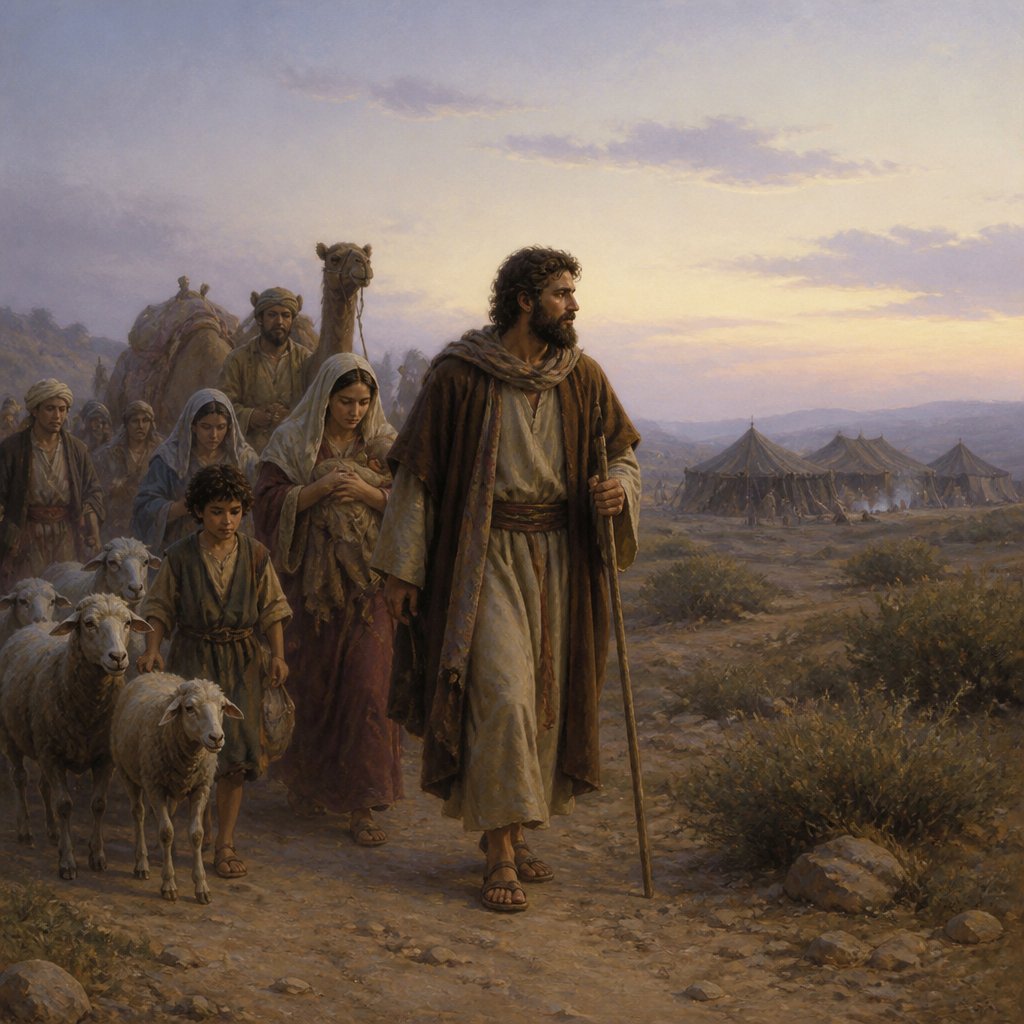
Genesis 31:20 (KJV) reads: "And Jacob stole away unawares to Laban the Syrian, in that he told him not that he fled."
This verse is part of the story of Jacob's departure from his uncle Laban's household. To understand the full meaning and context of this verse, it is essential to examine the events leading up to it.
Jacob had been working for Laban for many years, and during that time, he had experienced both blessings and trials. He had married Laban's daughters, Leah and Rachel, and had also amassed wealth through his dedication and hard work. However, Jacob eventually became aware of Laban's deceitful nature, particularly in his business dealings with him. Laban continually changed Jacob's wages, trying to take advantage of him, and Jacob became frustrated and desired to return to his homeland.
In Genesis 31, God instructs Jacob to return to the land of his fathers, and Jacob shares this message with his wives, Rachel and Leah. They are all in agreement that it is time to leave Laban and return to Jacob's homeland. Consequently, Jacob and his family steal away without Laban's knowledge, as stated in Genesis 31:20. This departure signifies a pivotal moment in the narrative, as it marks Jacob's separation from Laban and the beginning of his journey back to his own land.
In this verse, the act of Jacob "stealing away unawares" can be interpreted in a few different ways. On one hand, it can be seen as a necessary and justifiable action considering Laban's mistreatment and the divine command for Jacob to leave. On the other hand, it can also be viewed as a deceptive and dishonest maneuver, foreshadowing the deceptive practices that will continue to plague Jacob's descendants in future generations.
The context of this verse within the larger story of Jacob's life also serves to highlight the theme of God's faithfulness and provision. Despite facing difficult circumstances and dealing with deceitful individuals, Jacob remained obedient to God's call and relied on His guidance. This theme of trust and obedience in the face of adversity is a central aspect of the biblical narrative and serves as an example for believers to follow.
Furthermore, the symbolism within this verse can be extended to represent the broader theme of liberation and deliverance. Jacob's departure from Laban's household can be seen as a metaphor for the Israelites' exodus from Egypt, as both events mark a significant turning point in the lives of God's chosen people. The act of "stealing away unawares" can also be paralleled with the Israelites' escape from bondage, emphasizing the theme of freedom and liberation from oppressive circumstances.
In conclusion, Genesis 31:20 captures a crucial moment in the story of Jacob, symbolizing his departure from Laban's household and the beginning of a new chapter in his life. This verse not only reflects the themes of obedience, trust, and divine guidance but also serves as a broader symbol of liberation and deliverance. Jacob's actions, though controversial, ultimately lead him closer to fulfilling God's plan for his life, demonstrating the overarching theme of God's faithfulness and provision in the face of adversity.
Get our apps


Artwork for Genesis 31:20

Genesis 31:20 - "And Jacob stole away unawares to Laban the Syrian, in that he told him not that he fled."
"And Jacob stole away unawares to Laban the Syrian, in that he told him not that he fled." - Genesis 31:20

Genesis 21-31

Genesis 18-31

Genesis 31:35

Genesis 19-31

Genesis 24-31

John 20:30-31

Genesis 31:22 - "And it was told Laban on the third day that Jacob was fled."

Genesis 31:45 - "And Jacob took a stone, and set it up for a pillar."

Genesis 31:47 - "And Laban called it Jegarsahadutha: but Jacob called it Galeed."

Genesis 31:31 - "And Jacob answered and said to Laban, Because I was afraid: for I said, Peradventure thou wouldest take by force thy daughters from me."

Genesis 20

Genesis 34:31 - "And they said, Should he deal with our sister as with an harlot?"

Genesis 25:31 - "And Jacob said, Sell me this day thy birthright."

Genesis 31:2 - "And Jacob beheld the countenance of Laban, and, behold, it was not toward him as before."

Genesis 31:4 - "And Jacob sent and called Rachel and Leah to the field unto his flock,"

Genesis 37:31 - "And they took Joseph's coat, and killed a kid of the goats, and dipped the coat in the blood;"

Genesis 42:31 - "And we said unto him, We are true men; we are no spies:"

Luke 20:31 - "And the third took her; and in like manner the seven also: and they left no children, and died."

Genesis 20-18

Genesis 20-16

Genesis 15:20

Genesis 20-1

Genesis 20-15

Genesis 20-4

Genesis 20-13

Genesis 20-17

Genesis 20-3

Genesis 19-20