What does Genesis 34:27 mean?
“The sons of Jacob came upon the slain, and spoiled the city, because they had defiled their sister.” — Genesis 34:27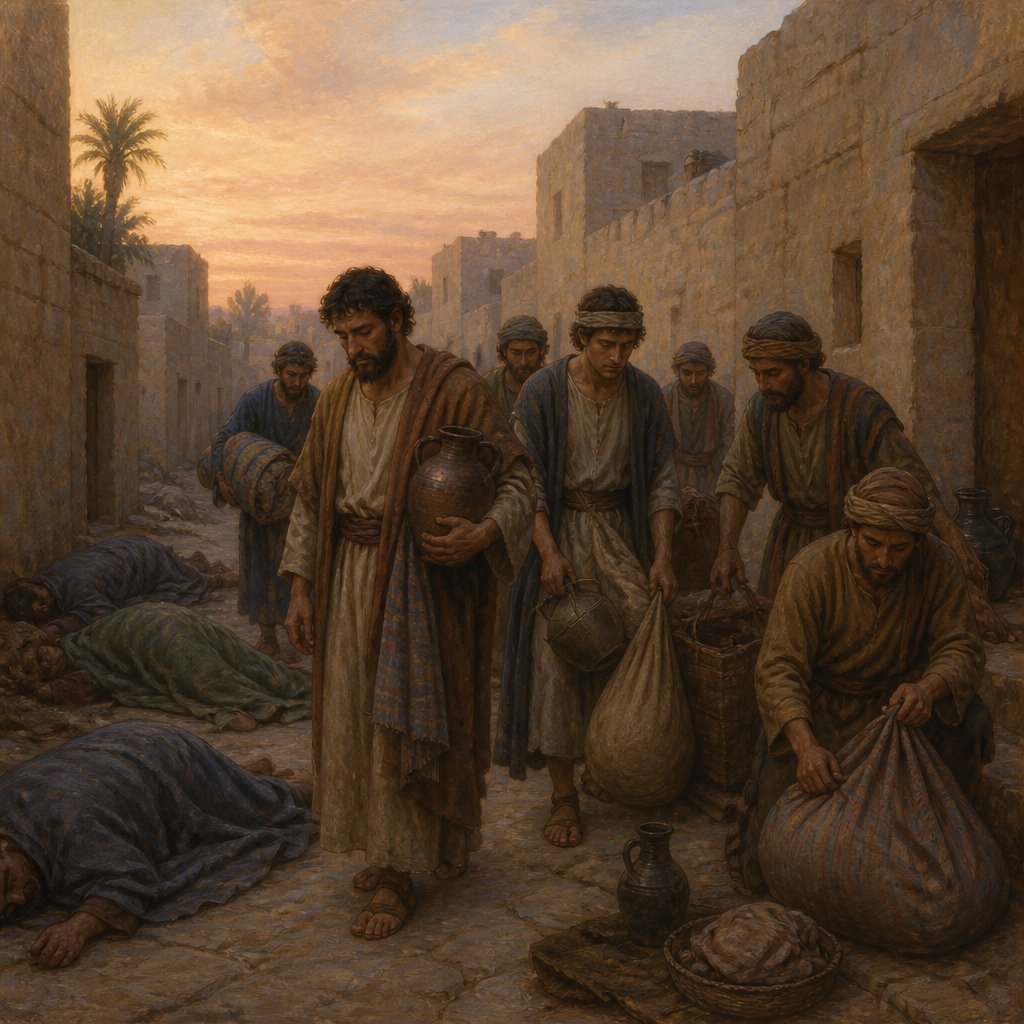
In the King James Version, Genesis 34:27 reads: "The sons of Jacob came upon the slain, and spoiled the city, because they had defiled their sister." This verse comes at the end of the story of Dinah, the daughter of Jacob, and the tragic events that followed her violation by Shechem, the son of Hamor the Hivite.
The story of Dinah and her violation is a disturbing and poignant tale that raises important questions about honor, justice, and the consequences of violence. As we delve into the larger context and themes of this verse, we can gain a deeper understanding of its significance and implications for our own lives.
The story of Dinah's violation and the subsequent retaliation by her brothers is found in Genesis 34. In this chapter, we learn that Dinah goes out to visit the daughters of the land, and she is raped by Shechem, the son of Hamor. This act of violence against Dinah is not only a violation of her bodily autonomy but also an assault on the honor and dignity of her family. After the violation, Shechem expresses his desire to marry Dinah, and he and his father seek to make amends with Jacob and his sons.
However, Jacob's sons deceitfully agree to the proposal and demand that all the men of the city be circumcised as a condition for the marriage. While the men of the city are still recovering from the procedure, two of Dinah's brothers, Simeon and Levi, enter the city and slaughter all the men, including Shechem and Hamor, and take their sister back.
The verse in question, Genesis 34:27, describes the aftermath of this violent act. It states that the sons of Jacob "came upon the slain, and spoiled the city, because they had defiled their sister." This verse captures the raw and vengeful response of Jacob's sons to the violation of their sister. In their eyes, the honor of their family has been tarnished, and they feel justified in seeking retribution.
One of the central themes of this verse and the surrounding story is the concept of honor and its role in shaping human actions and relationships. In the ancient Near Eastern culture in which this story is set, honor held immense importance, especially within the context of family and community. The violation of Dinah is seen as a grievous offense that demands a response to restore the family's honor. This leads to a cycle of violence and retribution, as each party seeks to maintain or reclaim their sense of honor.
This theme of honor is also interwoven with the theme of justice. The violent actions of Simeon and Levi, while motivated by a desire to avenge their sister, raise questions about the nature of justice and the appropriate response to wrongdoing. The reader is left to grapple with the complex moral and ethical implications of the brothers' actions.
Another important theme in this verse and the larger story is the portrayal of gender dynamics and the treatment of women. Dinah's violation is a stark reminder of the vulnerability of women in a patriarchal society, where their worth and honor are often tied to their chastity and purity. The violent retribution carried out by her brothers further emphasizes the control and authority wielded by men in this cultural context. This raises important questions about the value and agency of women, and the way in which they are often subjected to the consequences of male actions.
The symbolism in this verse and story is profound and multifaceted. The city of Shechem becomes a symbol of the collision of different cultural and ethical norms, and the violent conflict that arises from it. The slaughter of the men of the city can be seen as a symbol of the destructive consequences of honor-based violence and the cyclical nature of retribution.
In conclusion, Genesis 34:27 is a verse that delves into the complex themes of honor, justice, gender dynamics, and the consequences of violence. It challenges the reader to grapple with the ethical and moral implications of the characters' actions, and raises important questions about the treatment of women and the nature of justice. While the story of Dinah is a tragic and disturbing one, it serves as a poignant reminder of the enduring relevance of these themes in the human experience.
Get our apps


Artwork for Genesis 34:27

Genesis 34:27 - "The sons of Jacob came upon the slain, and spoiled the city, because they had defiled their sister."
"The sons of Jacob came upon the slain, and spoiled the city, because they had defiled their sister." - Genesis 34:27

Genesis 27:34 - "And when Esau heard the words of his father, he cried with a great and exceeding bitter cry, and said unto his father, Bless me, even me also, O my father."

Genesis 21-34

Genesis 19-34

Genesis 24-34

Genesis 27:34 KJV And when Esau heard the words of his father, he cried with a great and exceeding bitter cry, and said unto his father, Bless me, even me also, O my father.

Numbers 34:27 - "And the prince of the tribe of the children of Asher, Ahihud the son of Shelomi."

Leviticus 27:34 - "These are the commandments, which the LORD commanded Moses for the children of Israel in mount Sinai."

Images that depicts the verse Matthew 27:11-34

1 Chronicles 27:34 - "And after Ahithophel was Jehoiada the son of Benaiah, and Abiathar: and the general of the king's army was Joab."

Genesis 21:34 - "And Abraham sojourned in the Philistines' land many days."

Job 34:27 - "Because they turned back from him, and would not consider any of his ways:"

Genesis 34:18 - "And their words pleased Hamor, and Shechem Hamor's son."

Genesis 24:34 - "And he said, I am Abraham's servant."

Genesis 27:5

Genesis 27:32

Genesis 25-27

Genesis 34:31 - "And they said, Should he deal with our sister as with an harlot?"

Genesis 17-27

Genesis 18-27

Genesis 24-27

Genesis 21-27

Genesis 19-27

Genesis 36:34 - "And Jobab died, and Husham of the land of Temani reigned in his stead."

Genesis 34:28 - "They took their sheep, and their oxen, and their asses, and that which was in the city, and that which was in the field,"

Genesis 10:27 - "And Hadoram, and Uzal, and Diklah,"

Genesis 30:34 - "And Laban said, Behold, I would it might be according to thy word."

Genesis 34:6 - "¶ And Hamor the father of Shechem went out unto Jacob to commune with him."

Genesis 27:10 KJV