What does Genesis 35:8 mean?
"But Deborah Rebekah’s nurse died, and she was buried beneath Beth-el under an oak: and the name of it was called Allon-bachuth." - Genesis 35:8
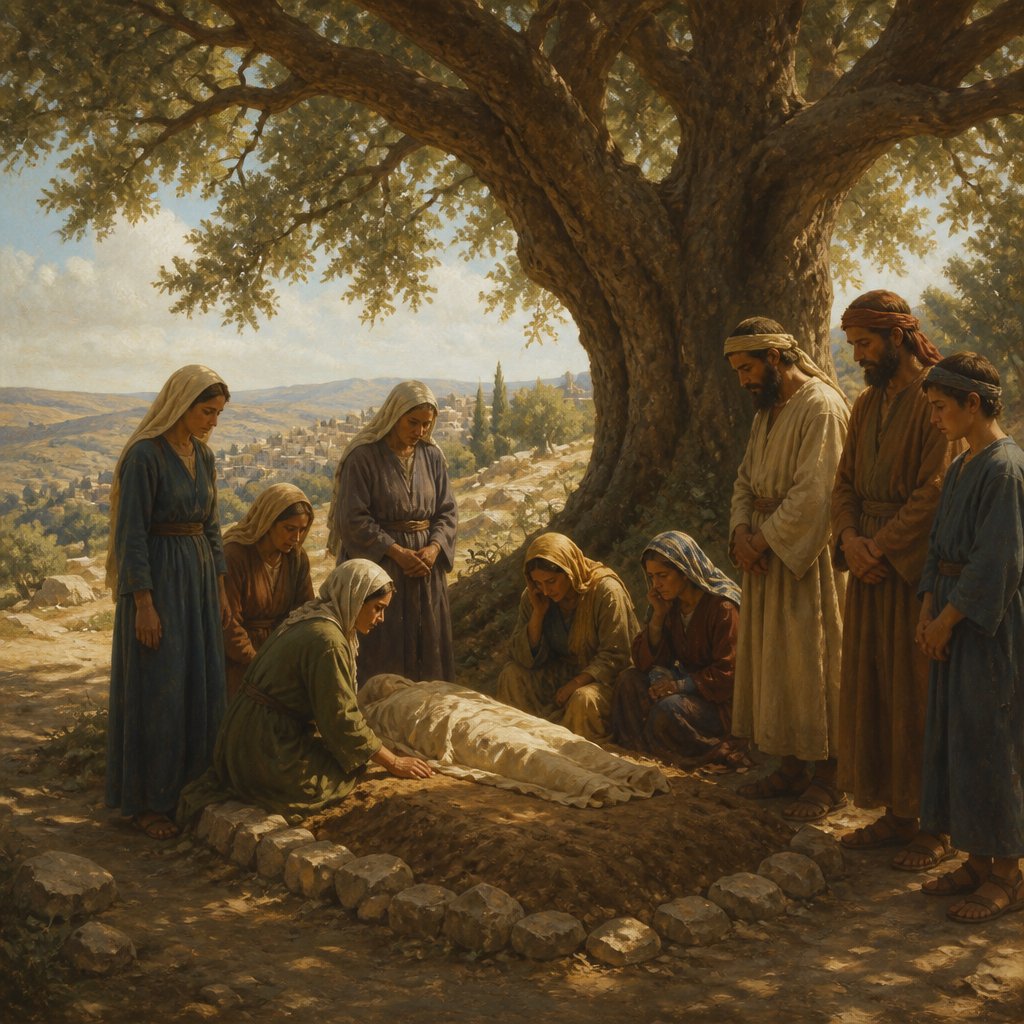
Genesis 35:8 in the King James Version (KJV) of the Bible reads: "But Deborah Rebekah's nurse died, and she was buried beneath Bethel under an oak: and the name of it was called Allonbachuth."
This verse is part of the larger narrative in the book of Genesis, which tells the story of the patriarchs of Israel, particularly Jacob and his family. The events surrounding this verse occur after Jacob returns to Bethel and builds an altar to God following a troubling period in his life. In this verse, we see the death and burial of Deborah, Rebekah's nurse, beneath an oak near Bethel. The tree is then named Allonbachuth, which means "the oak of weeping."
The significance of this verse lies in the themes of grief, remembrance, and the ongoing story of the covenant between God and the descendants of Abraham. To fully understand the meaning and commentary of Genesis 35:8, it is important to consider the wider context of the chapter and the events leading up to it.
In Genesis 35, Jacob is commanded by God to go to Bethel and build an altar there. This command comes after a period of struggle and conflict for Jacob and his family, including the rape of his daughter Dinah and the subsequent vengeance taken by his sons. It is at Bethel that Jacob had a profound encounter with God many years earlier, and returning there is a significant moment of spiritual renewal and recommitment to his faith.
The death of Deborah, Rebekah's nurse, serves as a reminder of the fleeting nature of life and the inevitability of death. This event would have undoubtedly brought grief to the family, yet the naming of the oak as "the oak of weeping" suggests a place of remembrance and mourning. In a larger sense, it also serves as a reminder of the sorrow and suffering that is a part of the human experience.
The naming of the oak also carries symbolic weight in the biblical context. Trees are often used symbolically throughout the Bible, representing strength, endurance, and the enduring nature of God's promises. The oak, in particular, is often associated with strength and steadfastness. In this verse, the oak becomes a place of communal mourning and remembrance, a tangible symbol of the sorrow and loss experienced by the family.
Furthermore, the death and burial of Deborah can also be seen as a marker of transition for the family of Jacob. After this event, the narrative of Genesis shifts towards the eventual death of Jacob himself and the continuation of the story through his sons, particularly Joseph. The naming of the oak as "the oak of weeping" suggests a turning point in the family's journey, a moment of acknowledging and processing their grief before moving forward into the future.
From a theological perspective, the placement of this verse within the larger narrative of the book of Genesis serves as a reminder of the broader themes of God's faithfulness and the ongoing relationship between God and the descendants of Abraham. The sorrow and grief experienced by the family at this moment serve to highlight the complexities of human experience and the importance of acknowledging and processing emotions such as grief within the context of faith.
In conclusion, Genesis 35:8, with its depiction of the death and burial of Deborah, Rebekah's nurse, beneath an oak near Bethel, carries deep and multi-layered significance within the broader context of the book of Genesis. The verse speaks to themes of grief, remembrance, and the enduring nature of God's promises. It serves as a poignant reminder of the complexities of human experience and the importance of acknowledging and processing emotions such as grief within the context of faith. The naming of the oak as "the oak of weeping" symbolizes a turning point in the narrative, marking a moment of transition and acknowledging the sorrow of the family before they continue on their journey.
Have questions about Genesis 35:8?
Dive deeper into this scripture with Bible Chat — an AI-powered tool for exploring God's Word through conversation. Ask questions, get context, and grow in your understanding of the Bible.
Get Our Apps


Genesis 35:8 Artwork

Genesis 35:8 - "But Deborah Rebekah's nurse died, and she was buried beneath Beth-el under an oak: and the name of it was called Allon-bachuth."
"But Deborah Rebekah's nurse died, and she was buried beneath Beth-el under an oak: and the name of it was called Allon-bachuth." - Genesis 35:8

Genesis 19-35

Genesis 26:35

Genesis 31:35

Genesis 24-35

genesis 26:1-35

Genesis 35:16-20

Genesis 29:16-35

Mark 8:35

Mark 8:35

Genesis 35:24 - "The sons of Rachel; Joseph, and Benjamin:"

Mark 8:35

Mark 8:35

Romans 8:35

Genesis 35:25 - "And the sons of Bilhah, Rachel's handmaid; Dan, and Naphtali:"

Genesis 35:28 - "And the days of Isaac were an hundred and fourscore years."

Isaiah 35:8-10

Mark 8:27 - 35

Mark 8:27 - 35

Mark 8:27 - 35

Mark 8:27 - 35

Mark 8:27 - 35

Genesis 26:35 - "Which were a grief of mind unto Isaac and to Rebekah."

Genesis 35:19 - "And Rachel died, and was buried in the way to Ephrath, which is Beth-lehem."

Genesis 35:21 - "¶ And Israel journeyed, and spread his tent beyond the tower of Edar."

"The sons of Rachel; Joseph, and Benjamin:" - Genesis 35:24

Genesis 35:15 - "And Jacob called the name of the place where God spake with him, Beth-el."

Genesis 35:23 - "The sons of Leah; Reuben, Jacob's firstborn, and Simeon, and Levi, and Judah, and Issachar, and Zebulun:"

Genesis 35:13 - "And God went up from him in the place where he talked with him."