What does Genesis 35:20 mean?
“And Jacob set a pillar upon her grave: that is the pillar of Rachel’s grave unto this day.” — Genesis 35:20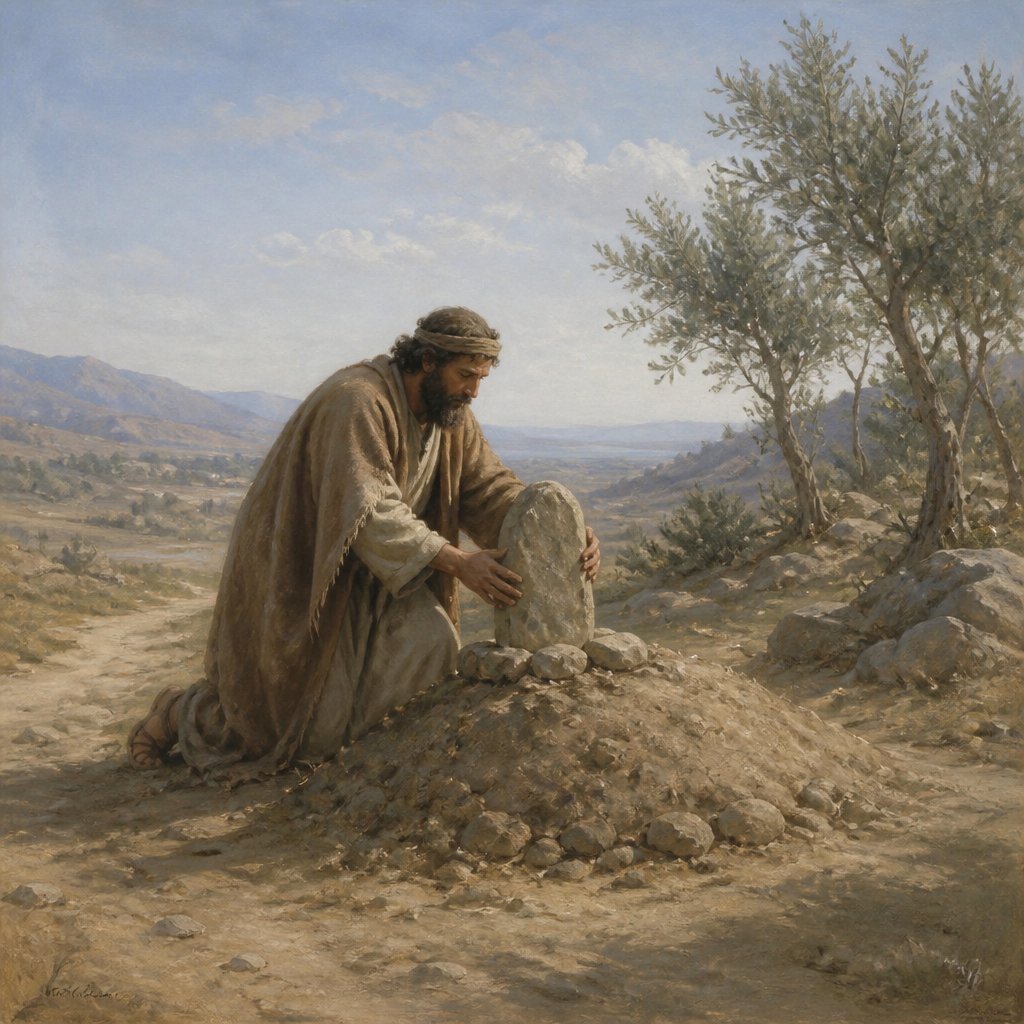
Genesis 35:20 (KJV) reads, "And Jacob set a pillar upon her grave: that is the pillar of Rachel's grave unto this day."
This verse is significantly symbolic in the context of the book of Genesis and the broader themes of the Bible. It is a verse that speaks to the importance of honoring the dead and the ways in which individuals can create physical reminders of their loved ones. Rachel, the wife of Jacob, dies giving birth to their second son, Benjamin, and Jacob sets up a pillar as a memorial for her.
The creation of a memorial or pillar in honor of the deceased is a traditional practice that dates back to ancient times. It serves as a lasting reminder of the person who has passed away and allows for future generations to remember and pay their respects. In the case of Rachel, her pillar becomes a physical representation of her legacy and the impact she had on her family and community.
In the broader biblical context, the act of setting up a pillar on Rachel's grave can be seen as a demonstration of Jacob's deep love and respect for his wife. It also reflects the importance of honoring and remembering those who have passed away, a theme that is present throughout the Bible. From the construction of monuments in the Old Testament to the commemoration of Jesus' sacrifice in the New Testament, the Bible consistently emphasizes the significance of honoring the dead and preserving their memory.
The verse also carries with it a sense of permanence and continuity. By describing the pillar as "unto this day," the author of Genesis is emphasizing the enduring nature of the memorial. This serves as a reminder that even after Rachel's death, her presence continues to be felt and her memory lives on through the pillar that Jacob has set up. It also speaks to the timeless nature of grief and remembrance, as the act of honoring the dead transcends time and remains relevant throughout history.
The setting up of a pillar on Rachel's grave can also be seen as a symbolic gesture of unity and connection. The pillar serves as a physical link between the living and the dead, connecting Jacob and his descendants to Rachel even after her passing. It is a tangible representation of their ongoing relationship with her, as well as a reminder of the importance of family and lineage.
From a broader theological perspective, the verse can be interpreted as a reflection of the hope and faith that is central to the Christian belief system. By creating a permanent memorial for Rachel, Jacob is expressing his belief in an afterlife and his conviction that he will one day be reunited with his beloved wife. This belief in the continuation of life beyond death is a fundamental aspect of many religious traditions, and the setting up of a pillar on Rachel's grave can be seen as a testament to this faith.
In conclusion, Genesis 35:20 is a verse that carries rich symbolism and meaning within the broader context of the Bible. It speaks to the importance of honoring the dead, the enduring nature of grief and remembrance, and the timeless significance of faith and hope. It also serves as a poignant reminder of the connections that bind us to our loved ones, even after they have passed away.
Get our apps


Artwork for Genesis 35:20

Genesis 35:20 - "And Jacob set a pillar upon her grave: that is the pillar of Rachel's grave unto this day."
"And Jacob set a pillar upon her grave: that is the pillar of Rachel's grave unto this day." - Genesis 35:20

Genesis 35:16-20

Genesis 19-35

Genesis 26:35

Genesis 31:35

Genesis 24-35

Lucas 20:34-35

genesis 26:1-35

Genesis 29:16-35

Genesis 35:24 - "The sons of Rachel; Joseph, and Benjamin:"

Genesis 35:25 - "And the sons of Bilhah, Rachel's handmaid; Dan, and Naphtali:"

Genesis 35:28 - "And the days of Isaac were an hundred and fourscore years."

Genesis 26:35 - "Which were a grief of mind unto Isaac and to Rebekah."

Exodus 35:20 - "¶ And all the congregation of the children of Israel departed from the presence of Moses."

Genesis 35:19 - "And Rachel died, and was buried in the way to Ephrath, which is Beth-lehem."

Genesis 35:21 - "¶ And Israel journeyed, and spread his tent beyond the tower of Edar."

Psalms 35:20 - "For they speak not peace: but they devise deceitful matters against them that are quiet in the land."

Numbers 35:20 - "But if he thrust him of hatred, or hurl at him by laying of wait, that he die;"

Ezekiel 20:35 - "And I will bring you into the wilderness of the people, and there will I plead with you face to face."

"The sons of Rachel; Joseph, and Benjamin:" - Genesis 35:24

Genesis 35:15 - "And Jacob called the name of the place where God spake with him, Beth-el."

Genesis 35:23 - "The sons of Leah; Reuben, Jacob's firstborn, and Simeon, and Levi, and Judah, and Issachar, and Zebulun:"

Genesis 35:13 - "And God went up from him in the place where he talked with him."

Genesis 27:35 - "And he said, Thy brother came with subtilty, and hath taken away thy blessing."

Genesis 20

Genesis 35:9 - "¶ And God appeared unto Jacob again, when he came out of Padan-aram, and blessed him."

Luke 20:35 - "But they which shall be accounted worthy to obtain that world, and the resurrection from the dead, neither marry, nor are given in marriage:"

1 Samuel 20:35 - "¶ And it came to pass in the morning, that Jonathan went out into the field at the time appointed with David, and a little lad with him."

Genesis 35:16 - "¶ And they journeyed from Beth-el; and there was but a little way to come to Ephrath: and Rachel travailed, and she had hard labour."