What does Genesis 42:15 mean?
“Hereby ye shall be proved: By the life of Pharaoh ye shall not go forth hence, except your youngest brother come hither.” — Genesis 42:15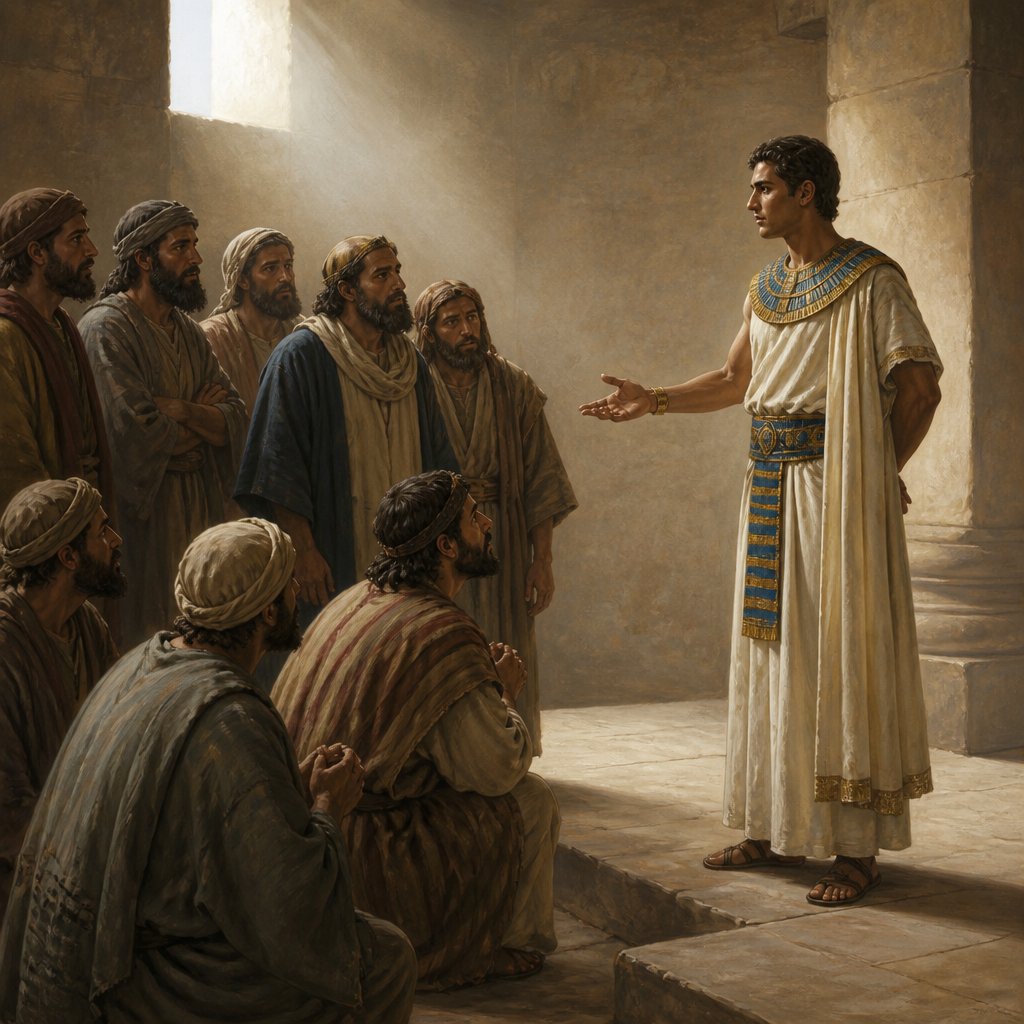
The bible verse Genesis 42:15 from the King James Version (KJV) reads, "Hereby ye shall be proved: By the life of Pharaoh ye shall not go forth hence, except your youngest brother come hither."
This verse is part of the story of Joseph and his brothers, which is an important and well-known narrative in the book of Genesis. The broader context of this verse is the story of Jacob sending his sons to Egypt in search of grain during a severe famine. Joseph, who is in charge of the distribution of food in Egypt, recognizes his brothers when they come to him and devises a plan to test them and see if they have truly changed from the time when they sold him into slavery.
The verse carries several themes that are significant in the narrative. One of the main themes is the idea of testing and proving one's character. Joseph uses the situation to test his brothers' sincerity and willingness to protect their younger brother, Benjamin. This connects to the theme of redemption and forgiveness, as Joseph is looking for evidence that his brothers have repented for their cruel actions towards him and are genuinely remorseful.
Another important theme in this verse is the concept of divine justice and providence. Joseph's actions are guided by a belief in God's plan and the judgment of moral character. By requiring his brothers to bring back Benjamin in order to receive more grain, Joseph is fulfilling a larger purpose ordained by God. This theme emphasizes the idea that God is ultimately in control and orchestrating events for the greater good.
The mention of Pharaoh in the verse is significant as well. It serves as a reminder of the power and authority that Joseph holds in Egypt, as well as the larger political context in which the story is taking place. It also emphasizes the seriousness and urgency of the situation, as the brothers must comply with Joseph's demands in order to secure provisions for their family.
Symbolism in this verse can be found in the role of Benjamin as the youngest brother. As the only remaining son of Rachel, Benjamin holds a special place in Jacob's heart, and his well-being is of utmost importance to the family. He can be seen as a symbol of innocence, vulnerability, and the potential for growth and change. His presence serves as a catalyst for the transformation and reconciliation that will take place within the family.
Overall, Genesis 42:15 is a pivotal verse in the story of Joseph and his brothers, embodying themes of redemption, divine providence, and the testing of character. It also provides a powerful symbol in the form of Benjamin, representing innocence and the potential for change. The verse serves as a reminder of the complexities of human relationships and the power of forgiveness and reconciliation, as well as the belief in a higher, guiding force.
Get our apps


Artwork for Genesis 42:15

Genesis 42:15 - "Hereby ye shall be proved: By the life of Pharaoh ye shall not go forth hence, except your youngest brother come hither."
"Hereby ye shall be proved: By the life of Pharaoh ye shall not go forth hence, except your youngest brother come hither." - Genesis 42:15

Genesis 42:29

Genesis 24-42

Genesis 42:1-2

Joshua 15:42 - "Libnah, and Ether, and Ashan,"

Genesis 42:26 - "And they laded their asses with the corn, and departed thence."

Genesis 42:8 - "And Joseph knew his brethren, but they knew not him."

Genesis 36:42 - "Duke Kenaz, duke Teman, duke Mibzar,"

Genesis 42:17 - "And he put them all together into ward three days."

Genesis 42:3 - "¶ And Joseph's ten brethren went down to buy corn in Egypt."

Genesis 42:31 - "And we said unto him, We are true men; we are no spies:"

"Libnah, and Ether, and Ashan," - Joshua 15:42

Genesis 42:23 - "And they knew not that Joseph understood them; for he spake unto them by an interpreter."

Genesis 41:41-42 focus on signet ring

Genesis 42:12 - "And he said unto them, Nay, but to see the nakedness of the land ye are come."

1 Corinthians 15:42 - "So also is the resurrection of the dead. It is sown in corruption; it is raised in incorruption:"

Mark 15:42 - "¶ And now when the even was come, because it was the preparation, that is, the day before the sabbath,"

Genesis 42:11 - "We are all one man's sons; we are true men, thy servants are no spies."

Genesis 42:14 - "And Joseph said unto them, That is it that I spake unto you, saying, Ye are spies:"

Genesis 42:5 - "And the sons of Israel came to buy corn among those that came: for the famine was in the land of Canaan."

Genesis 42:30 - "The man, who is the lord of the land, spake roughly to us, and took us for spies of the country."

Genesis 42:18 - "And Joseph said unto them the third day, This do, and live; for I fear God:"

Genesis 42:10 - "And they said unto him, Nay, my lord, but to buy food are thy servants come."

"And they laded their asses with the corn, and departed thence." - Genesis 42:26

Genesis 30:42 - "But when the cattle were feeble, he put them not in: so the feebler were Laban's, and the stronger Jacob's."

Genesis 42:32 - "We be twelve brethren, sons of our father; one is not, and the youngest is this day with our father in the land of Canaan."

"Duke Kenaz, duke Teman, duke Mibzar," - Genesis 36:42

"And Joseph knew his brethren, but they knew not him." - Genesis 42:8

Genesis 42:4 - "But Benjamin, Joseph's brother, Jacob sent not with his brethren; for he said, Lest peradventure mischief befall him."