What does Genesis 48:7 mean?
“And as for me, when I came from Padan, Rachel died by me in the land of Canaan in the way, when yet there was but a little way to come unto Ephrath: and I buried her there in the way of Ephrath; the same is Beth-lehem.” — Genesis 48:7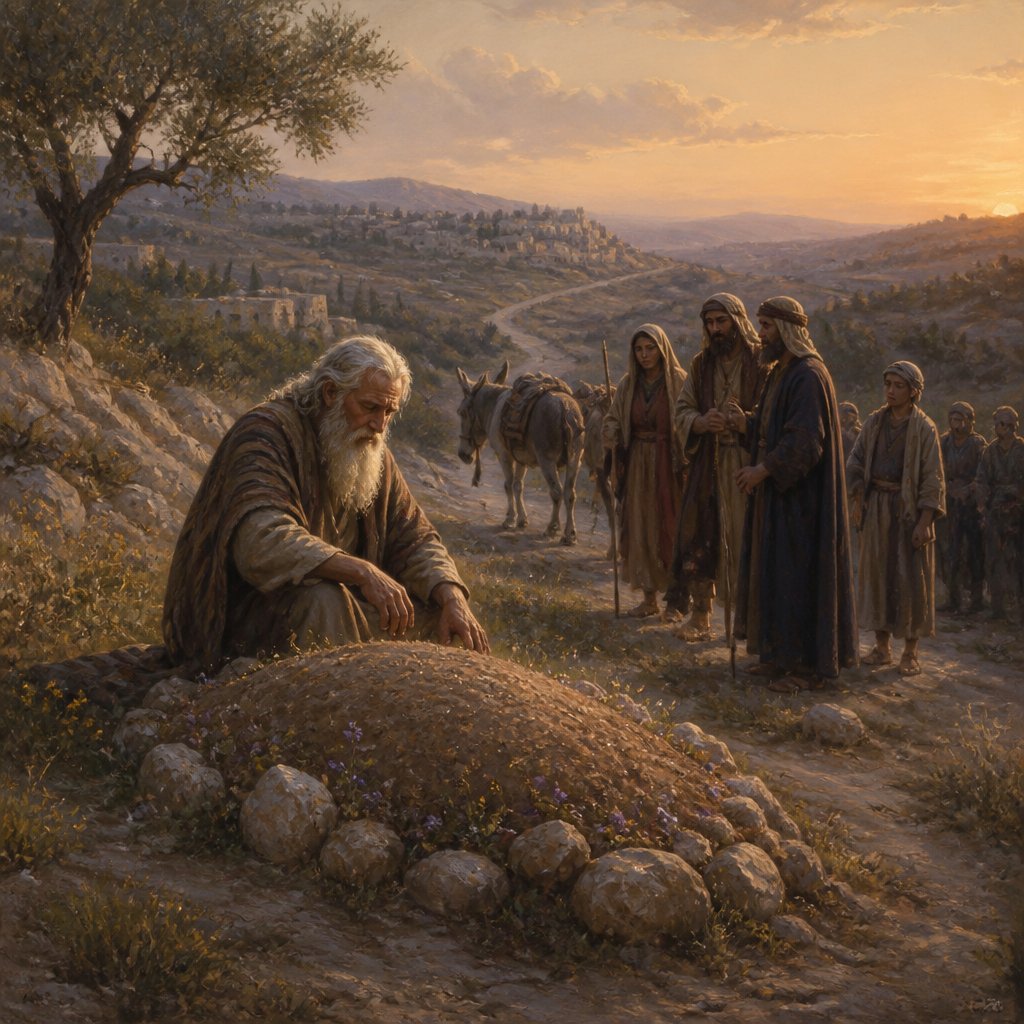
Genesis 48:7 in the King James Version reads, "Now as for me, when I came from Padan, Rachel died by me in the land of Canaan in the way, when yet there was but a little way to come unto Ephrath: and I buried her there in the way of Ephrath; the same is Bethlehem."
This verse is part of the larger narrative in the book of Genesis that recounts the story of the patriarchs of Israel, particularly focusing on the lives of Jacob and his twelve sons. In this particular verse, Jacob is blessing his grandsons, Ephraim and Manasseh, the sons of Joseph. This blessing is significant as it echoes the theme of the passing on of the patriarchal blessing from one generation to the next, which is a recurring theme throughout the book of Genesis.
In this verse, Jacob is reflecting on the memory of his beloved wife, Rachel, who died while giving birth to Benjamin, his youngest son. Rachel's death was a significant event in Jacob's life, and it is clear that he still carries the grief from her passing. By mentioning Rachel's death and burial in this blessing, Jacob is paying homage to her and her importance in his life and in the history of the Israelite people. This also serves as a reminder of the human aspect of these biblical characters, as they grapple with loss and sorrow just as we do today.
The context of this verse is important in understanding its significance. Jacob is nearing the end of his life, and he is passing on his blessings to the next generation. The passing on of the patriarchal blessing was a crucial aspect of ancient Israelite culture, as it represented the transfer of leadership, authority, and spiritual inheritance within the family. By mentioning Rachel's death and burial in this context, Jacob is subtly acknowledging the role that she played in the formation of the Israelite nation, and he is also highlighting the continuity of the family lineage despite the loss of loved ones.
Symbolism plays a significant role in this verse as well. The mention of Rachel's death and burial on the way to Ephrath, which is also known as Bethlehem, holds symbolic meaning. Bethlehem would later become a pivotal location in the biblical narrative, as it is the birthplace of King David, who is a significant figure in Israelite history, and ultimately, the birthplace of Jesus, who is central to the Christian faith. By directing our attention to Rachel's burial in Bethlehem, the verse foreshadows future events and further emphasizes the significance of Rachel and her descendants in the grander scheme of biblical history.
Overall, Genesis 48:7 is a poignant and reflective verse that delves into the themes of loss, remembrance, and continuity. Through Jacob's words, we are reminded of the human experience of grief and our need to honor and remember those who have passed before us. The verse also embodies the theme of the passing on of blessings from one generation to the next, emphasizing the interconnectedness of family and the continuity of the divine plan throughout history. As readers, we are encouraged to recognize and appreciate the impact of those who came before us, and to carry on their legacy as we move forward in our own journeys.
Get our apps


Artwork for Genesis 48:7
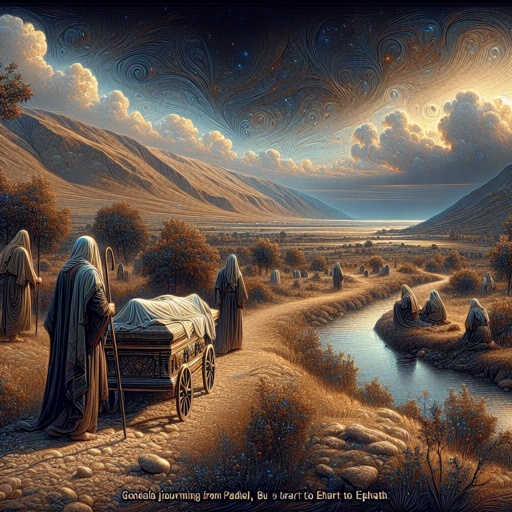
Genesis 48:7 - "And as for me, when I came from Padan, Rachel died by me in the land of Canaan in the way, when yet there was but a little way to come unto Ephrath: and I buried her there in the way of Ephrath; the same is Beth-lehem."
"And as for me, when I came from Padan, Rachel died by me in the land of Canaan in the way, when yet there was but a little way to come unto Ephrath: and I buried her there in the way of Ephrath; the same is Beth-lehem." - Genesis 48:7

Genesis 24-48

Genesis 48:8 - "And Israel beheld Joseph's sons, and said, Who are these?"

Nehemiah 7:48 - "The children of Lebana, the children of Hagaba, the children of Shalmai,"

John 7:48 - "Have any of the rulers or of the Pharisees believed on him?"

Psalms 48:7 - "Thou breakest the ships of Tarshish with an east wind."

Luke 7:48 - "And he said unto her, Thy sins are forgiven."

Genesis 31:48 - "And Laban said, This heap is a witness between me and thee this day. Therefore was the name of it called Galeed;"

Acts 7:48 - "Howbeit the most High dwelleth not in temples made with hands; as saith the prophet,"

Numbers 7:48 - "¶ On the seventh day Elishama the son of Ammihud, prince of the children of Ephraim, offered:"
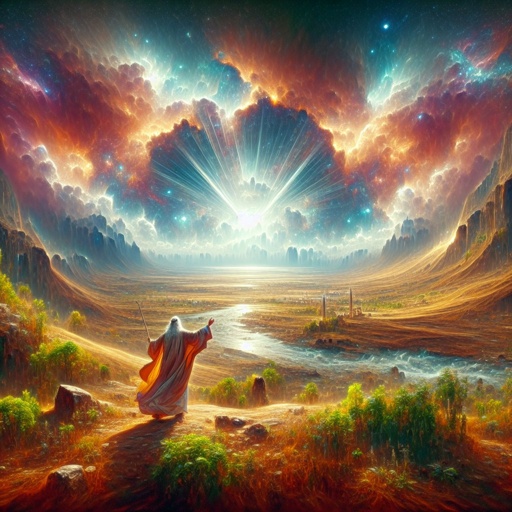
Genesis 48:3 - "And Jacob said unto Joseph, God Almighty appeared unto me at Luz in the land of Canaan, and blessed me,"

Genesis 48:12 - "And Joseph brought them out from between his knees, and he bowed himself with his face to the earth."
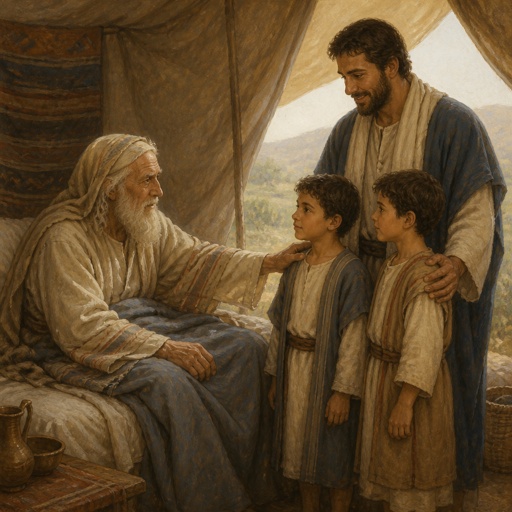
"And Israel beheld Joseph's sons, and said, Who are these?" - Genesis 48:8

Ezekiel 48:7 - "And by the border of Reuben, from the east side unto the west side, a portion for Judah."
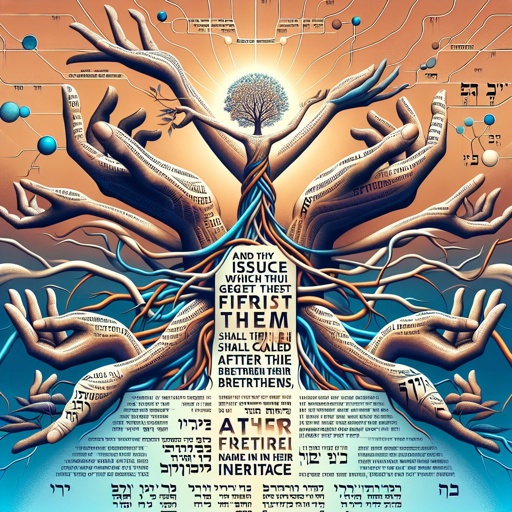
Genesis 48:6 - "And thy issue, which thou begettest after them, shall be thine, and shall be called after the name of their brethren in their inheritance."

Genesis 48:18 - "And Joseph said unto his father, Not so, my father: for this is the firstborn; put thy right hand upon his head."
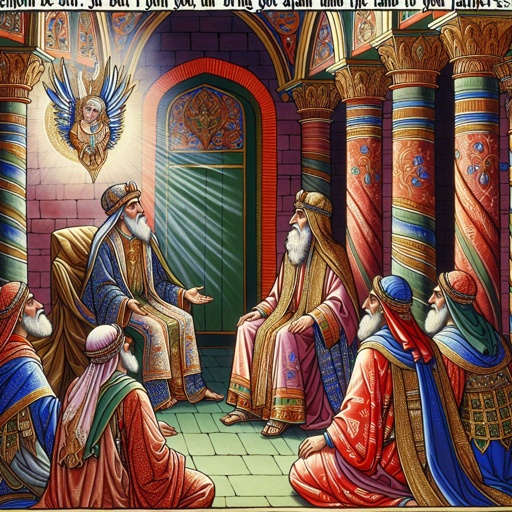
Genesis 48:21 - "And Israel said unto Joseph, Behold, I die: but God shall be with you, and bring you again unto the land of your fathers."

Genesis 48:2 - "And one told Jacob, and said, Behold, thy son Joseph cometh unto thee: and Israel strengthened himself, and sat upon the bed."
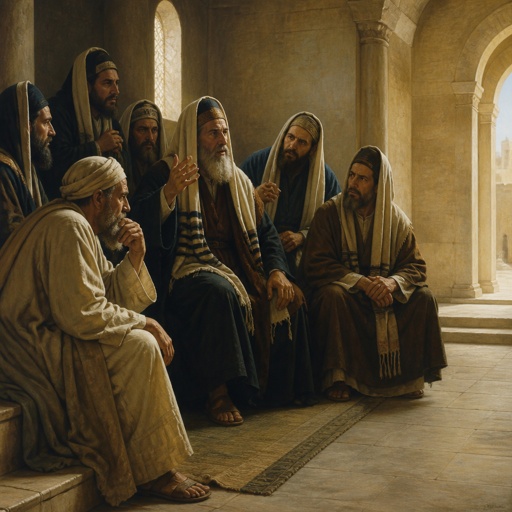
"Have any of the rulers or of the Pharisees believed on him?" - John 7:48
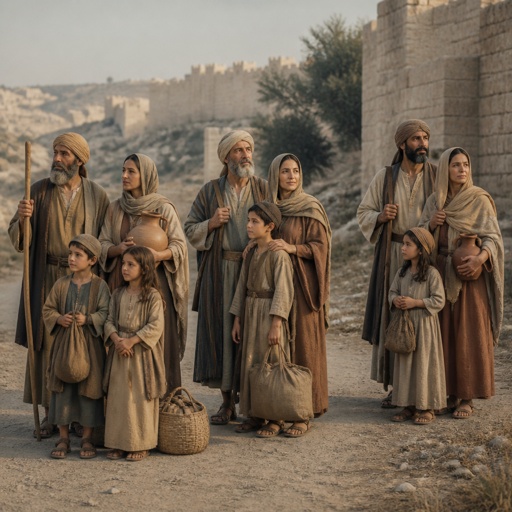
"The children of Lebana, the children of Hagaba, the children of Shalmai," - Nehemiah 7:48
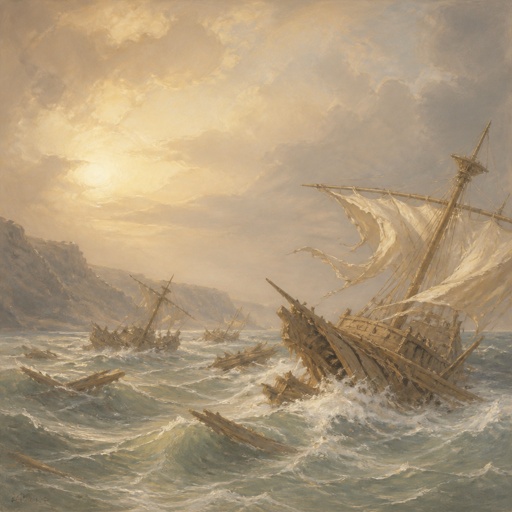
"Thou breakest the ships of Tarshish with an east wind." - Psalms 48:7
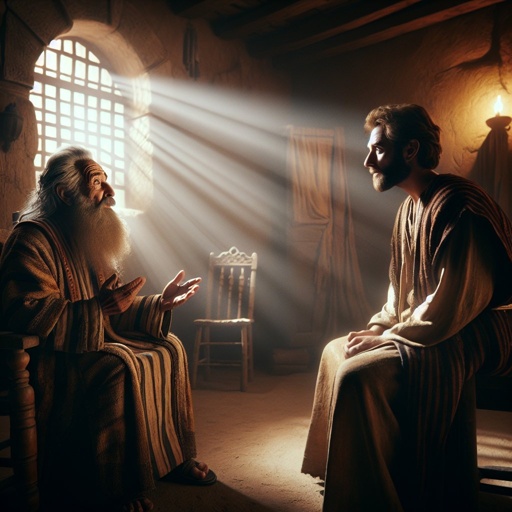
Genesis 48:11 - "And Israel said unto Joseph, I had not thought to see thy face: and, lo, God hath shewed me also thy seed."

1 Kings 7:48 - "And Solomon made all the vessels that pertained unto the house of the LORD: the altar of gold, and the table of gold, whereupon the shewbread was,"
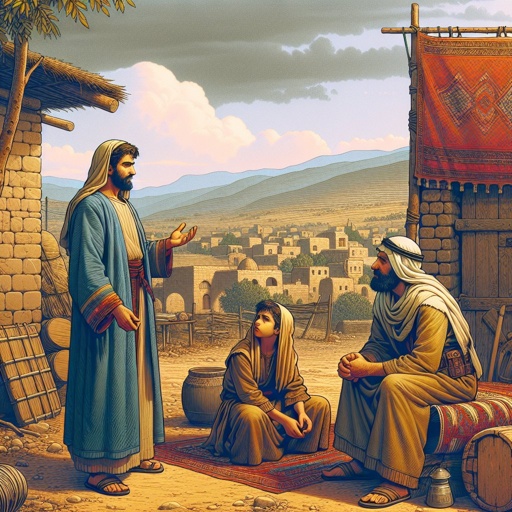
Genesis 48:1 - "And it came to pass after these things, that one told Joseph, Behold, thy father is sick: and he took with him his two sons, Manasseh and Ephraim."

Genesis 48:22 - "Moreover I have given to thee one portion above thy brethren, which I took out of the hand of the Amorite with my sword and with my bow."

Genesis 48:20 - "And he blessed them that day, saying, In thee shall Israel bless, saying, God make thee as Ephraim and as Manasseh: and he set Ephraim before Manasseh."
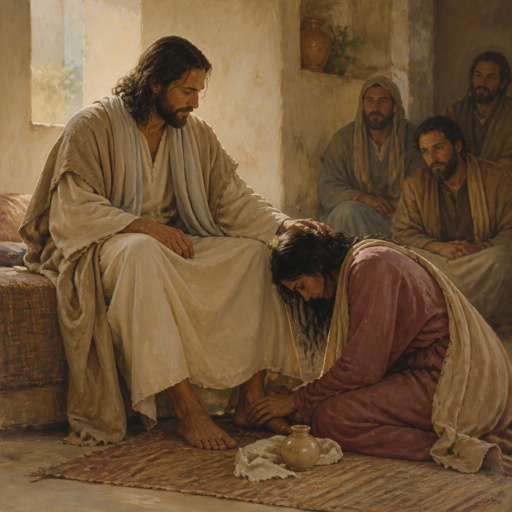
"And he said unto her, Thy sins are forgiven." - Luke 7:48

Genesis 48:10 - "Now the eyes of Israel were dim for age, so that he could not see. And he brought them near unto him; and he kissed them, and embraced them."
Genesis 48:15 - "¶ And he blessed Joseph, and said, God, before whom my fathers Abraham and Isaac did walk, the God which fed me all my life long unto this day,"