What does Genesis 4:2 mean?
"And she again bare his brother Abel. And Abel was a keeper of sheep, but Cain was a tiller of the ground." - Genesis 4:2
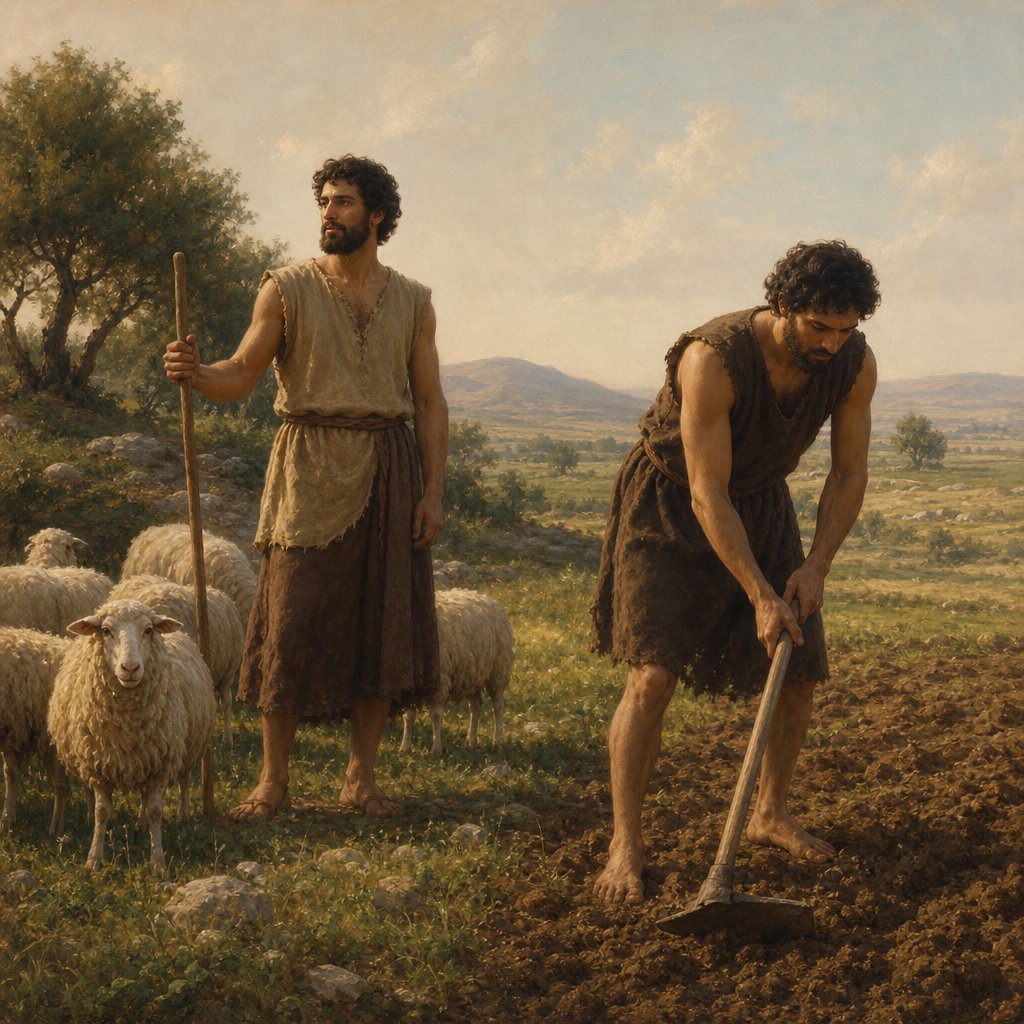
Genesis 4:2 in the King James Version of the Bible reads, "And she again bare his brother Abel. And Abel was a keeper of sheep, but Cain was a tiller of the ground."
This verse is part of the story of Cain and Abel, the first two sons of Adam and Eve. The verse takes place shortly after the fall of humanity in the Garden of Eden, and it sets the stage for the tragic events that will unfold between the two brothers. This verse also provides insight into the contrasting natures of the brothers and their differing roles in society.
The story of Cain and Abel is ultimately a morality tale, depicting the ruinous consequences of envy, rage, and the failure to live up to God's expectations. As the narrative unfolds in the subsequent verses, Cain becomes consumed by jealousy and resentment towards Abel, leading him to commit the first act of murder recorded in the Bible.
In Genesis 4:2, we see the beginnings of the brothers' respective occupations. Abel is described as a "keeper of sheep," while Cain is a "tiller of the ground." These descriptions not only highlight their differing roles but also serve to symbolize broader themes and connotations.
The occupation of Abel as a "keeper of sheep" can be seen as symbolic of purity, innocence, and sacrifice. Throughout the Bible, sheep are often used to represent followers of God, and they are frequently employed as sacrificial animals in religious rituals. Therefore, Abel's occupation as a shepherd may foreshadow his role as an innocent and virtuous figure who ultimately becomes a sacrificial victim.
On the other hand, Cain's occupation as a "tiller of the ground" conveys a connection to the earth and agricultural labor. This occupation is often associated with hard work, toil, and the challenges of maintaining the land. The ground itself plays a significant role in the story, as it becomes the site of both brothers' offerings to God and ultimately becomes the instrument of Abel's murder.
Furthermore, the occupations of the two brothers can also be interpreted symbolically in terms of their characters and moral standing. Abel's role as a shepherd may suggest his moral purity and closeness to God, while Cain's role as a farmer may hint at his worldly concerns and a lack of spiritual depth.
The symbolic implications of the brothers' occupations are further reflected in the events that unfold in the following verses. Cain's offering of the fruits of the ground is rejected by God, while Abel's offering of the firstlings of his flock is accepted. This rejection serves as a catalyst for Cain's jealousy and anger, leading to the tragic outcome of the story.
The contrasting roles of Cain and Abel in Genesis 4:2 also have broader thematic implications. The story can be seen as an exploration of the nature of sibling rivalry, the consequences of sin, and the themes of justice and forgiveness. It also serves as a cautionary tale about the destructive power of envy and the importance of maintaining a righteous and obedient relationship with God.
In conclusion, Genesis 4:2, with its depiction of the differing occupations of Cain and Abel, serves as a starting point for the tragedy that unfolds between the two brothers. The verse is rich with symbolism, foreshadowing the moral and spiritual implications of their actions and the fatal consequences of Cain's jealousy. Ultimately, the story of Cain and Abel stands as a powerful and enduring lesson about the destructive nature of sin and the importance of living in accordance with God's will.
Have questions about Genesis 4:2?
Dive deeper into this scripture with Bible Chat — an AI-powered tool for exploring God's Word through conversation. Ask questions, get context, and grow in your understanding of the Bible.
Get Our Apps


Genesis 4:2 Artwork

Genesis 4:2 - "And she again bare his brother Abel. And Abel was a keeper of sheep, but Cain was a tiller of the ground."
"And she again bare his brother Abel. And Abel was a keeper of sheep, but Cain was a tiller of the ground." - Genesis 4:2

Genesis 2:4 - "¶ These are the generations of the heavens and of the earth when they were created, in the day that the LORD God made the earth and the heavens,"

Genesis 23-4

Genesis 20-4

Genesis 21-4

Genesis 17:4

Genesis 22-4

Genesis 18-4

Genesis 6:4

Genesis 6: 4

Genesis 19-4

Genesis 29-4

Genesis 25-4

Genesis 16:4

Genesis 1:4

Genesis 24-4

"¶ These are the generations of the heavens and of the earth when they were created, in the day that the LORD God made the earth and the heavens," - Genesis 2:4

Genesis 10:4 - "And the sons of Javan; Elishah, and Tarshish, Kittim, and Dodanim."

Genesis 2:1-2

Genesis 2:1-2

Genesis 4:4 - "And Abel, he also brought of the firstlings of his flock and of the fat thereof. And the LORD had respect unto Abel and to his offering:"

Genesis 14:4 - "Twelve years they served Chedorlaomer, and in the thirteenth year they rebelled."

Genesis 36:4 - "And Adah bare to Esau Eliphaz; and Bashemath bare Reuel;"

Genesis 4:24 - "If Cain shall be avenged sevenfold, truly Lamech seventy and sevenfold."

Genesis 3:4 - "And the serpent said unto the woman, Ye shall not surely die:"

Genesis 31:4 - "And Jacob sent and called Rachel and Leah to the field unto his flock,"

2 Corinthians 4:4

2 Corinthians 4:4

Genesis 1:4 - "And God saw the light, that it was good: and God divided the light from the darkness."