What does Genesis 4:4 mean?
"And Abel, he also brought of the firstlings of his flock and of the fat thereof. And the LORD had respect unto Abel and to his offering:" - Genesis 4:4
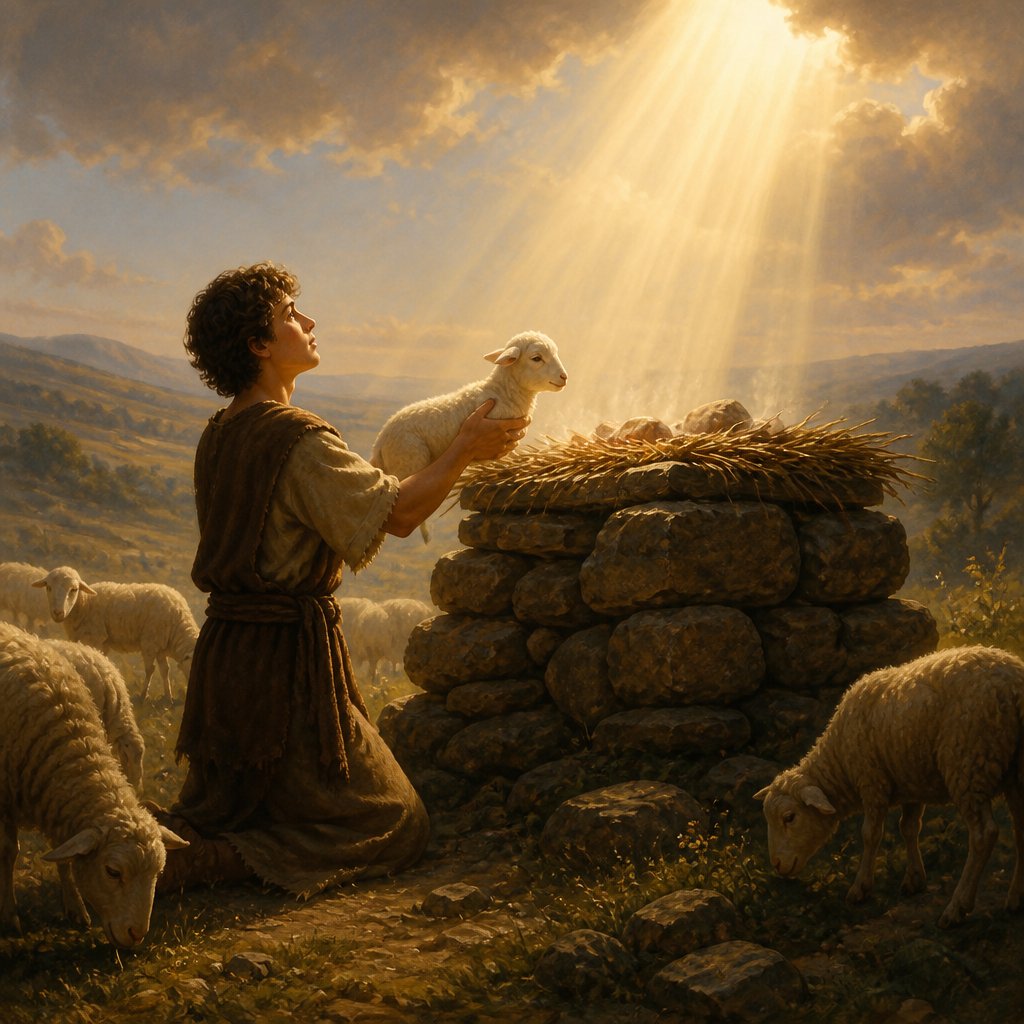
Genesis 4:4 (KJV) reads: "And Abel, he also brought of the firstlings of his flock and of the fat thereof. And the Lord had respect unto Abel and to his offering."
This verse comes from the story of Cain and Abel, the sons of Adam and Eve. It is a pivotal moment in the narrative, as it marks the beginning of the conflict between the two brothers that ultimately leads to the first murder in human history. The verse serves as a crucial turning point in the story, as it sets the stage for the tragic events that follow.
In order to fully understand the meaning and significance of this verse, it is important to consider the context in which it is set. In the preceding verses, we are told that Cain, a tiller of the ground, brought an offering to the Lord from the fruit of the ground. Abel, a keeper of sheep, also brought an offering from his flock. It is in this context that we are introduced to the offerings made by each brother.
The verse begins with Abel bringing the firstlings of his flock and the fat thereof as an offering to the Lord. This act demonstrates Abel's recognition of God as the provider of all good things and his desire to honor God with the best of what he has. The fact that Abel brought the first and best of his flock indicates his heartfelt devotion to God and a desire to please Him.
The verse then goes on to tell us that the Lord had respect unto Abel and his offering. This signifies that God looked upon Abel's offering with favor and approval. This is a crucial moment in the story, as it establishes the idea that the nature of the offering is important to God. It shows that God values a sincere and sacrificial heart, and that He desires offerings made with reverence and gratitude.
On the other hand, the acceptance of Abel's offering and the rejection of Cain's offering serves as a catalyst for Cain's jealousy and anger, which ultimately leads to the tragic murder of his brother. This sets the stage for the exploration of themes such as envy, anger, and the consequences of sin.
Additionally, this verse also serves as a foreshadowing of the ultimate sacrifice that would be made by Jesus Christ. The offering made by Abel prefigures the sacrificial system that would later be established in the Mosaic law, which required the blood of animals for the atonement of sins. Furthermore, it points to the ultimate sacrifice of Jesus Christ, who would offer Himself as the perfect and complete atonement for the sins of humanity.
In terms of symbolism, Abel's offering of the firstlings of his flock and the fat thereof can be seen as a representation of a heart that is fully surrendered to God. The firstlings represent the best and finest of what Abel had to offer, while the fat symbolizes the richness and abundance of his sacrifice. This stands in contrast to Cain's offering, which was not given with the same level of sincerity and devotion.
In conclusion, Genesis 4:4 is a pivotal verse in the biblical narrative, as it sets the stage for the tragic events that follow. It demonstrates the importance of heartfelt devotion and sacrifice in one's relationship with God, as well as the consequences of envy and anger. It also serves as a foreshadowing of the ultimate sacrifice of Jesus Christ. This verse continues to hold profound significance for believers, as it reminds us of the importance of offering our best to God and the ultimate sacrifice made on our behalf.
Have questions about Genesis 4:4?
Dive deeper into this scripture with Bible Chat — an AI-powered tool for exploring God's Word through conversation. Ask questions, get context, and grow in your understanding of the Bible.
Get Our Apps


Genesis 4:4 Artwork

Genesis 4:4 - "And Abel, he also brought of the firstlings of his flock and of the fat thereof. And the LORD had respect unto Abel and to his offering:"
"And Abel, he also brought of the firstlings of his flock and of the fat thereof. And the LORD had respect unto Abel and to his offering:" - Genesis 4:4

Genesis 6:4

Genesis 6: 4

Genesis 29-4

Genesis 19-4

Genesis 25-4

Genesis 16:4

Genesis 1:4

Genesis 24-4

Genesis 23-4

Genesis 20-4

Genesis 21-4

Genesis 17:4

Genesis 22-4

Genesis 18-4

Genesis 10:4 - "And the sons of Javan; Elishah, and Tarshish, Kittim, and Dodanim."

Genesis 14:4 - "Twelve years they served Chedorlaomer, and in the thirteenth year they rebelled."

Genesis 36:4 - "And Adah bare to Esau Eliphaz; and Bashemath bare Reuel;"

Genesis 4:24 - "If Cain shall be avenged sevenfold, truly Lamech seventy and sevenfold."

Genesis 3:4 - "And the serpent said unto the woman, Ye shall not surely die:"

Genesis 31:4 - "And Jacob sent and called Rachel and Leah to the field unto his flock,"

Genesis 1:4 - "And God saw the light, that it was good: and God divided the light from the darkness."

Genesis 4:20 - "And Adah bare Jabal: he was the father of such as dwell in tents, and of such as have cattle."

Genesis 9:4 - "But flesh with the life thereof, which is the blood thereof, shall ye not eat."

Genesis 17:4 - "As for me, behold, my covenant is with thee, and thou shalt be a father of many nations."

Genesis 8:4 - "And the ark rested in the seventh month, on the seventeenth day of the month, upon the mountains of Ararat."

Genesis 4:21 - "And his brother's name was Jubal: he was the father of all such as handle the harp and organ."

Genesis 38:4 - "And she conceived again, and bare a son; and she called his name Onan."

Genesis 4:13 - "And Cain said unto the LORD, My punishment is greater than I can bear."