What does Genesis 50:16 mean?
“And they sent a messenger unto Joseph, saying, Thy father did command before he died, saying,” — Genesis 50:16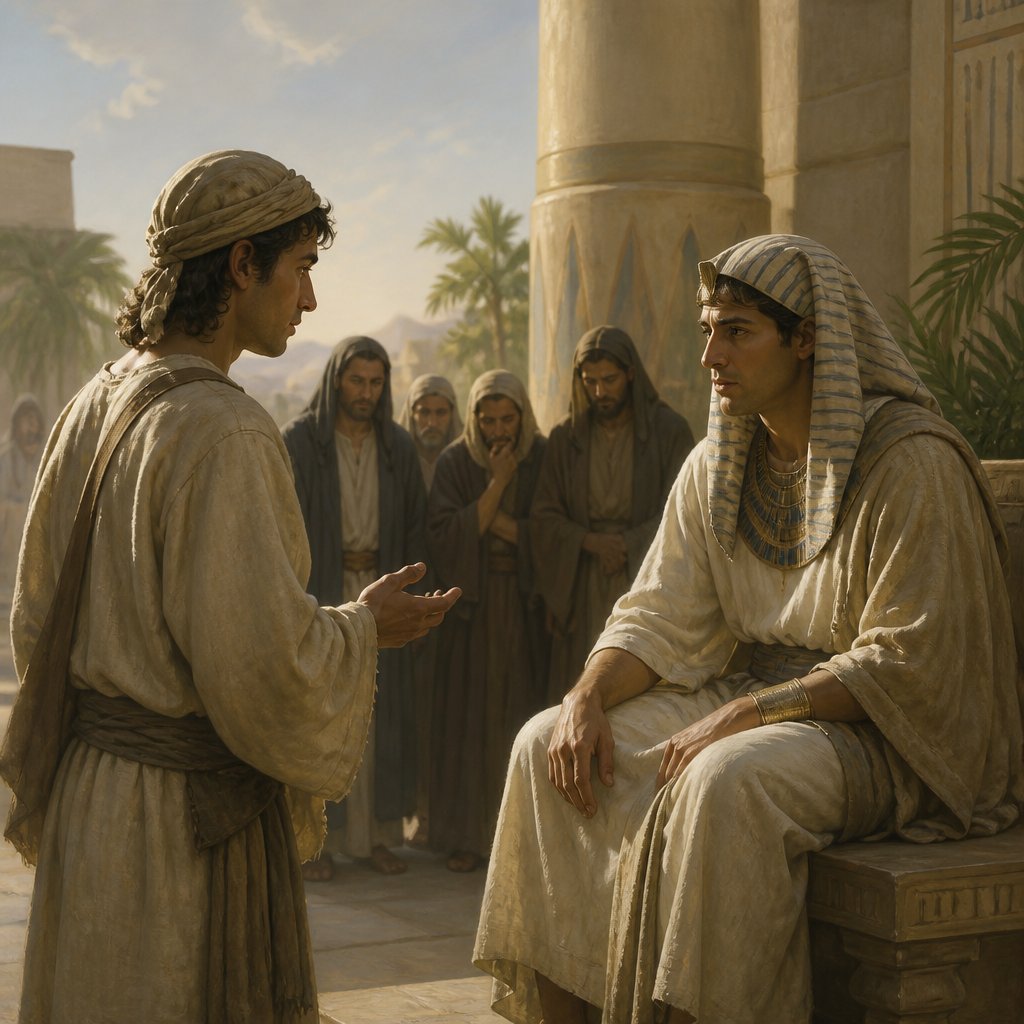
Genesis 50:16 (KJV) reads: "And they sent a messenger unto Joseph, saying, Thy father did command before he died, saying." This verse comes from the book of Genesis, which is the first book of the Bible, and specifically from the final chapter of the book. This verse is part of the story of Joseph, who was the son of Jacob and Rachel and was sold into slavery by his own brothers. However, through divine intervention and his ability to interpret dreams, Joseph rises to a position of power in Egypt. Eventually, Joseph's brothers come to Egypt seeking food during a famine, and they encounter Joseph, who reveals himself to them and forgives them for their past actions.
The verse in question takes place after the death of their father, Jacob. Joseph's brothers, feeling guilty about their past actions, send a message to Joseph, claiming that their father had instructed Joseph to forgive them. This is a moment of vulnerability and fear for Joseph's brothers, as they are concerned about Joseph seeking revenge now that their father is no longer there to protect them.
This verse is significant as it reflects the themes of forgiveness, reconciliation, and the power of family relationships. After years of separation and betrayal, Joseph and his brothers are finally able to come together and seek reconciliation. This verse shows the power of forgiveness in the face of deep hurt and betrayal. It also demonstrates the importance of family and the enduring bonds that tie siblings together, despite past grievances.
The context of this verse is important for understanding its significance. Throughout the story of Joseph, themes of God's providence, forgiveness, and the importance of family are prevalent. Joseph's ability to interpret dreams and rise to power in Egypt is seen as a sign of God's guidance and favor. Additionally, the reconciliation between Joseph and his brothers is a testament to the power of forgiveness and the ability to move beyond past wrongs.
Symbolism can also be found in this verse. The message sent by Joseph's brothers can be seen as a symbol of their desire for reconciliation and their attempt to make amends for their past actions. Additionally, the death of Jacob symbolizes the passing of an era and the opportunity for a new beginning for Joseph and his brothers. The verse can also be seen as a symbol of the power of forgiveness and the ability to let go of past hurts in order to move forward.
In conclusion, Genesis 50:16 (KJV) is a significant verse within the larger narrative of Joseph and his brothers. It reflects the themes of forgiveness, reconciliation, and the enduring power of family relationships. The context of the verse and its symbolism further underscore its importance within the biblical narrative. This verse teaches us about the power of forgiveness and the importance of family, and it continues to resonate with readers as a powerful example of reconciliation and healing.
Get our apps


Artwork for Genesis 50:16

Genesis 50:16 - "And they sent a messenger unto Joseph, saying, Thy father did command before he died, saying,"
"And they sent a messenger unto Joseph, saying, Thy father did command before he died, saying," - Genesis 50:16

Genesis 24-50

Genesis 50:26

Genesis 50:25

Genesis 50:25

Genesis 50:26

Genesis 50:26

Genesis 50:26

Genesis 50:25

Genesis 50:12 - "And his sons did unto him according as he commanded them:"

Genesis 50:19 - "And Joseph said unto them, Fear not: for am I in the place of God?"

Create a coffin for Joseph Genesis 50:26

Genesis 50:1 - "And Joseph fell upon his father's face, and wept upon him, and kissed him."

Numbers 16:50 - "And Aaron returned unto Moses unto the door of the tabernacle of the congregation: and the plague was stayed."

Genesis 50:9 - "And there went up with him both chariots and horsemen: and it was a very great company."

Genesis 50:22 - "¶ And Joseph dwelt in Egypt, he, and his father's house: and Joseph lived an hundred and ten years."

Genesis 50:2 - "And Joseph commanded his servants the physicians to embalm his father: and the physicians embalmed Israel."

Genesis 50:6 - "And Pharaoh said, Go up, and bury thy father, according as he made thee swear."

Genesis 50:18 - "And his brethren also went and fell down before his face; and they said, Behold, we be thy servants."

Genesis 50:26 - "So Joseph died, being an hundred and ten years old: and they embalmed him, and he was put in a coffin in Egypt."

Genesis 50:20 - "But as for you, ye thought evil against me; but God meant it unto good, to bring to pass, as it is this day, to save much people alive."

Ezekiel 16:50 - "And they were haughty, and committed abomination before me: therefore I took them away as I saw good."

Genesis 50:3 - "And forty days were fulfilled for him; for so are fulfilled the days of those which are embalmed: and the Egyptians mourned for him threescore and ten days."

Genesis 24:50 - "Then Laban and Bethuel answered and said, The thing proceedeth from the LORD: we cannot speak unto thee bad or good."

Genesis 50:25 - "And Joseph took an oath of the children of Israel, saying, God will surely visit you, and ye shall carry up my bones from hence."

Genesis 50:8 - "And all the house of Joseph, and his brethren, and his father's house: only their little ones, and their flocks, and their herds, they left in the land of Goshen."

Genesis 50:7 - "¶ And Joseph went up to bury his father: and with him went up all the servants of Pharaoh, the elders of his house, and all the elders of the land of Egypt,"

Genesis 50:14 - "¶ And Joseph returned into Egypt, he, and his brethren, and all that went up with him to bury his father, after he had buried his father."

Genesis 50:21 - "Now therefore fear ye not: I will nourish you, and your little ones. And he comforted them, and spake kindly unto them."