What does Genesis 9:20 mean?
“And Noah began to be an husbandman, and he planted a vineyard:” — Genesis 9:20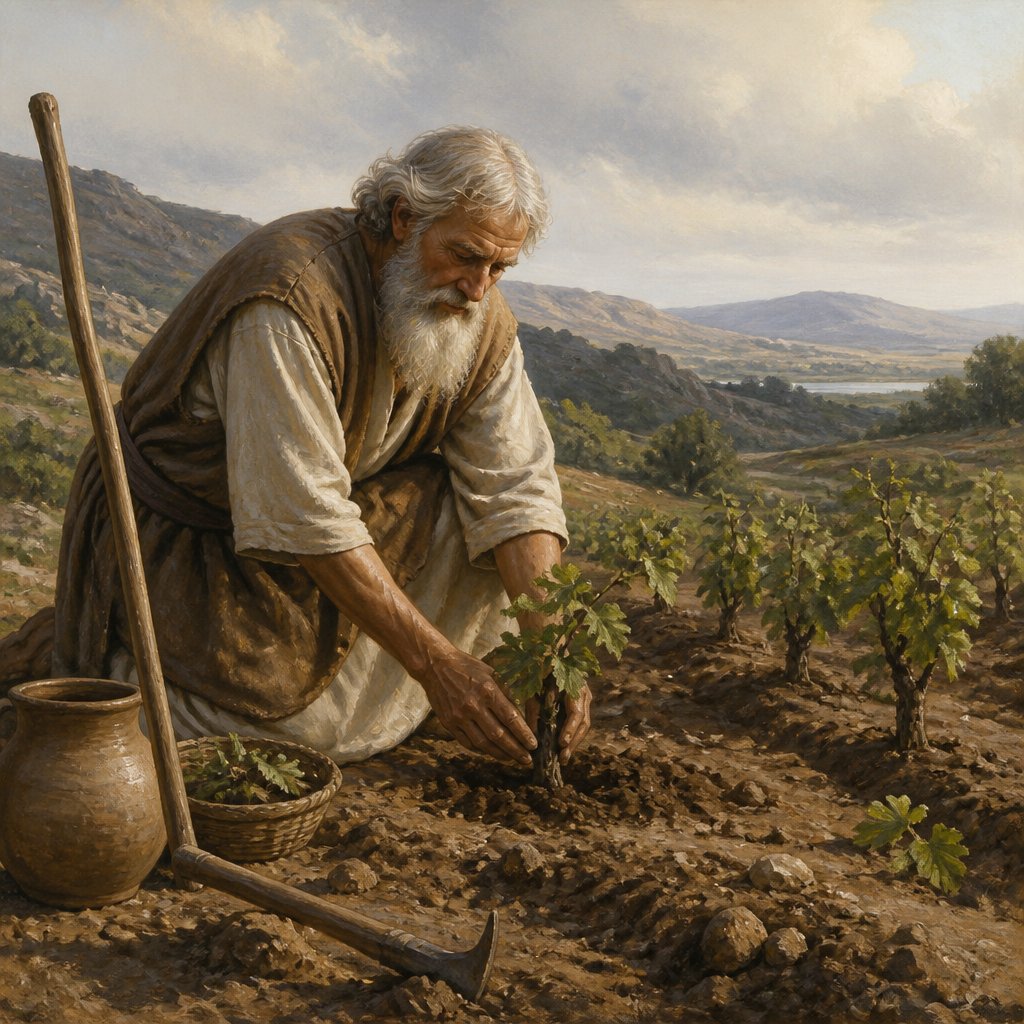
Genesis 9:20 "And Noah began to be an husbandman, and he planted a vineyard."
This verse comes from the book of Genesis in the Old Testament, which is often thought of as the foundation of the entire Bible. It tells the story of the beginning of the world, the creation of man, and the early history of the human race. In this verse, we see Noah, who has just survived the great flood, beginning a new chapter in his life as a farmer.
The context of this verse is important to understanding its meaning. To fully appreciate its significance, we need to go back to earlier in the chapter. In the preceding verses, we read about God's covenant with Noah and his sons, promising never again to destroy the earth with a flood. As a sign of this covenant, God gives the rainbow as a symbol of his promise. The covenant demonstrates God's mercy and grace towards humanity, despite our sinfulness. This sets the stage for the narrative of Noah's new life as a husbandman, or farmer.
The theme of renewal and new beginnings is central to this verse. After the devastation of the flood, Noah is entrusted with the task of replenishing the earth and starting anew. The planting of a vineyard can be seen as a metaphor for the act of faith in the future, and the hope for a better world. It also suggests the importance of hard work and perseverance, as Noah must have faced many challenges in cultivating the land after the flood.
This verse can also be seen as symbolic of the human condition. Just as Noah planted a vineyard to sustain himself and his family, it reflects the human desire for sustenance and self-sufficiency. It also reminds us of our dependence on the earth and its resources for our survival. The act of tilling the ground and growing crops can be seen as a metaphor for the human struggle to make a living and provide for our families.
The symbolism of the vineyard itself is significant in the Bible. Throughout the scriptures, the vineyard is often used as a symbol of God's people. In Isaiah 5:7, for example, the vineyard is a metaphor for the nation of Israel. In the New Testament, Jesus uses the image of the vineyard in several parables to teach spiritual lessons. In this context, Noah's planting of a vineyard can be seen as a foreshadowing of the role of his descendants in God's plan for the world.
The verse also teaches us the importance of agriculture and the stewardship of the earth. As a husbandman, Noah is responsible for caring for the land and ensuring its productivity. This reflects the biblical principle of stewardship, where humans are called to responsibly manage the resources that God has given us. It reminds us of our duty to protect and preserve the natural world, and to use its resources wisely.
In conclusion, Genesis 9:20 is a verse rich in symbolism and meaning. It reflects the themes of renewal, self-sufficiency, and stewardship, while also pointing towards God's covenant with humanity. It reminds us of our connection to the earth and the importance of hard work and perseverance. It also foreshadows the role of Noah's descendants in God's plan for the world. Ultimately, this verse serves as a reminder of God's faithfulness and mercy, even in the midst of devastation.
Get our apps


Artwork for Genesis 9:20

Genesis 9:20 - "And Noah began to be an husbandman, and he planted a vineyard:"
"And Noah began to be an husbandman, and he planted a vineyard:" - Genesis 9:20

Genesis 20:9

Genesis 20

Genesis 20-18

Genesis 20-16

Genesis 15:20

Genesis 20-1

Genesis 20-15

Genesis 20-4

Genesis 20-13

Genesis 20-17
Genesis 20-3

Genesis 19-20

Genesis 18-20

Genesis 20-19

Genesis 23-20

Genesis 20-7

Genesis 20-8

Genesis 28-20

Genesis 20-12

Genesis 20-10
Genesis 20-11

Genesis 20-2

Genesis 22-20

Genesis 21-20

Genesis 20-6

Genesis 24-20

Genesis 20-5

Genesis 20-14