What does Habakkuk 2:1 mean?
“I will stand upon my watch, and set me upon the tower, and will watch to see what he will say unto me, and what I shall answer when I am reproved.” — Habakkuk 2:1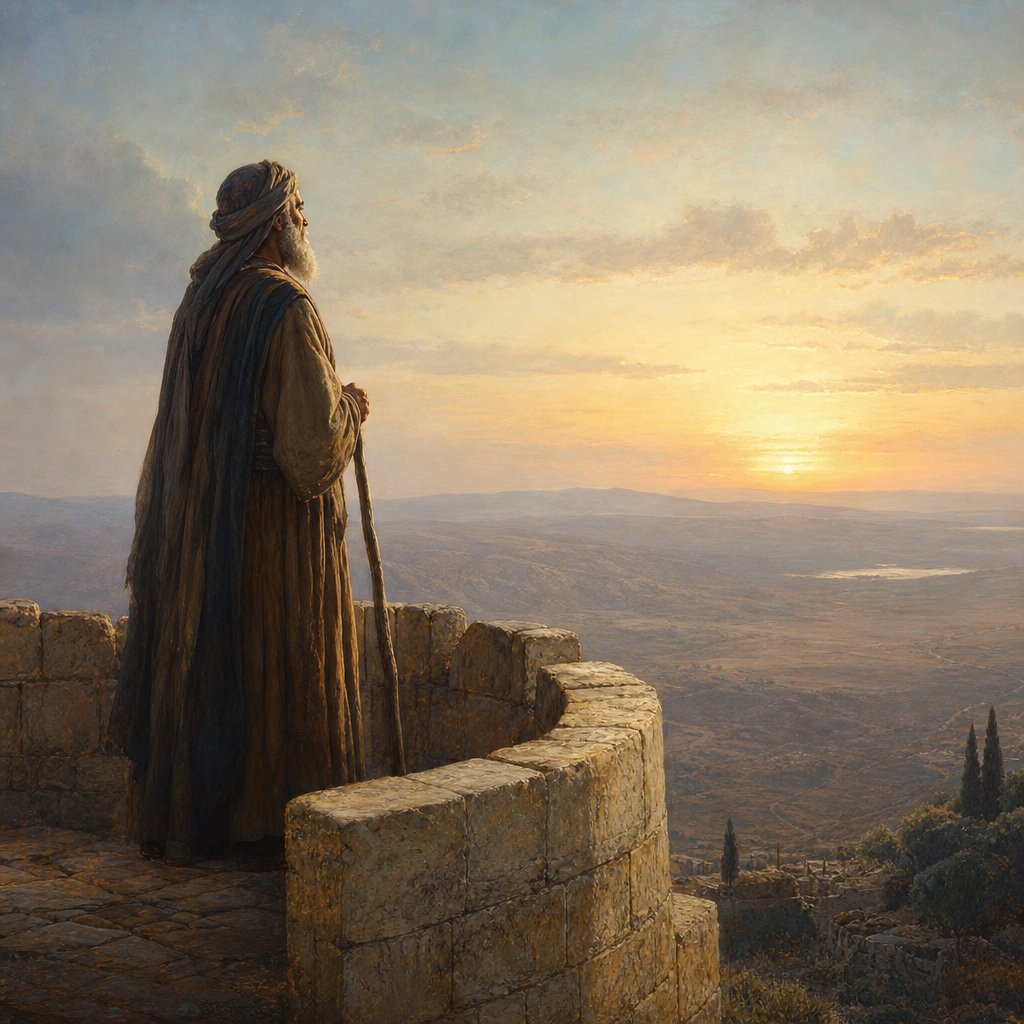
Habakkuk 2:1 in the King James Version reads, “I will stand upon my watch, and set me upon the tower, and will watch to see what he will say unto me, and what I shall answer when I am reproved.” In prose, it is the prophet describing a deliberate, reverent posture of waiting for God’s reply after he has poured out his perplexities and complaints. Habakkuk has been wrestling with the apparent triumph of violence and injustice in Judah and, even more troubling to him, with the Lord’s declaration that He will use the Chaldeans as an instrument of judgment. Chapter 1 is filled with the prophet’s questions—why God seems to tolerate wrong, and how a holy God can employ a nation more wicked than Judah to correct Judah. Chapter 2 opens with Habakkuk choosing not to argue endlessly in the dark but to take his place as a watchman, expecting that God will speak, and preparing his own response once God corrects him.
The language of “watch” and “tower” draws from the imagery of a sentinel posted on a city wall. In the ancient world the watchman’s job was to stay awake, keep his vantage point, scan the horizon, and interpret signs—dust clouds, movement, distant messengers—so that the city might be warned and guided. Habakkuk borrows that vocational picture for a spiritual reality. He will “stand upon” his watch, meaning he takes up an assigned duty rather than a casual moment of devotion. He “sets” himself “upon the tower,” which suggests intention and discipline: he positions his soul where he can see and hear clearly, away from the noise below. The prophet is not claiming a literal stone tower is necessary for revelation; the tower functions symbolically as elevation—clarity, perspective, sobriety, and separation unto God—so he can discern the Lord’s answer with patience. This is what faithful inquiry looks like in Scripture: not unbelieving accusation, but watchful waiting that expects the Lord to speak and is willing to be taught.
The verse also reveals that Habakkuk understands his conversation with God is not on equal terms. He says he will “watch to see what he will say unto me,” which treats God’s response as certain and authoritative; yet he adds, “and what I shall answer when I am reproved.” The word “reproved” is crucial to the meaning. Habakkuk anticipates correction. He admits that even a sincere prophet can misunderstand God’s ways, and that the divine answer may expose flawed assumptions in his complaint. This is not merely Habakkuk preparing a clever rebuttal; it is a confession that the Lord may show him where his reasoning needs adjustment. The prophet’s readiness to be reproved is itself an act of humility and faith. He is prepared to answer in the sense of responding rightly—aligning himself with what God reveals—even if that response requires repentance of attitude, recalibration of expectations, or deeper trust where sight is lacking.
Seen in its wider context, Habakkuk 2:1 is the hinge between the prophet’s questions and God’s famous reply that unfolds immediately afterward. In the verses that follow (still within the KJV), the Lord commands Habakkuk to write the vision plainly and declares that though it seems to tarry, it will surely come. The Lord contrasts the proud soul that is not upright with the central statement, “the just shall live by his faith.” That theme is prepared for by Habakkuk’s posture in 2:1. Before faith is defined in words, it is embodied in the watchman’s stance: waiting, listening, and submitting. Habakkuk is not told to stop asking; he is shown how to ask. He brings his moral confusion to God, then stations himself to receive God’s moral interpretation of history—an interpretation that will include both judgment upon Judah and eventual judgment upon the Chaldeans. The tower, then, is not escape from the world’s turmoil but a place from which the prophet learns how God governs it.
The symbolism can be pressed further without leaving the verse. To “stand” conveys steadiness and perseverance; the prophet will not drift away because the answer delays. To “watch” conveys vigilance; Habakkuk expects meaning, not silence, even if the meaning arrives in God’s time. To “see what he will say” blends sight and speech, suggesting that God’s word is something to be perceived with spiritual understanding, not merely heard as sound. Prophetic revelation in Scripture often comes as “vision,” and Habakkuk’s phrasing anticipates that what God says will be grasped as a kind of seeing. Finally, the mention of “answer” implies that revelation carries responsibility. Habakkuk is not waiting for information alone; he is waiting for instruction that will govern how he speaks and lives, and eventually how he will declare God’s message to others.
The significance of Habakkuk 2:1, then, is that it models the faithful posture of a believer caught between troubling realities and an as-yet-unseen divine resolution. It acknowledges that God welcomes honest lament, but it also insists that the human heart must be willing to be corrected by God’s wisdom. The verse places spiritual inquiry under the discipline of watchfulness and submission. Habakkuk does not manufacture his own answer to the crisis; he waits for the Lord’s word, ready to receive reproof and to respond in obedience. In doing so, he becomes an emblem of the larger message of the book: God’s ways may be higher than our immediate moral calculus, His timing may test us, and yet the right place for the just is still the watchtower of faith—steadfast, attentive, and teachable before the living God.
Get our apps


Artwork for Habakkuk 2:1

Habakkuk 2:1-3

"I will stand upon my watch, and set me upon the tower, and will watch to see what he will say unto me, and what I shall answer when I am reproved." - Habakkuk 2:1

Habakkuk 2:1 - "I will stand upon my watch, and set me upon the tower, and will watch to see what he will say unto me, and what I shall answer when I am reproved."
"I will stand upon my watch, and set me upon the tower, and will watch to see what he will say unto me, and what I shall answer when I am reproved." - Habakkuk 2:1

Habakkuk 1:1 - "The burden which Habakkuk the prophet did see."

"The burden which Habakkuk the prophet did see." - Habakkuk 1:1

Habakkuk 3:1 - "A prayer of Habakkuk the prophet upon Shigionoth."

"A prayer of Habakkuk the prophet upon Shigionoth." - Habakkuk 3:1

"A prayer of Habakkuk the prophet upon Shigionoth." - Habakkuk 3:1
![For the vision [is] yet for an appointed time, but at the end it shall speak, and not lie: though it tarry, wait for it; because it will surely come, it will not tarry.
Habakkuk 2:3
https://bible.art/verse/habakkuk-2:3](https://media.bible.art/d8f47f50-dcfd-4ed4-802f-e18a941d0e1c-thumbnail.jpg)
For the vision [is] yet for an appointed time, but at the end it shall speak, and not lie: though it tarry, wait for it; because it will surely come, it will not tarry. Habakkuk 2:3 https://bible.art/verse/habakkuk-2:3

Habakkuk 1:2 - "O LORD, how long shall I cry, and thou wilt not hear! even cry out unto thee of violence, and thou wilt not save!"

Habakkuk 2:12 - "¶ Woe to him that buildeth a town with blood, and stablisheth a city by iniquity!"

Habakkuk 1:7 - "They are terrible and dreadful: their judgment and their dignity shall proceed of themselves."

Habakkuk 2:14 - "For the earth shall be filled with the knowledge of the glory of the LORD, as the waters cover the sea."

Habakkuk 2:11 - "For the stone shall cry out of the wall, and the beam out of the timber shall answer it."

Habakkuk 2:2 - "And the LORD answered me, and said, Write the vision, and make it plain upon tables, that he may run that readeth it."

Habakkuk 1:17 - "Shall they therefore empty their net, and not spare continually to slay the nations?"

Habakkuk 2:20 - "But the LORD is in his holy temple: let all the earth keep silence before him."

Habakkuk 2:13 - "Behold, is it not of the LORD of hosts that the people shall labour in the very fire, and the people shall weary themselves for very vanity?"

Habakkuk 2:3 - "For the vision is yet for an appointed time, but at the end it shall speak, and not lie: though it tarry, wait for it; because it will surely come, it will not tarry."

Habakkuk 1:14 - "And makest men as the fishes of the sea, as the creeping things, that have no ruler over them?"

Habakkuk 2:7 - "Shall they not rise up suddenly that shall bite thee, and awake that shall vex thee, and thou shalt be for booties unto them?"

Habakkuk 1:16 - "Therefore they sacrifice unto their net, and burn incense unto their drag; because by them their portion is fat, and their meat plenteous."

Habakkuk 2:4 - "Behold, his soul which is lifted up is not upright in him: but the just shall live by his faith."

Habakkuk 1:11 - "Then shall his mind change, and he shall pass over, and offend, imputing this his power unto his god."

"They are terrible and dreadful: their judgment and their dignity shall proceed of themselves." - Habakkuk 1:7

Habakkuk 2:15 - "¶ Woe unto him that giveth his neighbour drink, that puttest thy bottle to him, and makest him drunken also, that thou mayest look on their nakedness!"

Habakkuk 2:10 - "Thou hast consulted shame to thy house by cutting off many people, and hast sinned against thy soul."

Habakkuk 1:6 - "For, lo, I raise up the Chaldeans, that bitter and hasty nation, which shall march through the breadth of the land, to possess the dwellingplaces that are not their's."

Habakkuk 1:9 - "They shall come all for violence: their faces shall sup up as the east wind, and they shall gather the captivity as the sand."