What does Haggai 2:7 mean?
“And I will shake all nations, and the desire of all nations shall come: and I will fill this house with glory, saith the LORD of hosts.” — Haggai 2:7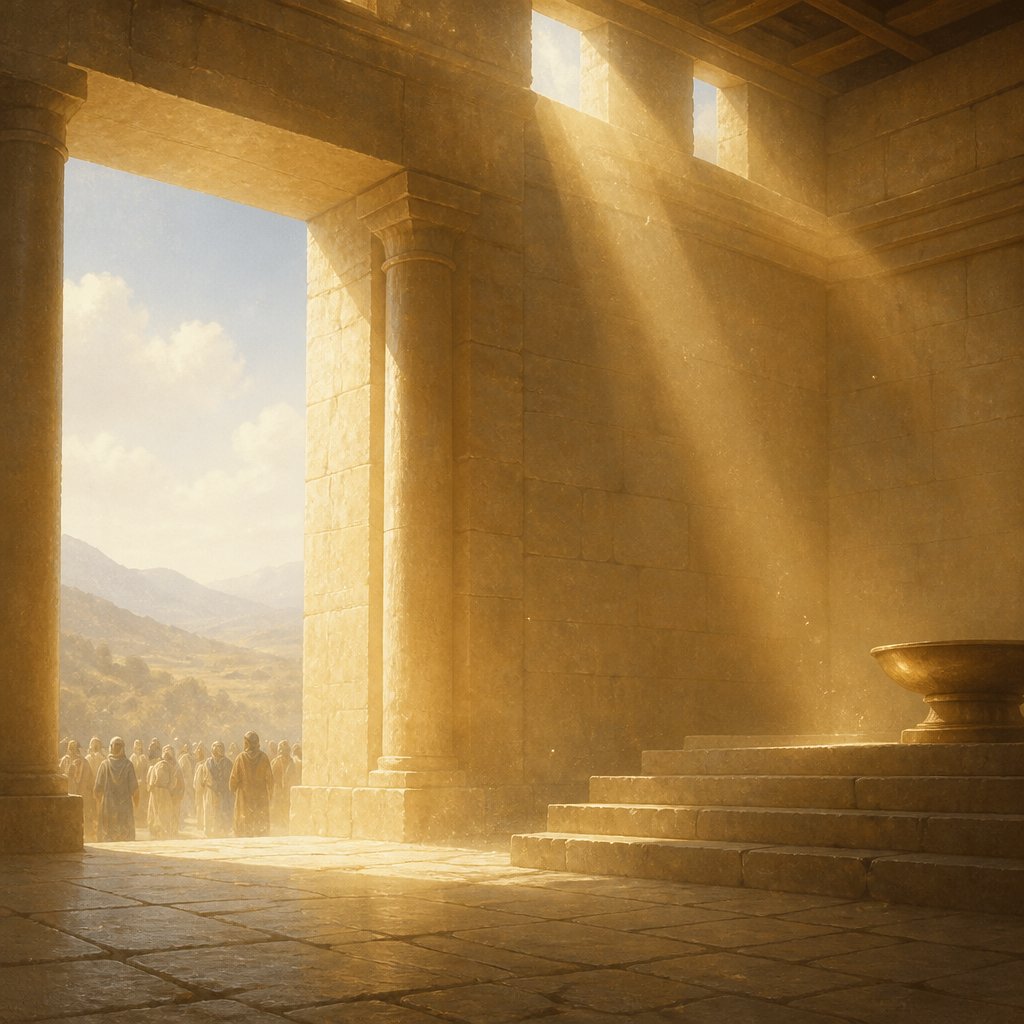
Haggai 2:7 in the King James Version reads, “And I will shake all nations, and the desire of all nations shall come: and I will fill this house with glory, saith the LORD of hosts.” In its plain sense, the verse is the LORD’s promise that He Himself will intervene in history with a mighty overturning, and that the outcome of that upheaval will be the coming of “the desire of all nations” and the filling of “this house” with divine “glory.” The language is forceful and royal: the LORD of hosts—He who commands heavenly armies and rules over the affairs of men—claims authority not only over Judah’s temple project but over “all nations,” and He binds the fate of that temple to a broader, world-reaching act of God.
The immediate context is the rebuilding of the temple after the return from Babylon. The people had laid a foundation, but the work and the structure seemed small and unimpressive compared to Solomon’s temple. Earlier in the chapter the LORD addresses that discouragement directly: “Who is left among you that saw this house in her first glory? and how do ye see it now? is it not in your eyes in comparison of it as nothing?” Yet He commands them to be strong and continue, grounding His charge in His covenant presence: “for I am with you, saith the LORD of hosts,” and “my spirit remaineth among you: fear ye not.” Haggai 2:7 belongs to that consolation. The LORD does not deny the present smallness; rather, He declares that the meaning of the temple will not finally be measured by its immediate appearance or by what the returned remnant can supply. The future glory of the house will be God-given, and God will act on a scale beyond Judah’s resources: He will “shake all nations.”
The “shaking” is a central theme. Just a few lines earlier the LORD says, “Yet once, it is a little while, and I will shake the heavens, and the earth, and the sea, and the dry land.” That is creation-language, echoing the idea that the Maker can unsettle what seems fixed. In Haggai, this shaking has moral and political weight: God judges pride, topples false securities, and rearranges the conditions of the world so that His purpose stands. Nations appear stable, economies look immovable, and empires act as though they are ultimate; the LORD declares that He can make them tremble. In the history of Israel, such divine shaking often includes the rise and fall of powers, the opening of paths for God’s people, and the exposure of what cannot last. In this verse, the shaking is not mere chaos; it is purposive. It makes room for a coming and for a filling. God unsettles the nations so that something desired may arrive and His house may be glorified.
The phrase “the desire of all nations shall come” is the most discussed line in the verse, and in KJV form it reads like a personal coming, as though “desire” is someone who arrives. In the flow of the promise, “desire” stands for what the nations long for yet cannot secure by their own strength—true peace, righteous rule, lasting blessing, and the knowledge of the living God. The nations are pictured not as self-sufficient but as needy, even if their need is often unconfessed. Underneath their idols and rivalries is an ache for what only the LORD can give. In that sense, “desire” is not a shallow wish but a deep longing placed in humanity, a hunger for the ultimate good. The verse then says this desire “shall come,” stressing that the answer to that longing is not man’s achievement but God’s gift, arriving by divine appointment.
At the same time, the verse’s own imagery ties the coming desire to the temple: “and I will fill this house with glory.” “This house” is the rebuilt temple in Jerusalem, the focal point of Israel’s worship and the emblem of God dwelling among His people. The theme of glory in Scripture is the manifest weight of God’s presence, His holiness made known, His reality revealed in a way that commands reverence. The returnees feared they would never see such glory again because their building looked poor. The LORD replies that glory is not finally produced by gold, cedar, or human craftsmanship; it is bestowed by God. When He says, “I will fill this house with glory,” He claims the prerogative to make the temple significant not by external grandeur but by His own self-disclosure and by what He chooses to do in connection with it.
The symbolism of “house” and “glory” also carries covenant meaning. The temple was not simply a national monument; it was where sacrifice, atonement language, priestly ministry, and prayer concentrated, and where Israel’s relationship to God was ritually proclaimed. To promise glory filling the house is to promise that God will again own His covenant relationship publicly, that He will not abandon His worship, and that He will make His presence known in a way that outweighs present humiliation. The verse therefore functions as a rebuke to despair and a call to faith: the builders must not interpret God’s favor by what their eyes see in the early stages, because God intends to attach a greater divine purpose to this “house” than the present generation can yet perceive.
Within the broader message of Haggai 2, the verse also ties into the question of resources. Immediately after this promise, the LORD says, “The silver is mine, and the gold is mine, saith the LORD of hosts.” The significance is that the apparent poverty of the returned remnant is not a barrier to the LORD’s plan. If He chooses to glorify His house, He has mastery over the wealth of the nations He shakes. Whether one emphasizes the idea that the nations will bring their precious things, or that God will reorder the world so that honor and tribute flow toward His purposes, the theological point is the same: God’s glory is not dependent on Judah’s economic strength but on His sovereign ownership and rule.
The verse also bears an eschatological weight—that is, it leans toward the LORD’s ultimate future. The language of shaking “all nations” and shaking even “the heavens, and the earth” stretches beyond a single local event. It suggests a decisive divine intervention that reaches the whole created order, a theme often associated with God’s final acts of judgment and restoration. In Haggai, that far-reaching language is applied to encourage obedience in the present: because God will act in a way that encompasses all nations, the smallness of present obedience is not meaningless. The temple work is caught up in a story larger than the builders’ lifetimes, and the LORD’s promise gives their labor eternal significance.
Read as a whole, Haggai 2:7 is a bridge between disappointment and hope. It acknowledges, by implication, that God’s people can be tempted to measure spiritual realities by visible splendor and immediate outcomes. The LORD answers by pointing to His own ability to shake what is mighty and to glorify what is weak. The “nations” represent the seemingly immovable world beyond Judah’s control; “desire” represents the deep human longing that God alone can satisfy; “this house” represents the place where God chooses to meet His people; and “glory” represents God’s own presence and honor, which He can pour out irrespective of human limitation. The verse’s significance, then, is not merely that a building will be improved, but that God will demonstrate, through history-shaking power, that He is the giver of what all peoples truly need, and that He is able to make His dwelling-place radiant with His own glory, even when it begins in frailty.
Get our apps


Artwork for Haggai 2:7

Haggai 2:7 - "And I will shake all nations, and the desire of all nations shall come: and I will fill this house with glory, saith the LORD of hosts."
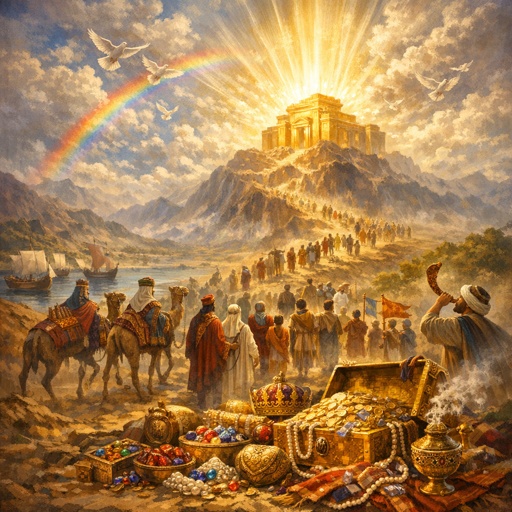
"And I will shake all nations, and the desire of all nations shall come: and I will fill this house with glory, saith the LORD of hosts." - Haggai 2:7
"And I will shake all nations, and the desire of all nations shall come: and I will fill this house with glory, saith the LORD of hosts." - Haggai 2:7

Haggai 2:6-7 – "This is what the Lord Almighty says: 'In a little while I will once more shake the heavens and the earth, the sea and the dry land.'"

Haggai 2:20 - "¶ And again the word of the LORD came unto Haggai in the four and twentieth day of the month, saying,"

Haggai 2:1 - "In the seventh month, in the one and twentieth day of the month, came the word of the LORD by the prophet Haggai, saying,"

Haggai 2:14 - "Then answered Haggai, and said, So is this people, and so is this nation before me, saith the LORD; and so is every work of their hands; and that which they offer there is unclean."

Haggai 2:10 - "¶ In the four and twentieth day of the ninth month, in the second year of Darius, came the word of the LORD by Haggai the prophet, saying,"

Haggai 2:13 - "Then said Haggai, If one that is unclean by a dead body touch any of these, shall it be unclean? And the priests answered and said, It shall be unclean."

Haggai 2:9

Haggai 1:7 - "¶ Thus saith the LORD of hosts; Consider your ways."
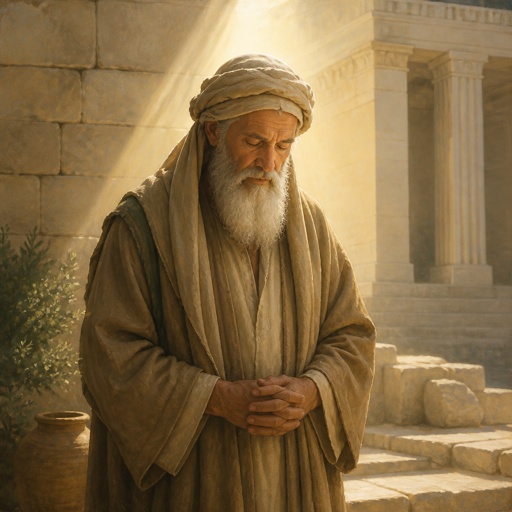
"¶ And again the word of the LORD came unto Haggai in the four and twentieth day of the month, saying," - Haggai 2:20

Haggai 2:8 - "The silver is mine, and the gold is mine, saith the LORD of hosts."

Haggai 2:11 - "Thus saith the LORD of hosts; Ask now the priests concerning the law, saying,"

Haggai 2:2 - "Speak now to Zerubbabel the son of Shealtiel, governor of Judah, and to Joshua the son of Josedech, the high priest, and to the residue of the people, saying,"
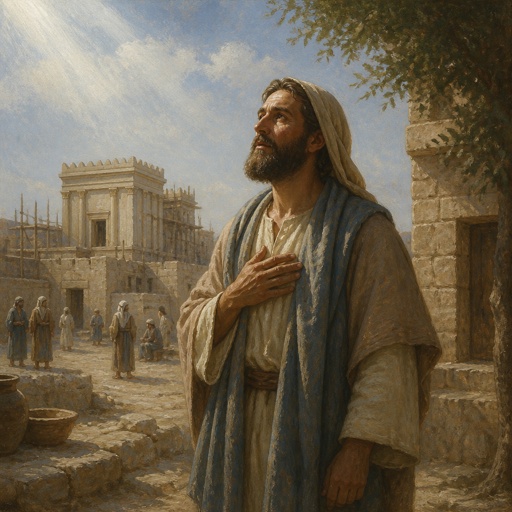
"In the seventh month, in the one and twentieth day of the month, came the word of the LORD by the prophet Haggai, saying," - Haggai 2:1

Haggai 2:14 Then Haggai answered and said, “ ‘So is this people, and so is this nation before Me,’ says the LORD, ‘and so is every work of their hands; and what they offer there is unclean.

Haggai 2:14 Then Haggai answered and said, “ ‘So is this people, and so is this nation before Me,’ says the LORD, ‘and so is every work of their hands; and what they offer there is unclean.
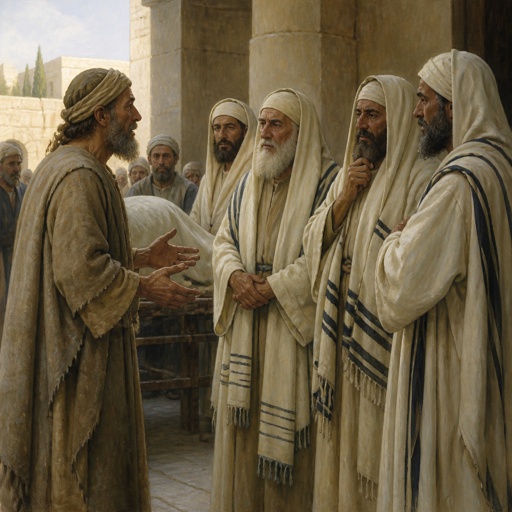
"Then said Haggai, If one that is unclean by a dead body touch any of these, shall it be unclean? And the priests answered and said, It shall be unclean." - Haggai 2:13

Haggai 2:21 - "Speak to Zerubbabel, governor of Judah, saying, I will shake the heavens and the earth;"
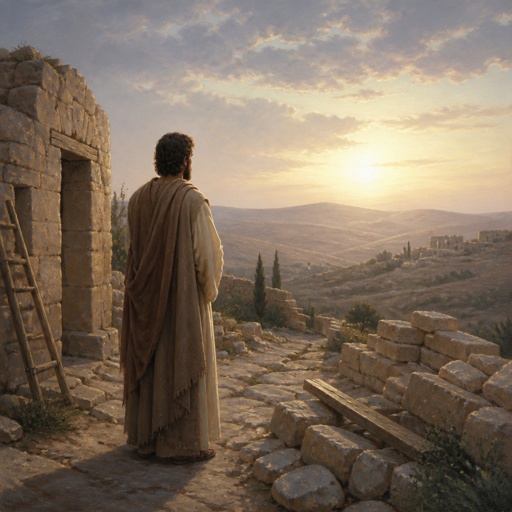
"¶ Thus saith the LORD of hosts; Consider your ways." - Haggai 1:7
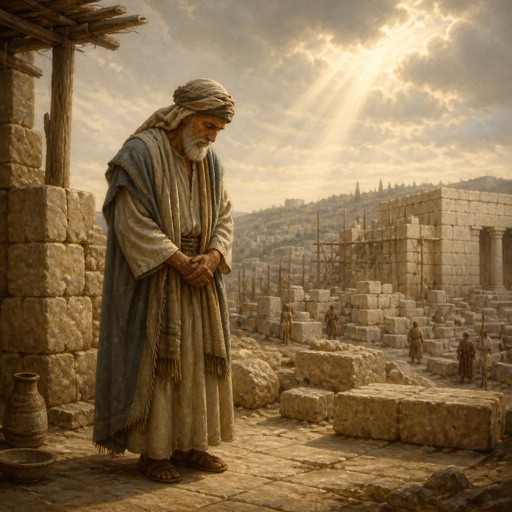
"¶ In the four and twentieth day of the ninth month, in the second year of Darius, came the word of the LORD by Haggai the prophet, saying," - Haggai 2:10
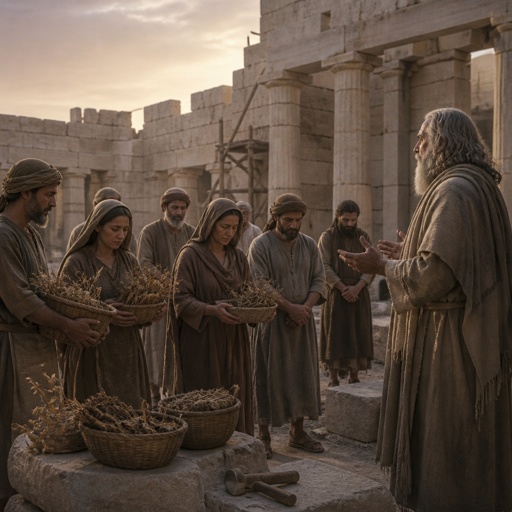
"Then answered Haggai, and said, So is this people, and so is this nation before me, saith the LORD; and so is every work of their hands; and that which they offer there is unclean." - Haggai 2:14

Haggai 2:17 - "I smote you with blasting and with mildew and with hail in all the labours of your hands; yet ye turned not to me, saith the LORD."

Haggai 1:2 - "Thus speaketh the LORD of hosts, saying, This people say, The time is not come, the time that the LORD'S house should be built."

Haggai 2:3 - "Who is left among you that saw this house in her first glory? and how do ye see it now? is it not in your eyes in comparison of it as nothing?"

Haggai 2:5 - "According to the word that I covenanted with you when ye came out of Egypt, so my spirit remaineth among you: fear ye not."

Haggai 2:6 - "For thus saith the LORD of hosts; Yet once, it is a little while, and I will shake the heavens, and the earth, and the sea, and the dry land;"

Haggai 2:18 - "Consider now from this day and upward, from the four and twentieth day of the ninth month, even from the day that the foundation of the LORD'S temple was laid, consider it."
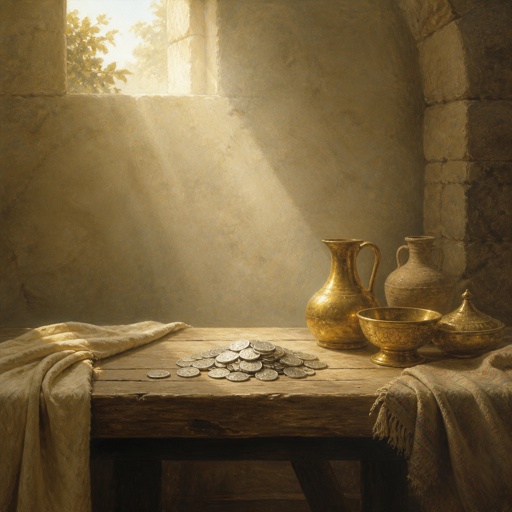
"The silver is mine, and the gold is mine, saith the LORD of hosts." - Haggai 2:8