What does Hebrews 2:9 mean?
“But we see Jesus, who was made a little lower than the angels for the suffering of death, crowned with glory and honour; that he by the grace of God should taste death for every man.” — Hebrews 2:9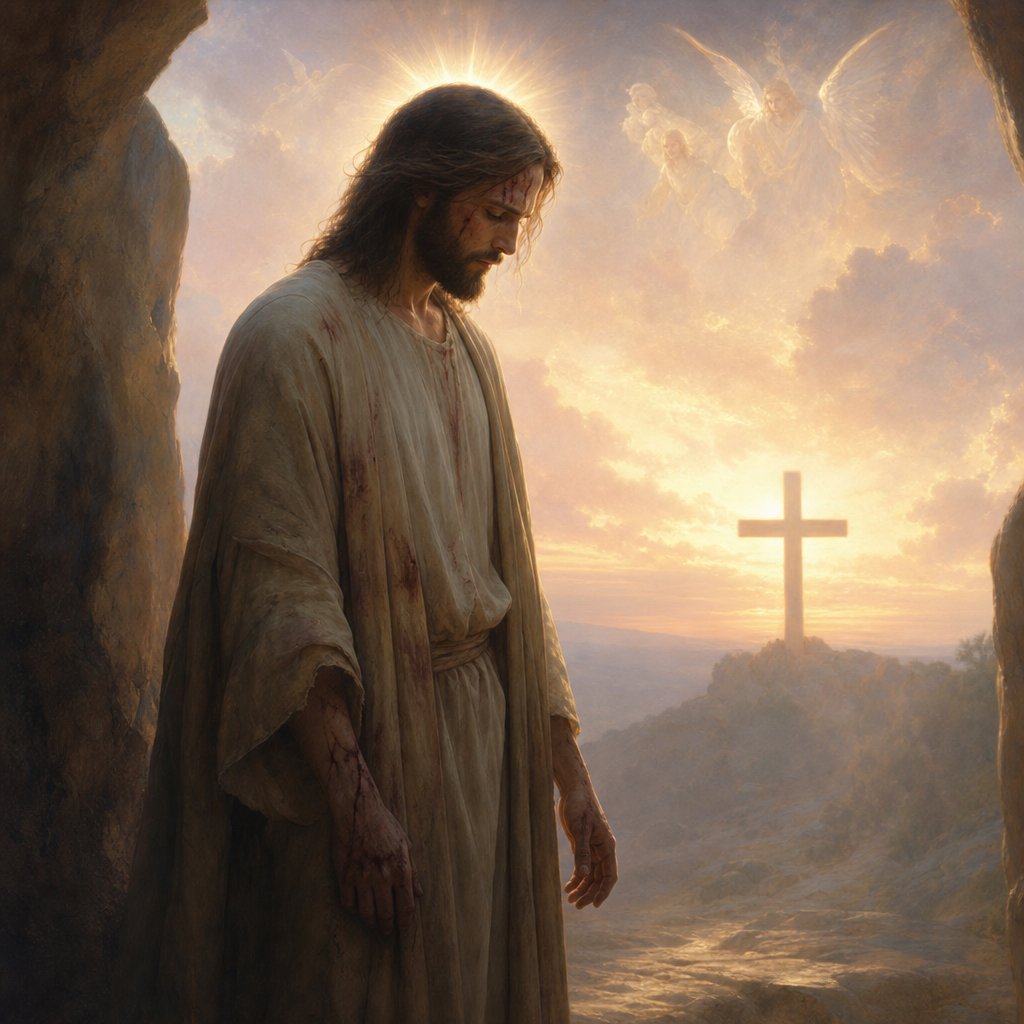
Hebrews 2:9 in the King James Version of the Bible reads, "But we see Jesus, who was made a little lower than the angels for the suffering of death, crowned with glory and honour; that he by the grace of God should taste death for every man."
This verse is rich with theological depth and significance, highlighting the sacrificial nature of Jesus' death, the exaltation and glory that followed, and the inclusive nature of his redemptive work for all humanity.
The verse begins with the declaration, "But we see Jesus," indicating a shift in focus to the person and work of Christ. This is significant as it directs attention away from earthly concerns and towards the divine, calling the reader to fix their gaze on the one who is the foundation of their faith.
The text then notes that Jesus was "made a little lower than the angels for the suffering of death." This references the incarnation of Christ, the Son of God becoming human and taking on the form of a servant (Philippians 2:7). Jesus, who was equal with God, willingly humbled himself to take on the limitations and vulnerabilities of human existence, culminating in the ultimate act of self-sacrifice on the cross. This act demonstrates God's deep love for humanity, as he was willing to undergo suffering and death in order to reconcile humanity to himself.
The phrase "crowned with glory and honour" speaks to the exaltation of Jesus following his resurrection and ascension. The suffering and death of Christ were not the end of the story; rather, they led to his glorification and enthronement at the right hand of God. This exaltation signifies his victory over sin and death, and his ultimate triumph as the King of Kings and Lord of Lords.
The verse concludes with the purpose of Jesus' redemptive work, stating that "he by the grace of God should taste death for every man." This speaks to the inclusive nature of the atonement, emphasizing that Jesus' sacrificial death was for the benefit of all humanity. Regardless of race, ethnicity, or social status, the grace of God extends to every individual, offering salvation and reconciliation with God through faith in Christ.
The overarching theme of Hebrews 2:9 is the redemptive work of Jesus Christ, his incarnation, suffering, death, and subsequent exaltation. It emphasizes the profound love and grace of God in providing a way for humanity to be reconciled to him, highlighting the inclusive nature of salvation through Christ. The verse serves as a reminder of the central tenets of the Christian faith, pointing to the significance of Jesus' atoning sacrifice and the hope and assurance that it brings to believers.
In the broader context of the book of Hebrews, this verse is part of a larger argument for the superiority and sufficiency of Christ. The author of Hebrews contrasts Jesus with the angels, demonstrating that while angels are mighty and glorious, Jesus, as the Son of God, is superior to them in every way. The verse also serves as a bridge between the discussion of Jesus' incarnation and suffering in the previous verses and the subsequent exhortation for believers to hold fast to their faith in Christ.
Symbolically, the verse portrays Jesus as the suffering servant who willingly humbled himself for the sake of humanity, only to be exalted and glorified by God. This imagery of suffering leading to glory reflects the overarching narrative of Jesus' life, death, and resurrection, and serves as a powerful reminder of the redemptive power and transformative impact of the gospel message.
In conclusion, Hebrews 2:9 encapsulates the heart of the Christian faith, encapsulating the sacrificial death and exaltation of Jesus Christ, and the inclusive nature of his redemptive work for all humanity. It serves as a source of comfort and inspiration for believers, reminding them of the unmerited grace and unwavering love of God displayed through the person and work of Jesus Christ.
Get our apps


Artwork for Hebrews 2:9

Hebrews 2:9 - "But we see Jesus, who was made a little lower than the angels for the suffering of death, crowned with glory and honour; that he by the grace of God should taste death for every man."
"But we see Jesus, who was made a little lower than the angels for the suffering of death, crowned with glory and honour; that he by the grace of God should taste death for every man." - Hebrews 2:9
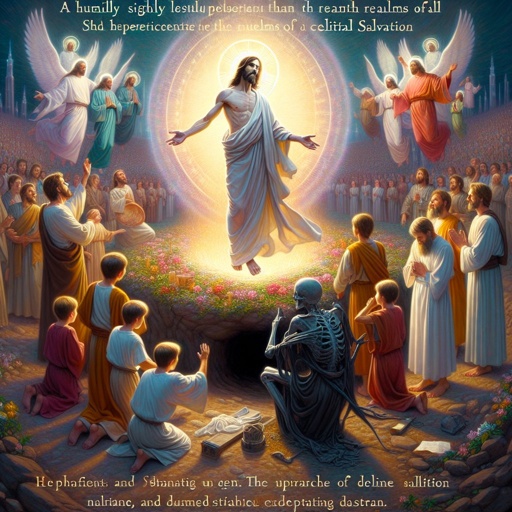
Hebrews 2:9-15 - "But we see Jesus, who was made a little lower than the angels for the suffering of death, crowned with glory and honour; that he by the grace of God should taste death for every man. For it became him, for whom are all things, and by whom are all things, in bringing many sons unto glory, to make the captain of their salvation perfect through sufferings. For both he that sanctifieth and they who are sanctified are all of one: for which cause he is not ashamed to call them brethren, Saying, I will declare thy name unto my brethren, in the midst of the church will I sing praise unto thee. And again, I will put my trust in him. And again, Behold I and the children which God hath given me. Forasmuch then as the children are partakers of flesh and blood, he also himself likewise took part of the same; that through death he might destroy him that had the power of death, that is, the devil; And deliver them who through fear of death were all their lifetime subject to bondage."
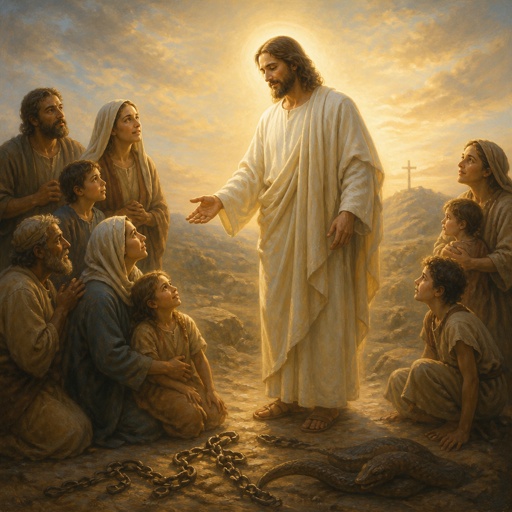
"But we see Jesus, who was made a little lower than the angels for the suffering of death, crowned with glory and honour; that he by the grace of God should taste death for every man. For it became him, for whom are all things, and by whom are all things, in bringing many sons unto glory, to make the captain of their salvation perfect through sufferings. For both he that sanctifieth and they who are sanctified are all of one: for which cause he is not ashamed to call them brethren, Saying, I will declare thy name unto my brethren, in the midst of the church will I sing praise unto thee. And again, I will put my trust in him. And again, Behold I and the children which God hath given me. Forasmuch then as the children are partakers of flesh and blood, he also himself likewise took part of the same; that through death he might destroy him that had the power of death, that is, the devil; And deliver them who through fear of death were all their lifetime subject to bondage." - Hebrews 2:9-15

Hebrews 9:2 - "For there was a tabernacle made; the first, wherein was the candlestick, and the table, and the shewbread; which is called the sanctuary."
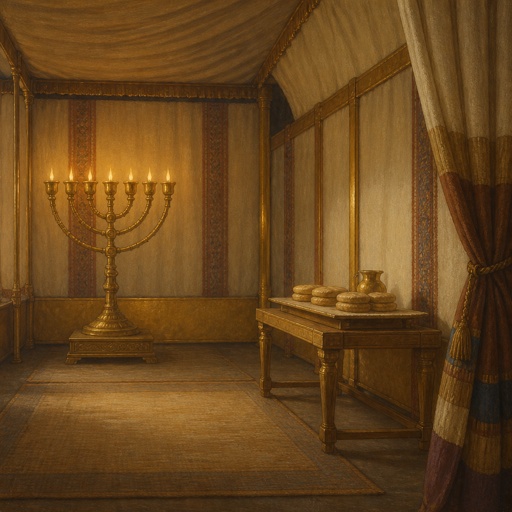
"For there was a tabernacle made; the first, wherein was the candlestick, and the table, and the shewbread; which is called the sanctuary." - Hebrews 9:2

Hebrews 4:9 - "There remaineth therefore a rest to the people of God."

Hebrews 9:16 - "For where a testament is, there must also of necessity be the death of the testator."

Hebrews 9:18 - "Whereupon neither the first testament was dedicated without blood."

Hebrews 9:27 - "And as it is appointed unto men once to die, but after this the judgment:"

Hebrews 9:3 - "And after the second veil, the tabernacle which is called the Holiest of all;"

Hebrews 9:9 - "Which was a figure for the time then present, in which were offered both gifts and sacrifices, that could not make him that did the service perfect, as pertaining to the conscience;"

Hebrews 9:13 - "For if the blood of bulls and of goats, and the ashes of an heifer sprinkling the unclean, sanctifieth to the purifying of the flesh:"

Hebrews 9:20 - "Saying, This is the blood of the testament which God hath enjoined unto you."

Hebrews 9:21 - "Moreover he sprinkled with blood both the tabernacle, and all the vessels of the ministry."

Hebrews 9:17 - "For a testament is of force after men are dead: otherwise it is of no strength at all while the testator liveth."

Hebrews 9:1 - "Then verily the first covenant had also ordinances of divine service, and a worldly sanctuary."

Hebrews 9:22 - "And almost all things are by the law purged with blood; and without shedding of blood is no remission."

Hebrews 3:9 - "When your fathers tempted me, proved me, and saw my works forty years."

Hebrews 9:5 - "And over it the cherubims of glory shadowing the mercyseat; of which we cannot now speak particularly."
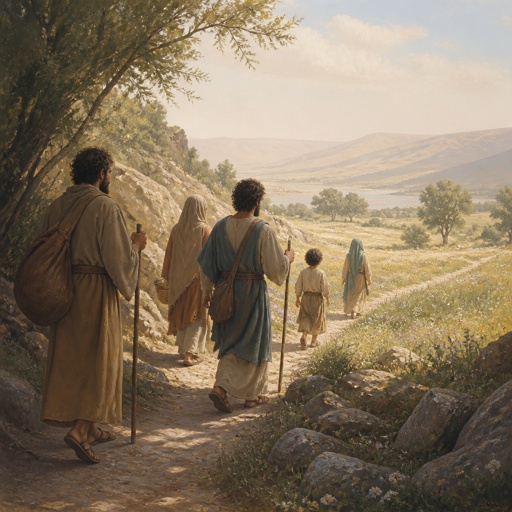
"There remaineth therefore a rest to the people of God." - Hebrews 4:9

Hebrews 6:9 - "But, beloved, we are persuaded better things of you, and things that accompany salvation, though we thus speak."

Hebrews 7:9 - "And as I may so say, Levi also, who receiveth tithes, payed tithes in Abraham."

Hebrews 9:8 - "The Holy Ghost this signifying, that the way into the holiest of all was not yet made manifest, while as the first tabernacle was yet standing:"

Hebrews 9:6 - "Now when these things were thus ordained, the priests went always into the first tabernacle, accomplishing the service of God."

Hebrews 9:10 - "Which stood only in meats and drinks, and divers washings, and carnal ordinances, imposed on them until the time of reformation."

Hebrews 9:23 - "It was therefore necessary that the patterns of things in the heavens should be purified with these; but the heavenly things themselves with better sacrifices than these."

Hebrews 5:9 - "And being made perfect, he became the author of eternal salvation unto all them that obey him;"

Hebrews 11:2 - "For by it the elders obtained a good report."

Hebrews 2:2 - "For if the word spoken by angels was stedfast, and every transgression and disobedience received a just recompence of reward;"