What does Hebrews 5:6 mean?
“As he saith also in another place, Thou art a priest for ever after the order of Melchisedec.” — Hebrews 5:6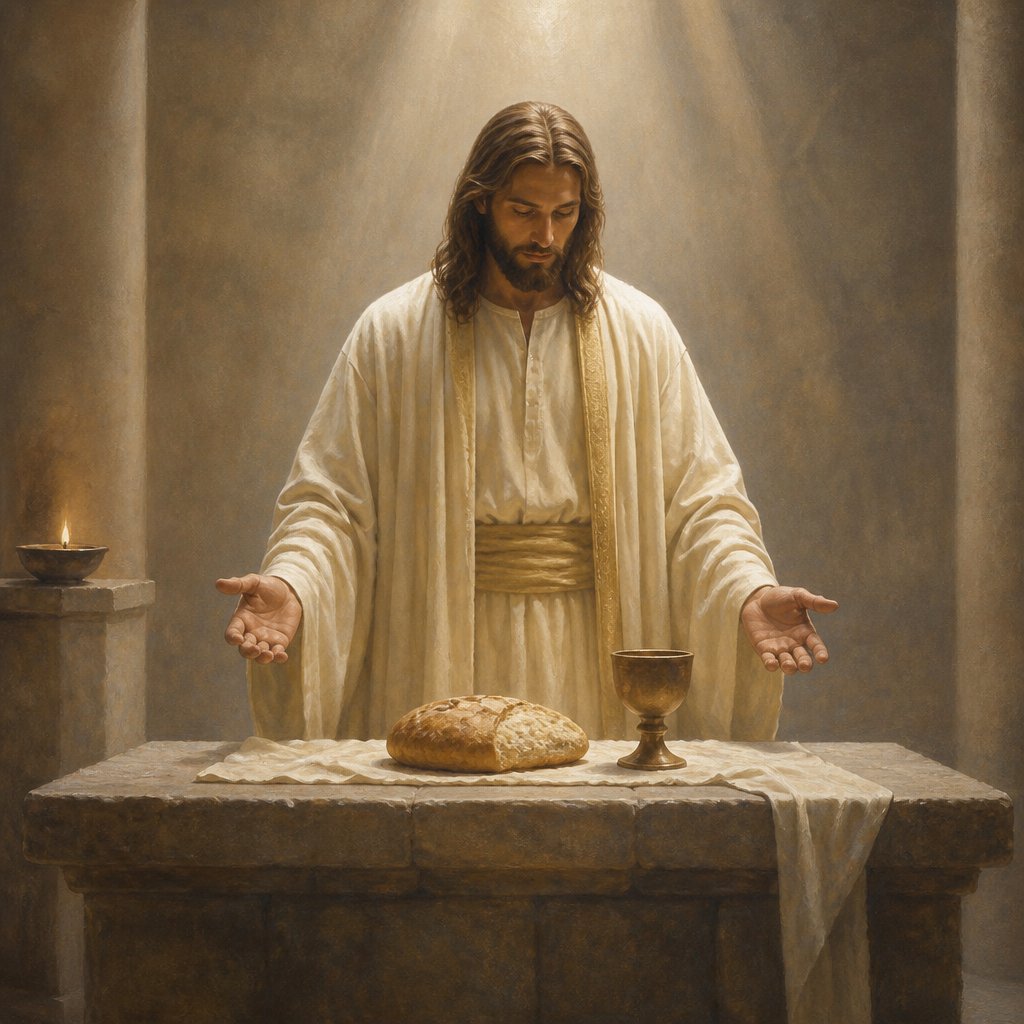
Hebrews 5:6 in the King James Version (KJV) of the Bible reads, "As he saith also in another place, Thou art a priest for ever after the order of Melchisedec." This verse is a reference to the priesthood of Jesus Christ and the prophecy of his eternal role as a high priest in the order of Melchizedek. To fully understand the depth and significance of this verse, it is important to examine its themes, context, and symbolism in both the Old and New Testaments.
One of the central themes of Hebrews 5:6 is the priesthood of Jesus Christ. In the Old Testament, the priesthood was an essential part of the Israelite religious system. The high priest was the mediator between God and the people, offering sacrifices to atone for the sins of the people and interceding on their behalf. The book of Hebrews emphasizes the superiority of Jesus' priesthood compared to the Levitical priesthood, highlighting how Jesus is the perfect and eternal high priest who is able to sympathize with our weaknesses (Hebrews 4:14-16).
The reference to the order of Melchizedek is symbolic of the eternal nature of Jesus' priesthood. Melchizedek was a mysterious figure who appears in the book of Genesis. He is described as the king of Salem and a priest of God Most High, and he blessed Abraham after his victory in battle (Genesis 14:18-20). Melchizedek's priesthood predated the Levitical priesthood and was unique in that it was not based on genealogy or lineage. The writer of Hebrews uses this to illustrate Jesus' eternal priesthood, which is not bound by the limitations of the Levitical priesthood but is rooted in the order of Melchizedek, making it eternal and superior.
The context of Hebrews 5:6 is important in understanding the significance of this verse. The book of Hebrews was written to Jewish Christians who were facing persecution and the temptation to revert back to Judaism. The author of Hebrews seeks to encourage and strengthen their faith in Jesus Christ as the ultimate fulfillment of the Old Testament sacrificial system and priesthood. The citation of Psalm 110:4 in Hebrews 5:6, "Thou art a priest for ever after the order of Melchizedek," serves as a reminder to the Jewish Christians that Jesus' priesthood is eternal and superior to that of the Levitical priesthood.
Furthermore, the reference to Melchizedek in Hebrews 5:6 also points to the typology and foreshadowing prevalent throughout the Old Testament. Melchizedek serves as a type of Christ, offering a glimpse of the coming Messiah who would be a king and a priest. This typology is further emphasized in the New Testament, particularly in the book of Hebrews, where Jesus is portrayed as the ultimate fulfillment of the Old Testament types and shadows.
In conclusion, Hebrews 5:6 in the King James Version of the Bible speaks to the eternal priesthood of Jesus Christ in the order of Melchizedek. This verse underscores the themes of Jesus' priesthood and its superiority over the Levitical priesthood, as well as its eternal and unchanging nature. The context of Hebrews as a whole and the symbolism of Melchizedek further deepen the significance of this verse. Ultimately, Hebrews 5:6 points to Jesus Christ as the perfect and eternal high priest who is able to intercede for His people and offer eternal salvation.
Get our apps


Artwork for Hebrews 5:6

Hebrews 5:6 - "As he saith also in another place, Thou art a priest for ever after the order of Melchisedec."
"As he saith also in another place, Thou art a priest for ever after the order of Melchisedec." - Hebrews 5:6

Hebrews 6:5 - "And have tasted the good word of God, and the powers of the world to come,"

"And have tasted the good word of God, and the powers of the world to come," - Hebrews 6:5

Hebrews 6:1

Hebrews 8:5

Hebrews 6:1

Hebrews 8:1-5

Hebrews 10:5-10

Hebrews 10:5-10

Hebrews 6:3 - "And this will we do, if God permit."

Hebrews 4:5 - "And in this place again, If they shall enter into my rest."

Hebrews 5:10 - "Called of God an high priest after the order of Melchisedec."

Hebrews 6:2 - "Of the doctrine of baptisms, and of laying on of hands, and of resurrection of the dead, and of eternal judgment."

Hebrews 10:6 - "In burnt offerings and sacrifices for sin thou hast had no pleasure."

Hebrews 13:5-6 - "Keep your life free from love of money, and be content with what you have, for he has said, 'I will never leave you nor forsake you.' So we can confidently say, 'The Lord is my helper; I will not fear; what can man do to me?'"

"And this will we do, if God permit." - Hebrews 6:3

Philippians 3:5 - "Circumcised the eighth day, of the stock of Israel, of the tribe of Benjamin, an Hebrew of the Hebrews; as touching the law, a Pharisee;"

Hebrews 5:13 - "For every one that useth milk is unskilful in the word of righteousness: for he is a babe."

Hebrews 5:4 - "And no man taketh this honour unto himself, but he that is called of God, as was Aaron."

Hebrews 6:15 - "And so, after he had patiently endured, he obtained the promise."

Hebrews 12:5-6 - "And have you completely forgotten this word of encouragement that addresses you as a father addresses his son? It says, “My son, do not make light of the Lord’s discipline, and do not lose heart when he rebukes you, because the Lord disciplines the one he loves, and he chastens everyone he accepts as his son.”"

Hebrews 6:6 - "If they shall fall away, to renew them again unto repentance; seeing they crucify to themselves the Son of God afresh, and put him to an open shame."

Hebrews 5:3 - "And by reason hereof he ought, as for the people, so also for himself, to offer for sins."

Hebrews 12:6 - "For whom the Lord loveth he chasteneth, and scourgeth every son whom he receiveth."

Hebrews 6:8 - "But that which beareth thorns and briers is rejected, and is nigh unto cursing; whose end is to be burned."

Hebrews 2:5 - "For unto the angels hath he not put in subjection the world to come, whereof we speak."

Hebrews 6:12 - "That ye be not slothful, but followers of them who through faith and patience inherit the promises."

Hebrews 6:14 - "Saying, Surely blessing I will bless thee, and multiplying I will multiply thee."

Hebrews 6:16 - "For men verily swear by the greater: and an oath for confirmation is to them an end of all strife."