What does Hebrews 5:7 mean?
“Who in the days of his flesh, when he had offered up prayers and supplications with strong crying and tears unto him that was able to save him from death, and was heard in that he feared;” — Hebrews 5:7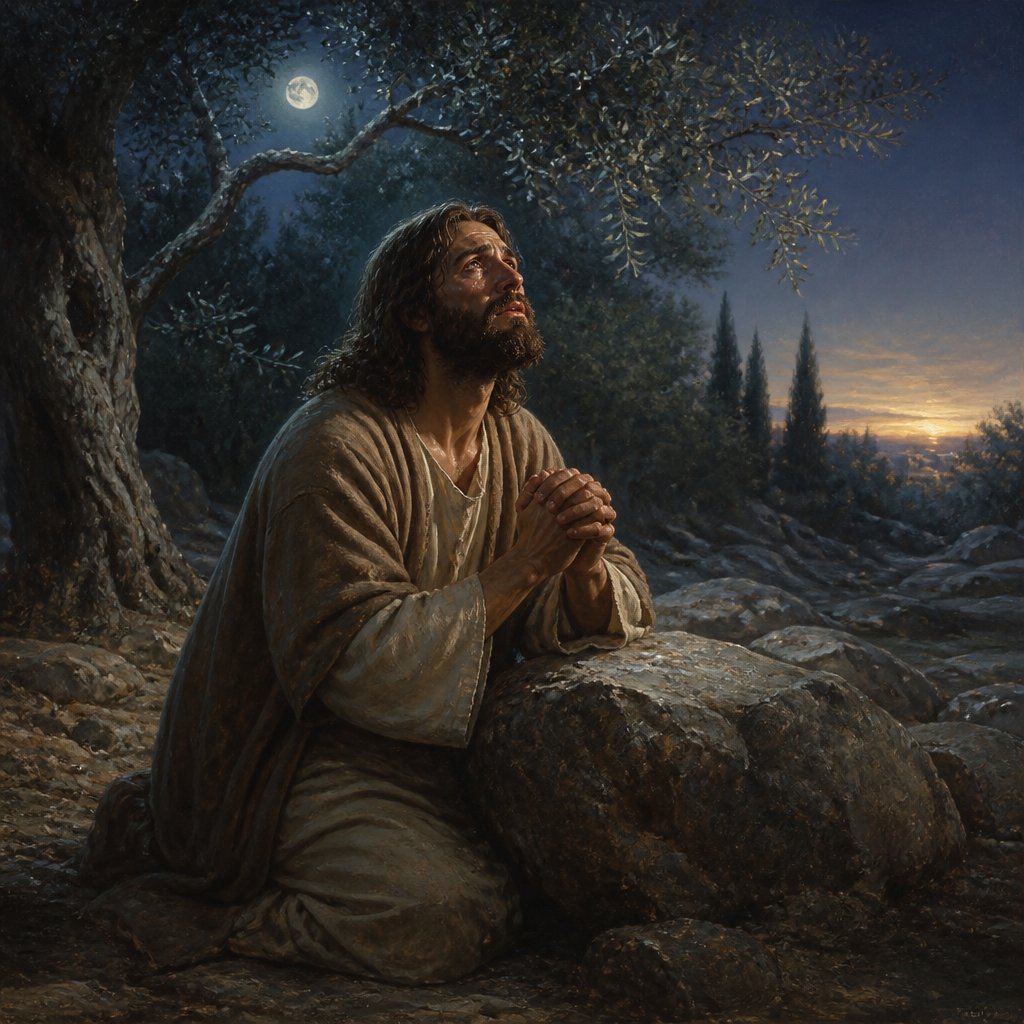
The verse Hebrews 5:7 from the King James Version of the Bible states: "Who in the days of his flesh, when he had offered up prayers and supplications with strong crying and tears unto him that was able to save him from death, and was heard in that he feared."
This verse is found in the New Testament epistle to the Hebrews, which is a letter written to Jewish Christians who were struggling with persecution and temptation to abandon their faith in Jesus Christ. The verse occurs within a passage where the author describes Jesus Christ as a high priest who is able to sympathize with human weaknesses, having experienced the same trials and temptations during his time on earth.
The passage refers to Jesus' prayer in the Garden of Gethsemane just before his arrest and crucifixion. It paints a poignant picture of Jesus in his humanity, displaying raw emotion and vulnerability as he pours out his heart to his heavenly Father. This verse serves to emphasize the depth of Jesus' suffering and the sincerity of his humility and dependence on God's will.
One of the main themes of this verse is the humanity of Jesus Christ. The phrase "in the days of his flesh" underscores the fact that Jesus, though fully divine, also fully experienced the limitations and emotions of human existence. The verse depicts Jesus as a deeply compassionate and empathetic figure, who is able to identify with the struggles and pain of his followers.
The act of offering "prayers and supplications with strong crying and tears" reflects Jesus' intense anguish and distress in the face of the impending crucifixion. It is a powerful reminder of the depth of Jesus' suffering and the emotional toll of his sacrificial mission.
Another prominent theme in this verse is the concept of prayer and humility. Despite being the Son of God, Jesus chose to humble himself and submit to the will of his Father through earnest prayer. This serves as a model for believers, emphasizing the importance of seeking God's guidance and strength through prayer, especially in times of trial and suffering.
The verse also highlights the concept of divine intervention. It states that Jesus "was heard in that he feared," indicating that God responded to Jesus' prayers and supplications. This illustrates the faithfulness of God to hear and respond to the cries of his children, even in the midst of seemingly insurmountable challenges.
The symbolism in this verse is rich and profound. Jesus' tears and cries represent his deep emotional turmoil and inner struggle, as well as his genuine humanity. His fervent prayers and supplications demonstrate his reliance on the power and mercy of God, portraying a humble surrender to divine will.
In its broader context, this verse speaks to the overarching message of the Christian faith – the redemptive sacrifice of Jesus Christ and the assurance of God's compassion and faithfulness. It also encourages believers to approach God with boldness and sincerity in their prayers, knowing that He is a compassionate and responsive Father.
In conclusion, Hebrews 5:7 from the King James Version of the Bible offers a poignant and powerful depiction of Jesus' humanity, suffering, and unwavering faith in God. It conveys important themes of empathy, humility, prayer, and divine intervention, serving as a source of comfort and inspiration for believers. This verse continues to resonate as a testament to the depth of Jesus' love and sacrifice, and the unwavering faithfulness of God.
Get our apps


Artwork for Hebrews 5:7

Hebrews 5:7 - "Who in the days of his flesh, when he had offered up prayers and supplications with strong crying and tears unto him that was able to save him from death, and was heard in that he feared;"
"Who in the days of his flesh, when he had offered up prayers and supplications with strong crying and tears unto him that was able to save him from death, and was heard in that he feared;" - Hebrews 5:7

Hebrews 7:5 - "And verily they that are of the sons of Levi, who receive the office of the priesthood, have a commandment to take tithes of the people according to the law, that is, of their brethren, though they come out of the loins of Abraham:"

Hebrews 8:5

Hebrews 7:7 - "And without all contradiction the less is blessed of the better."

Zechariah 5:7 - "And, behold, there was lifted up a talent of lead: and this is a woman that sitteth in the midst of the ephah."

Hebrews 8:1-5

Hebrews 10:5-10

Hebrews 10:5-10

Hebrews 4:5 - "And in this place again, If they shall enter into my rest."

Hebrews 5:10 - "Called of God an high priest after the order of Melchisedec."

Hebrews 7:20 - "And inasmuch as not without an oath he was made priest:"

"And without all contradiction the less is blessed of the better." - Hebrews 7:7

Hebrews 6:5 - "And have tasted the good word of God, and the powers of the world to come,"

Hebrews 7:12 - "For the priesthood being changed, there is made of necessity a change also of the law."

Hebrews 7:24 - "But this man, because he continueth ever, hath an unchangeable priesthood."

Hebrews 7:22 - "By so much was Jesus made a surety of a better testament."

Hebrews 7:17 - "For he testifieth, Thou art a priest for ever after the order of Melchisedec."

Hebrews 7:10 - "For he was yet in the loins of his father, when Melchisedec met him."

Hebrews 7:18 - "For there is verily a disannulling of the commandment going before for the weakness and unprofitableness thereof."

Philippians 3:5 - "Circumcised the eighth day, of the stock of Israel, of the tribe of Benjamin, an Hebrew of the Hebrews; as touching the law, a Pharisee;"

Hebrews 5:13 - "For every one that useth milk is unskilful in the word of righteousness: for he is a babe."

Hebrews 5:4 - "And no man taketh this honour unto himself, but he that is called of God, as was Aaron."

Hebrews 7:16 - "Who is made, not after the law of a carnal commandment, but after the power of an endless life."

Hebrews 3:7 - "Wherefore (as the Holy Ghost saith, To day if ye will hear his voice,"

Hebrews 5:3 - "And by reason hereof he ought, as for the people, so also for himself, to offer for sins."

Hebrews 2:5 - "For unto the angels hath he not put in subjection the world to come, whereof we speak."

Hebrews 8:7 - "For if that first covenant had been faultless, then should no place have been sought for the second."

Hebrews 7:15 - "And it is yet far more evident: for that after the similitude of Melchisedec there ariseth another priest,"
Hebrews 7:23 - "And they truly were many priests, because they were not suffered to continue by reason of death:"