What does Hebrews 7:1 mean?
“For this Melchisedec, king of Salem, priest of the most high God, who met Abraham returning from the slaughter of the kings, and blessed him;” — Hebrews 7:1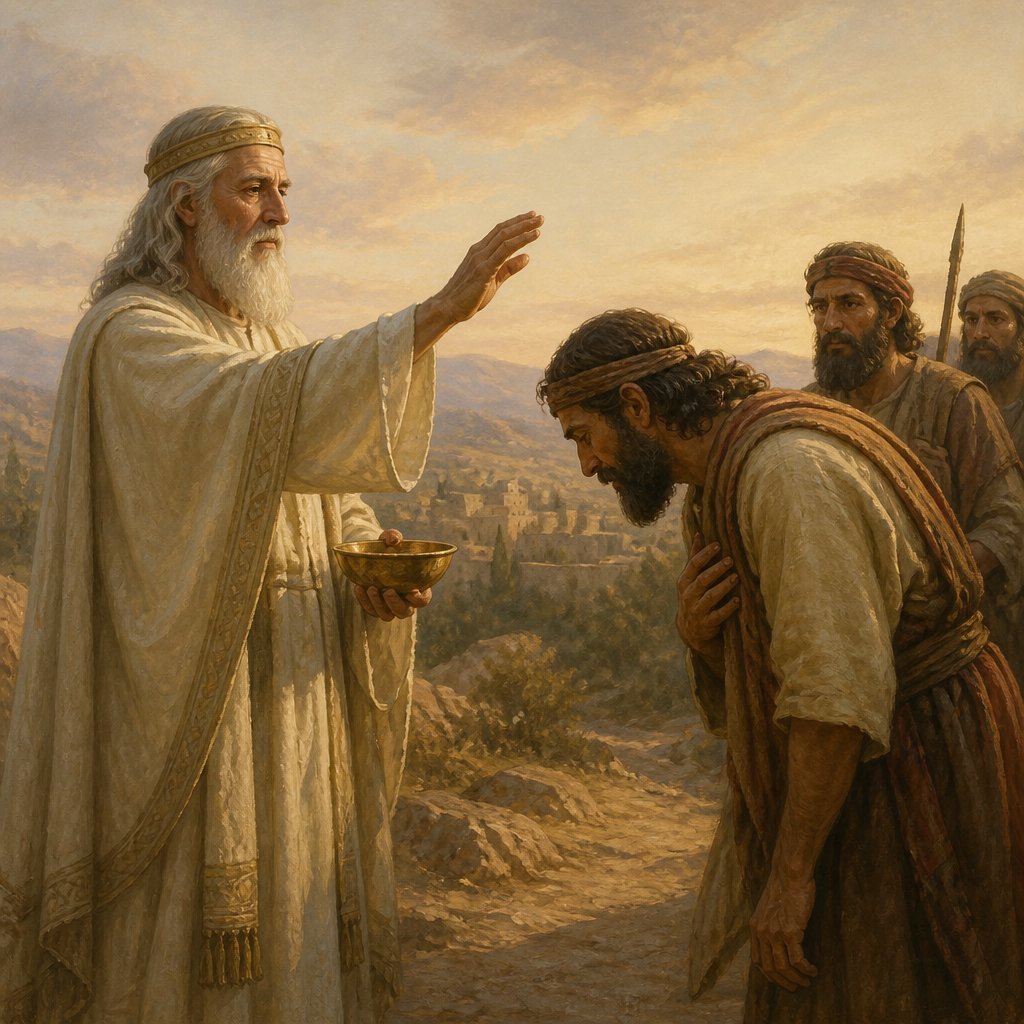
Hebrews 7:1 from the King James Version reads, "For this Melchisedec, king of Salem, priest of the most high God, who met Abraham returning from the slaughter of the kings, and blessed him". This verse introduces a character in the Bible who holds great significance in the Christian faith and has been the subject of much debate and interpretation.
The figure of Melchizedek is mentioned in the Old Testament in the book of Genesis, in chapter 14. He is described as the king of Salem, which is believed to be the ancient name for Jerusalem, and as a priest of the most high God. He is an intriguing and mysterious figure, as he appears in the biblical narrative seemingly out of nowhere, and then disappears just as quickly. Despite the brevity of his appearance, the author of Hebrews uses Melchizedek as a key figure to illustrate and explain the priesthood of Jesus Christ.
The context of Hebrews 7:1 is important in understanding the significance of Melchizedek. The author of Hebrews is writing to a Jewish audience, seeking to explain the superiority of Jesus' priesthood over the Levitical priesthood. In Jewish tradition, the priesthood was reserved for the descendants of Aaron, and the high priest held a position of great authority and reverence. The author of Hebrews points to Melchizedek as a precedent for a priesthood that predates the Levitical priesthood and holds a higher significance.
The symbolism in this verse is rich and multifaceted. Melchizedek is not only a priest, but he is also a king, which is a unique combination in the Old Testament. This foreshadows the dual role of Jesus Christ as both a king and a priest. Melchizedek is also described as the priest of the most high God, which sets him apart as a representative of a higher and more universal priesthood.
The encounter between Melchizedek and Abraham is also noteworthy. After Abraham's victory over the kings, Melchizedek blesses him and receives a tithe from him. This interaction underscores Melchizedek's authority and sets him apart from the Levitical priesthood, as he is not a part of the lineage of Aaron and yet he receives homage from Abraham, who is considered the father of the Jewish people.
The themes present in this verse include the idea of a priesthood that transcends earthly lineage and is rooted in a higher authority. Melchizedek serves as an archetype for Jesus Christ, who is the ultimate high priest according to the order of Melchizedek. The author of Hebrews uses the example of Melchizedek to argue for the superiority of Jesus' priesthood, as it is not based on human descent, but on an eternal and unchanging order.
Overall, Hebrews 7:1 introduces a significant and enigmatic figure in the biblical narrative. Melchizedek's role as a priest and king, his encounter with Abraham, and his representation of a priesthood that transcends the Levitical system all serve to highlight the greatness and majesty of Jesus Christ as the ultimate high priest. This verse sets the stage for the author of Hebrews to delve deeper into the theological implications of Jesus' priesthood and his role as the mediator between God and humanity.
Get our apps


Artwork for Hebrews 7:1

Hebrews 7:1 - "For this Melchisedec, king of Salem, priest of the most high God, who met Abraham returning from the slaughter of the kings, and blessed him;"

Hebrews 7:1-2 - "For this Melchizedek, king of Salem, priest of the Most High God, met Abraham returning from the slaughter of the kings and blessed him, and to him Abraham apportioned a tenth part of everything. He is first, by translation of his name, king of righteousness, and then he is also king of Salem, that is, king of peace."
"For this Melchisedec, king of Salem, priest of the most high God, who met Abraham returning from the slaughter of the kings, and blessed him;" - Hebrews 7:1
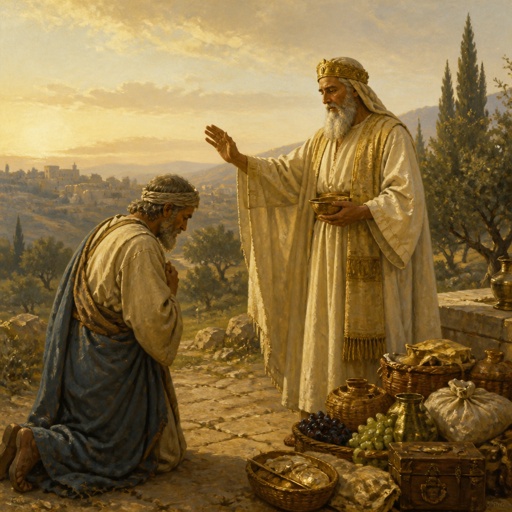
"For this Melchizedek, king of Salem, priest of the Most High God, met Abraham returning from the slaughter of the kings and blessed him, and to him Abraham apportioned a tenth part of everything. He is first, by translation of his name, king of righteousness, and then he is also king of Salem, that is, king of peace." - Hebrews 7:1-2

Hebrews 1:7 - "And of the angels he saith, Who maketh his angels spirits, and his ministers a flame of fire."

Hebrews 7:7 - "And without all contradiction the less is blessed of the better."

1 Samuel 13:7 - "And some of the Hebrews went over Jordan to the land of Gad and Gilead. As for Saul, he was yet in Gilgal, and all the people followed him trembling."

Hebrews 7:20 - "And inasmuch as not without an oath he was made priest:"

"And without all contradiction the less is blessed of the better." - Hebrews 7:7

Hebrews 7:12 - "For the priesthood being changed, there is made of necessity a change also of the law."

Hebrews 7:24 - "But this man, because he continueth ever, hath an unchangeable priesthood."

Hebrews 7:22 - "By so much was Jesus made a surety of a better testament."
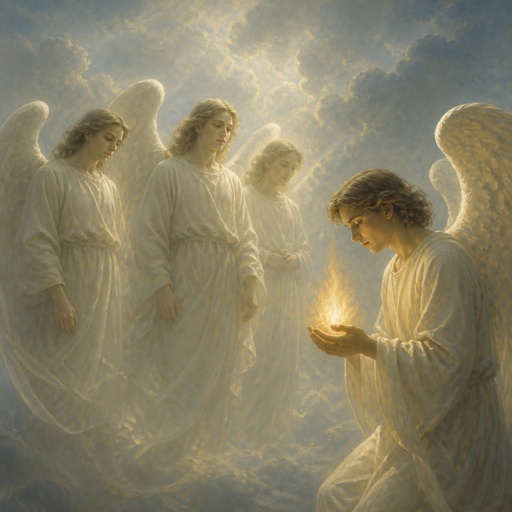
"And of the angels he saith, Who maketh his angels spirits, and his ministers a flame of fire." - Hebrews 1:7

Hebrews 7:17 - "For he testifieth, Thou art a priest for ever after the order of Melchisedec."

Hebrews 7:10 - "For he was yet in the loins of his father, when Melchisedec met him."

Hebrews 7:18 - "For there is verily a disannulling of the commandment going before for the weakness and unprofitableness thereof."

Hebrews 1:14

Hebrews 1:14

Hebrews 7:16 - "Who is made, not after the law of a carnal commandment, but after the power of an endless life."
Hebrews 3:7 - "Wherefore (as the Holy Ghost saith, To day if ye will hear his voice,"

Hebrews 6:1

Hebrews 8:7 - "For if that first covenant had been faultless, then should no place have been sought for the second."

Hebrews 7:15 - "And it is yet far more evident: for that after the similitude of Melchisedec there ariseth another priest,"
Hebrews 7:23 - "And they truly were many priests, because they were not suffered to continue by reason of death:"

Hebrews 7:8 - "And here men that die receive tithes; but there he receiveth them, of whom it is witnessed that he liveth."

Hebrews 6:1

Hebrews 10:7 - "Then said I, Lo, I come (in the volume of the book it is written of me,) to do thy will, O God."

Hebrews 7:14 - "For it is evident that our Lord sprang out of Juda; of which tribe Moses spake nothing concerning priesthood."

Hebrews 7:13 - "For he of whom these things are spoken pertaineth to another tribe, of which no man gave attendance at the altar."

Hebrews 7:9 - "And as I may so say, Levi also, who receiveth tithes, payed tithes in Abraham."