What does Hebrews 7:14 mean?
“For it is evident that our Lord sprang out of Juda; of which tribe Moses spake nothing concerning priesthood.” — Hebrews 7:14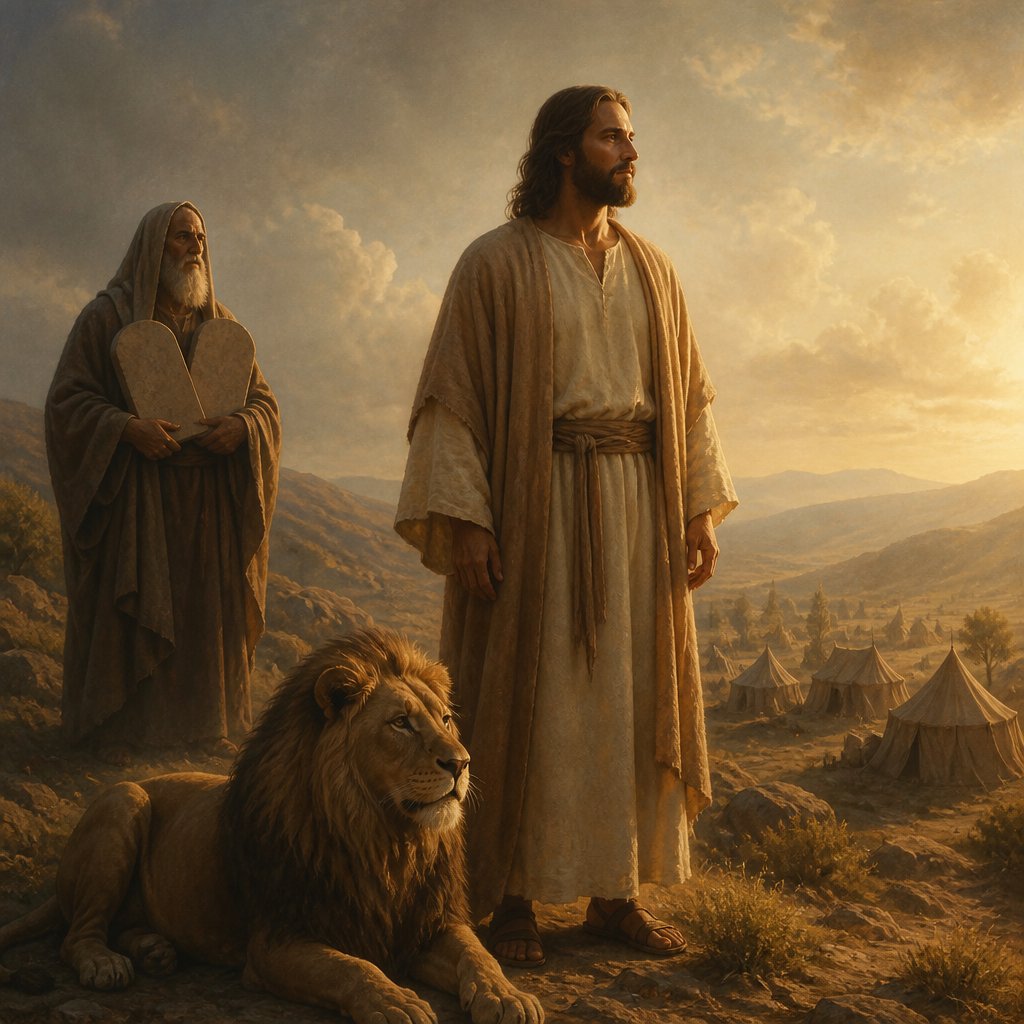
The Book of Hebrews is a piece of New Testament literature that is written in the form of a letter. It was written to a group of Jewish Christians who were facing persecution and struggling to hold onto their faith. The author of Hebrews is unknown, but their main aim was to encourage the readers to remain faithful to Jesus Christ in the face of adversity and to emphasize the superiority of Christ and the new covenant over the old covenant.
Hebrews 7:14, from the King James Version, reads: "For it is evident that our Lord sprang out of Juda; of which tribe Moses spake nothing concerning priesthood." This verse is part of a larger passage in which the author is comparing the priesthood of Jesus to the priesthood of the Old Testament, particularly the Levitical priesthood. The author argues that Jesus belongs to a different order of priesthood, the order of Melchizedek, and that his priesthood is superior to the Levitical priesthood.
The verse is significant for several reasons. First, it emphasizes the humanity of Jesus, stating that "our Lord sprang out of Juda." This highlights the fact that Jesus was a descendant of the tribe of Judah, one of the twelve tribes of Israel. This is important because in Jewish tradition, the priesthood was reserved for the tribe of Levi. By stating that Jesus came from the tribe of Judah, the author is making the point that Jesus's priesthood is not based on traditional Jewish lineage, but on a different, more ancient and superior order.
The reference to Moses is also significant. Moses was the great lawgiver of the Jewish people and is revered as one of the most important figures in the Old Testament. The author of Hebrews is pointing out that even in the Law given by Moses, there is no mention of a priesthood from the tribe of Judah. This further emphasizes the unique and superior nature of Jesus's priesthood.
The broader context of this verse is important for understanding its full significance. The Book of Hebrews is written to a Jewish audience who would have been very familiar with the Old Testament and Jewish religious traditions. The author is making the point that Jesus's priesthood is not bound by the limitations of the Old Testament priesthood, but is based on a more ancient and enduring order.
The theme of the priesthood of Jesus is central to the entire book of Hebrews. The author argues that Jesus is the ultimate high priest, who is able to intercede on behalf of humanity in a way that no other priest could. He is described as the mediator of a new and better covenant between God and humanity, a covenant that is not based on human efforts to keep the law, but on the grace and mercy of God.
The symbolism in this verse is also rich. The reference to the tribe of Judah carries with it the symbolism of kingship and authority. Jesus, as a descendant of Judah, is not only a priest but also a king. This echoes the prophecies in the Old Testament that the Messiah would come from the line of David, who was from the tribe of Judah. The reference to Moses and the Levitical priesthood symbolizes the limitations of the old covenant and the need for a new and better way of relating to God.
In conclusion, Hebrews 7:14 is a significant verse that emphasizes the unique and superior nature of Jesus's priesthood. It highlights the humanity of Jesus, his lineage from the tribe of Judah, and his connection to a more ancient and enduring order of priesthood. The verse is a key part of the author's argument for the superiority of Jesus and the new covenant over the old covenant. It is a powerful reminder to the original readers of Hebrews, and to us today, of the unchanging and enduring nature of Jesus's priesthood and his ability to intercede on our behalf.
Get our apps


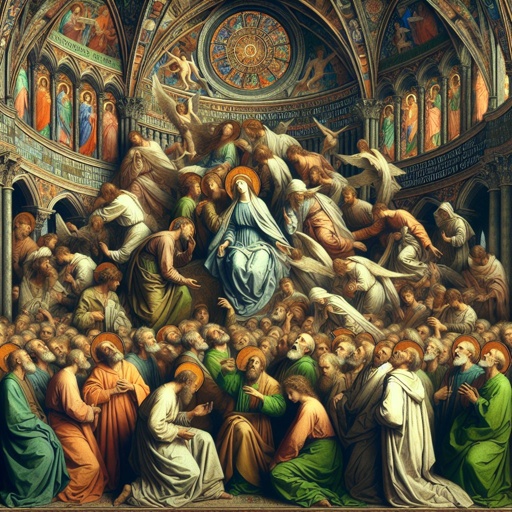
Artwork for Hebrews 7:14

Hebrews 7:14 - "For it is evident that our Lord sprang out of Juda; of which tribe Moses spake nothing concerning priesthood."
"For it is evident that our Lord sprang out of Juda; of which tribe Moses spake nothing concerning priesthood." - Hebrews 7:14

Hebrews 1:14

Hebrews 1:14

Hebrews 7:7 - "And without all contradiction the less is blessed of the better."

Hebrews 11:14 - "For they that say such things declare plainly that they seek a country."

Hebrews 13:14 - "For here have we no continuing city, but we seek one to come."

Hebrews 10:14 - "For by one offering he hath perfected for ever them that are sanctified."

Hebrews 7:20 - "And inasmuch as not without an oath he was made priest:"

"And without all contradiction the less is blessed of the better." - Hebrews 7:7

Hebrews 7:12 - "For the priesthood being changed, there is made of necessity a change also of the law."

Hebrews 7:24 - "But this man, because he continueth ever, hath an unchangeable priesthood."

Hebrews 7:22 - "By so much was Jesus made a surety of a better testament."

Hebrews 1:14 - "Are they not all ministering spirits, sent forth to minister for them who shall be heirs of salvation?"

Hebrews 6:14 - "Saying, Surely blessing I will bless thee, and multiplying I will multiply thee."

Hebrews 7:17 - "For he testifieth, Thou art a priest for ever after the order of Melchisedec."

Hebrews 7:10 - "For he was yet in the loins of his father, when Melchisedec met him."

Hebrews 7:18 - "For there is verily a disannulling of the commandment going before for the weakness and unprofitableness thereof."

Hebrews 12:14 - "Follow peace with all men, and holiness, without which no man shall see the Lord:"

Hebrews 7:16 - "Who is made, not after the law of a carnal commandment, but after the power of an endless life."
Hebrews 3:7 - "Wherefore (as the Holy Ghost saith, To day if ye will hear his voice,"

Hebrews 3:14 - "For we are made partakers of Christ, if we hold the beginning of our confidence stedfast unto the end;"
"For they that say such things declare plainly that they seek a country." - Hebrews 11:14

Hebrews 8:7 - "For if that first covenant had been faultless, then should no place have been sought for the second."

Hebrews 7:15 - "And it is yet far more evident: for that after the similitude of Melchisedec there ariseth another priest,"
Hebrews 7:23 - "And they truly were many priests, because they were not suffered to continue by reason of death:"

Hebrews 7:8 - "And here men that die receive tithes; but there he receiveth them, of whom it is witnessed that he liveth."

Hebrews 1:7 - "And of the angels he saith, Who maketh his angels spirits, and his ministers a flame of fire."

Hebrews 10:7 - "Then said I, Lo, I come (in the volume of the book it is written of me,) to do thy will, O God."

Hebrews 7:13 - "For he of whom these things are spoken pertaineth to another tribe, of which no man gave attendance at the altar."