What does Hebrews 7:24 mean?
“But this man, because he continueth ever, hath an unchangeable priesthood.” — Hebrews 7:24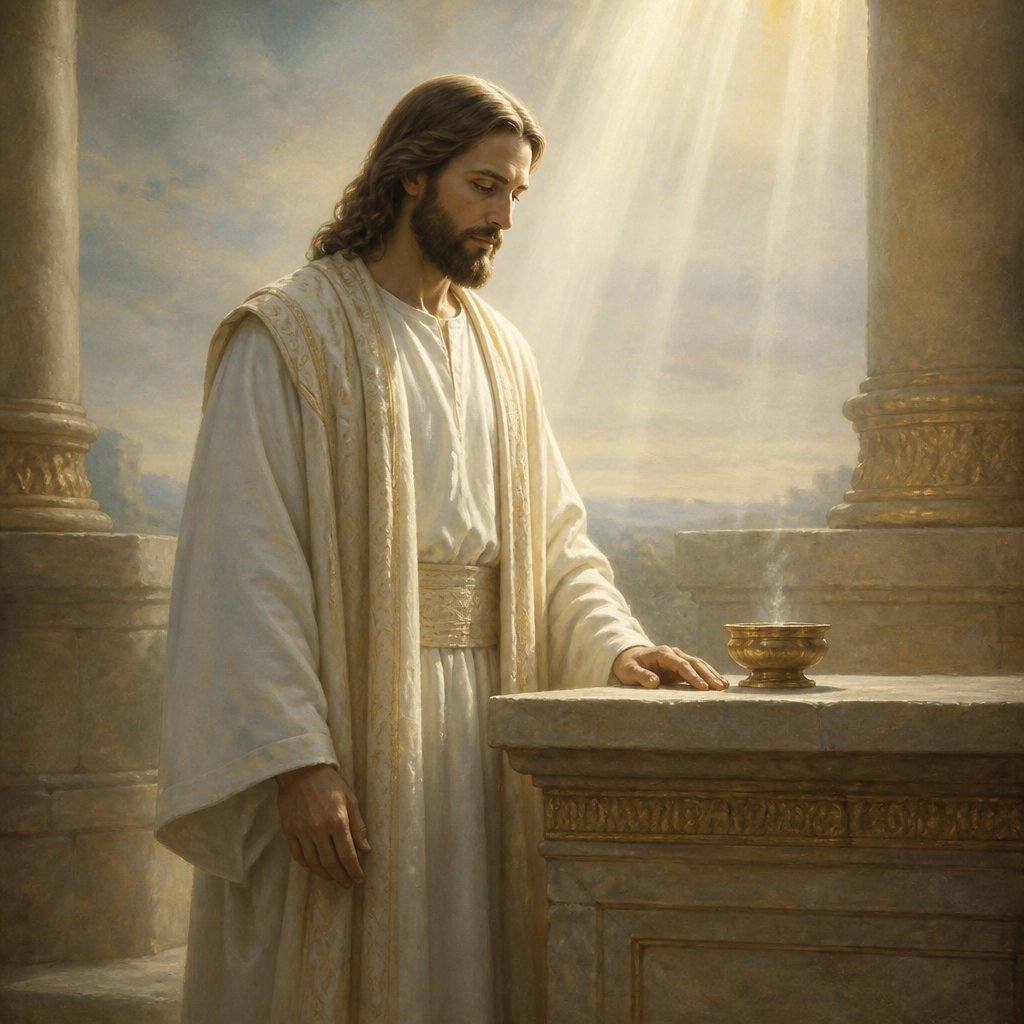
The verse Hebrews 7:24 from the King James Version states, "But this man, because he continueth ever, hath an unchangeable priesthood. " This verse is part of a larger passage in the book of Hebrews that focuses on the priesthood of Jesus Christ. In order to fully understand the meaning and significance of this verse, it is important to consider the broader context of the book of Hebrews as well as the historical and cultural background of the priesthood in the ancient Jewish tradition.
The book of Hebrews was written to a group of Jewish Christians who were facing persecution and were tempted to return to the practices of the Old Testament law. The author of Hebrews seeks to demonstrate the superiority of Christ and the fulfillment of the Old Testament promises in Him. The entire book is filled with comparisons between the Old Testament sacrificial system and the priesthood of Jesus Christ, with a focus on the eternal and unchanging nature of Christ's priesthood.
In the Old Testament, the priesthood was held by the descendants of Aaron, and the high priest was responsible for offering sacrifices for the sins of the people. However, these priests were mortal and their priesthood was subject to change through death. The verse Hebrews 7:24 highlights the superiority of Jesus' priesthood by emphasizing that He "continueth ever" and has an "unchangeable priesthood." This means that Jesus' priesthood is eternal and unchanging, and He is able to intercede for His people for all time.
The theme of the eternal and unchanging priesthood of Jesus Christ is a central theme in the book of Hebrews. The author emphasizes that Jesus is the ultimate high priest who offered Himself as a sacrifice for the sins of humanity, and His priesthood is not subject to the limitations of human priests. This concept is meant to provide hope and reassurance to the early Christians who were facing persecution, as it demonstrates the enduring and unchanging nature of Jesus' love and intercession on their behalf.
The symbolism in Hebrews 7:24 is profound and carries deep theological significance. The idea of an unchangeable priesthood emphasizes the permanence and continuity of Jesus' role as the high priest. This concept reflects the biblical understanding of Jesus as the eternal Son of God, who is able to save completely those who come to God through Him (Hebrews 7:25). The unchanging nature of Jesus' priesthood also emphasizes His reliability and faithfulness, as He is able to continue interceding for His people for all time.
Furthermore, the unchangeable priesthood of Jesus Christ points to the fulfillment of the Old Testament prophecies and promises. In the Old Testament, there were many prophecies about a coming Messiah who would establish a new and everlasting covenant with God's people. The unchangeable priesthood of Jesus Christ demonstrates that He is the fulfillment of these prophecies, and His sacrifice has inaugurated a new and better covenant that is based on His eternal priesthood and intercession.
In conclusion, Hebrews 7:24 from the King James Version is a verse that highlights the eternal and unchanging nature of Jesus' priesthood. It is a powerful reminder of the superiority of Christ's priesthood over the Old Testament system, and it emphasizes the reliability and faithfulness of Jesus as the ultimate high priest. This verse carries deep theological significance and serves as a source of comfort and hope for believers, as it demonstrates the enduring nature of Jesus' intercession on their behalf.
Get our apps


Artwork for Hebrews 7:24

Hebrews 7:24 - "But this man, because he continueth ever, hath an unchangeable priesthood."
"But this man, because he continueth ever, hath an unchangeable priesthood." - Hebrews 7:24

Hebrews 7:7 - "And without all contradiction the less is blessed of the better."

Hebrews 10:24 - "And let us consider one another to provoke unto love and to good works:"
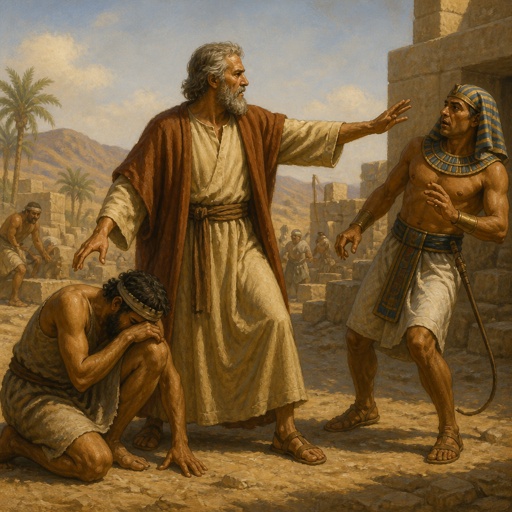
"And seeing one of them suffer wrong, he defended him, and avenged him that was oppressed, and smote the Egyptian:" - Acts 7:24

Hebrews 13:24 - "Salute all them that have the rule over you, and all the saints. They of Italy salute you."

Hebrews 11:24 - "By faith Moses, when he was come to years, refused to be called the son of Pharaoh's daughter;"

Hebrews 12:24 - "And to Jesus the mediator of the new covenant, and to the blood of sprinkling, that speaketh better things than that of Abel."

Hebrews 7:20 - "And inasmuch as not without an oath he was made priest:"

"And without all contradiction the less is blessed of the better." - Hebrews 7:7

Hebrews 7:12 - "For the priesthood being changed, there is made of necessity a change also of the law."

Hebrews 7:22 - "By so much was Jesus made a surety of a better testament."

Hebrews 7:17 - "For he testifieth, Thou art a priest for ever after the order of Melchisedec."

Hebrews 7:10 - "For he was yet in the loins of his father, when Melchisedec met him."

Hebrews 7:18 - "For there is verily a disannulling of the commandment going before for the weakness and unprofitableness thereof."

Hebrews 7:16 - "Who is made, not after the law of a carnal commandment, but after the power of an endless life."
Hebrews 3:7 - "Wherefore (as the Holy Ghost saith, To day if ye will hear his voice,"
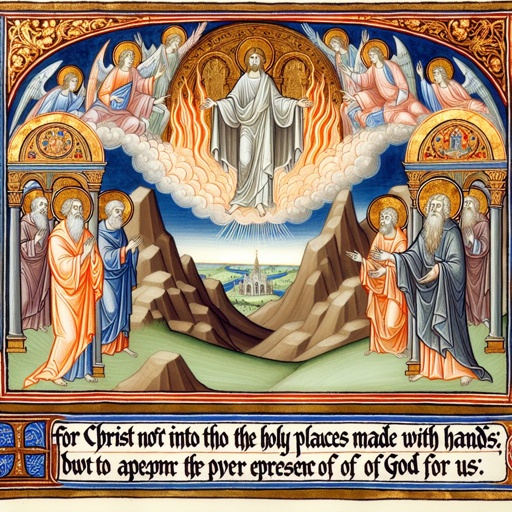
Hebrews 9:24 - "For Christ is not entered into the holy places made with hands, which are the figures of the true; but into heaven itself, now to appear in the presence of God for us:"

Hebrews 8:7 - "For if that first covenant had been faultless, then should no place have been sought for the second."

Hebrews 7:15 - "And it is yet far more evident: for that after the similitude of Melchisedec there ariseth another priest,"
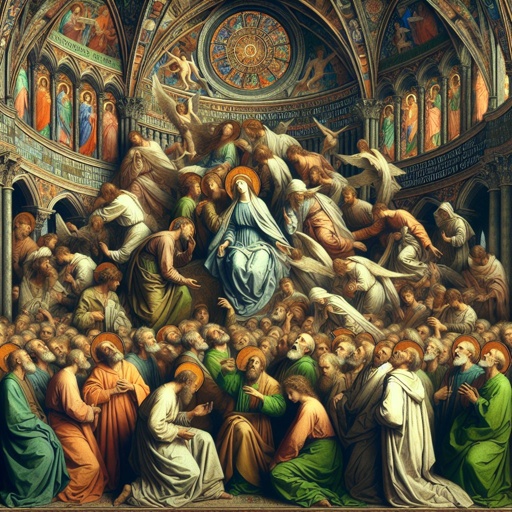
Hebrews 7:23 - "And they truly were many priests, because they were not suffered to continue by reason of death:"

Hebrews 7:8 - "And here men that die receive tithes; but there he receiveth them, of whom it is witnessed that he liveth."

Hebrews 1:7 - "And of the angels he saith, Who maketh his angels spirits, and his ministers a flame of fire."

Hebrews 10:7 - "Then said I, Lo, I come (in the volume of the book it is written of me,) to do thy will, O God."

Hebrews 7:14 - "For it is evident that our Lord sprang out of Juda; of which tribe Moses spake nothing concerning priesthood."

Hebrews 7:13 - "For he of whom these things are spoken pertaineth to another tribe, of which no man gave attendance at the altar."

Hebrews 7:9 - "And as I may so say, Levi also, who receiveth tithes, payed tithes in Abraham."

Hebrews 7:17 - "For he testifieth, Thou art a priest for ever after the order of Melchisedec."

Hebrews 7:19 - "For the law made nothing perfect, but the bringing in of a better hope did; by the which we draw nigh unto God."
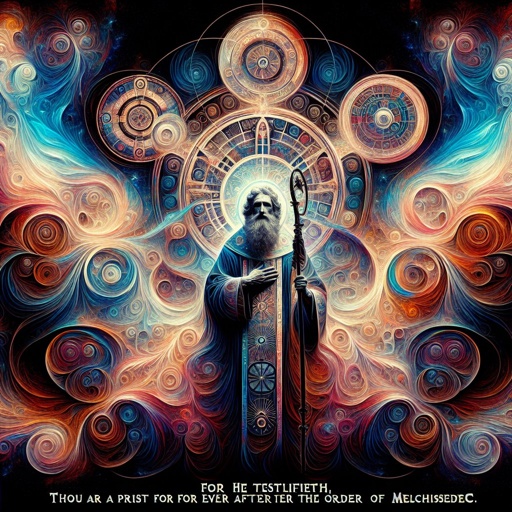
Hebrews 7:17 - "For he testifieth, Thou art a priest for ever after the order of Melchisedec."