What does Hebrews 7:27 mean?
“Who needeth not daily, as those high priests, to offer up sacrifice, first for his own sins, and then for the people’s: for this he did once, when he offered up himself.” — Hebrews 7:27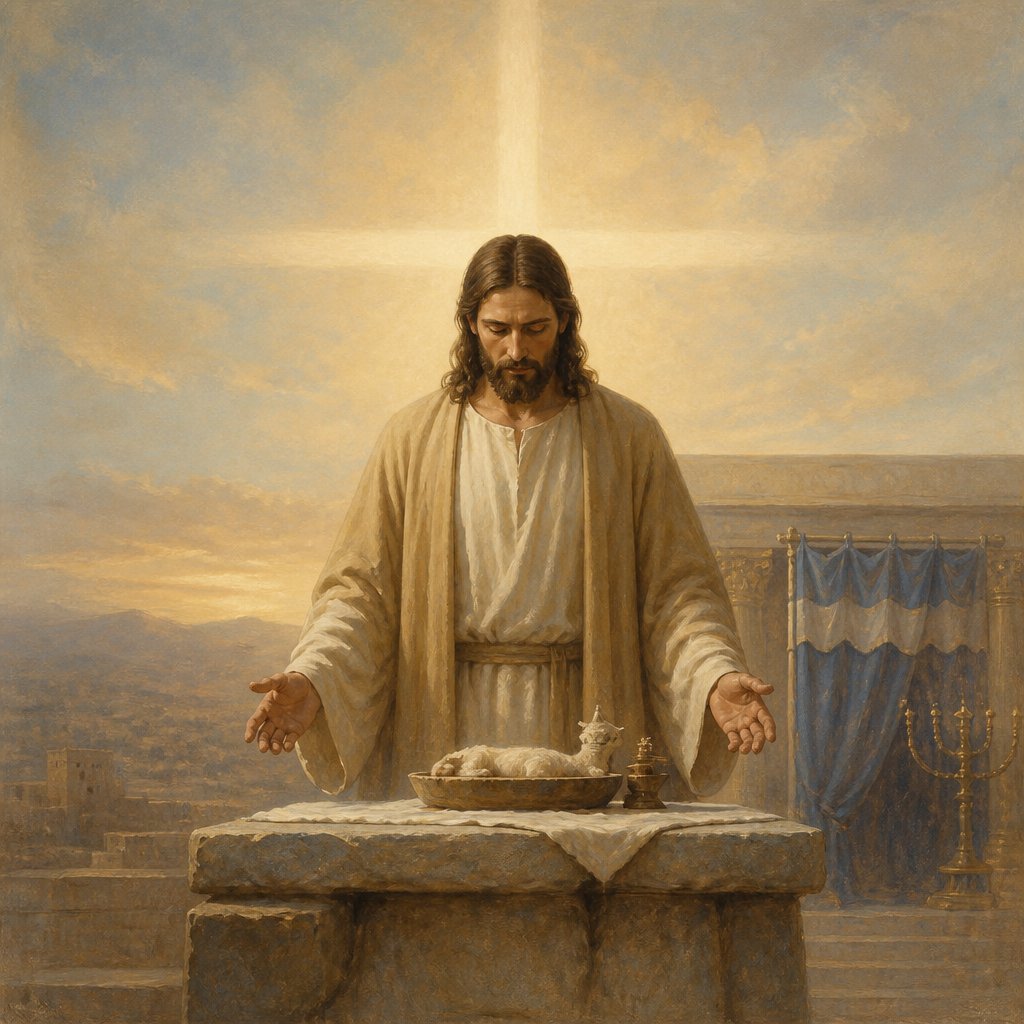
Hebrews 7:27 (KJV) reads, "Who needeth not daily, as those high priests, to offer up sacrifice, first for his own sins, and then for the people's: for this he did once, when he offered up himself."
This verse is part of the book of Hebrews, which addresses Jewish Christians who were experiencing persecution and were tempted to turn back to Judaism. The author of Hebrews seeks to demonstrate the superiority of Christ and His priesthood over the Levitical priesthood of the Old Testament.
In this verse, the author emphasizes the uniqueness and efficacy of Jesus' sacrifice. The high priests under the Old Covenant had to offer up sacrifices daily, first for their own sins and then for the sins of the people. However, Jesus, as the ultimate High Priest, did not need to offer sacrifices for His own sins because He was sinless. Instead, He offered up Himself as the perfect, once-for-all sacrifice for the sins of humanity.
This verse highlights several important theological themes. First and foremost, it underscores the sinlessness of Jesus Christ. Unlike the high priests of the Old Covenant, who were themselves sinners in need of atonement, Jesus was without sin. This is a powerful affirmation of His divinity and His unique ability to serve as the mediator between God and humanity.
The verse also emphasizes the sufficiency of Jesus' sacrifice. The repetitive nature of the Old Testament sacrificial system underscored the ongoing nature of human sinfulness and the inability of animal sacrifices to permanently remove sin. In contrast, Jesus' sacrifice was a once-for-all event that completely and eternally atoned for the sins of humanity. This speaks to the completeness and finality of His work on the cross, providing a way for sinful humanity to be reconciled with a holy God.
Another key theme in this verse is the priesthood of Jesus Christ. The concept of Christ as a high priest is a central theme in the book of Hebrews, and it serves to emphasize His role as the ultimate mediator between God and humanity. As a high priest, Jesus is uniquely qualified to intercede on behalf of His people and offer Himself as a sacrifice for their sins.
The context of this verse is important for understanding its significance. The author of Hebrews is writing to Jewish Christians who were grappling with the tension between their heritage in Judaism and their newfound faith in Christ. By highlighting the superiority of Jesus' priesthood and sacrifice, the author seeks to encourage and reassure these believers, demonstrating the fulfillment and surpassing of the Old Covenant in the person and work of Jesus Christ.
Symbolically, the verse also underscores the redemptive work of Jesus. The imagery of sacrifice carries deep significance, pointing to the shedding of blood and the offering of a life as a means of atonement. Jesus' sacrifice represents the ultimate expression of love and selflessness, providing a way for sinful humanity to be reconciled with a holy God.
In conclusion, Hebrews 7:27 (KJV) encapsulates the profound theological truths of Jesus' sinlessness, the sufficiency of His sacrifice, and His role as the ultimate high priest. This verse echoes throughout the entire book of Hebrews, serving as a powerful declaration of the unique and unparalleled nature of Jesus' atoning work. It offers hope and encouragement to believers, affirming the security and completeness of their salvation in Christ.
Get our apps


Artwork for Hebrews 7:27
Hebrews 7:27 - "Who needeth not daily, as those high priests, to offer up sacrifice, first for his own sins, and then for the people's: for this he did once, when he offered up himself."
"Who needeth not daily, as those high priests, to offer up sacrifice, first for his own sins, and then for the people's: for this he did once, when he offered up himself." - Hebrews 7:27

Hebrews 9:27 - "And as it is appointed unto men once to die, but after this the judgment:"

Hebrews 7:7 - "And without all contradiction the less is blessed of the better."

Hebrews 10:27 - "But a certain fearful looking for of judgment and fiery indignation, which shall devour the adversaries."

Hebrews 11:27 - "By faith he forsook Egypt, not fearing the wrath of the king: for he endured, as seeing him who is invisible."

"Non his son, Jehoshua his son." - 1 Chronicles 7:27

Hebrews 7:20 - "And inasmuch as not without an oath he was made priest:"
"And as it is appointed unto men once to die, but after this the judgment:" - Hebrews 9:27

"And without all contradiction the less is blessed of the better." - Hebrews 7:7

Hebrews 7:12 - "For the priesthood being changed, there is made of necessity a change also of the law."

Hebrews 7:24 - "But this man, because he continueth ever, hath an unchangeable priesthood."

Hebrews 7:22 - "By so much was Jesus made a surety of a better testament."

Hebrews 7:17 - "For he testifieth, Thou art a priest for ever after the order of Melchisedec."

Hebrews 7:10 - "For he was yet in the loins of his father, when Melchisedec met him."

Hebrews 7:18 - "For there is verily a disannulling of the commandment going before for the weakness and unprofitableness thereof."

Hebrews 12:27 - "And this word, Yet once more, signifieth the removing of those things that are shaken, as of things that are made, that those things which cannot be shaken may remain."

Hebrews 7:16 - "Who is made, not after the law of a carnal commandment, but after the power of an endless life."
Hebrews 3:7 - "Wherefore (as the Holy Ghost saith, To day if ye will hear his voice,"

Hebrews 8:7 - "For if that first covenant had been faultless, then should no place have been sought for the second."

Hebrews 7:15 - "And it is yet far more evident: for that after the similitude of Melchisedec there ariseth another priest,"
Hebrews 7:23 - "And they truly were many priests, because they were not suffered to continue by reason of death:"

Hebrews 7:8 - "And here men that die receive tithes; but there he receiveth them, of whom it is witnessed that he liveth."

Hebrews 1:7 - "And of the angels he saith, Who maketh his angels spirits, and his ministers a flame of fire."
"But a certain fearful looking for of judgment and fiery indignation, which shall devour the adversaries." - Hebrews 10:27

Hebrews 10:7 - "Then said I, Lo, I come (in the volume of the book it is written of me,) to do thy will, O God."

Hebrews 7:14 - "For it is evident that our Lord sprang out of Juda; of which tribe Moses spake nothing concerning priesthood."

Hebrews 7:13 - "For he of whom these things are spoken pertaineth to another tribe, of which no man gave attendance at the altar."

Hebrews 7:9 - "And as I may so say, Levi also, who receiveth tithes, payed tithes in Abraham."

Hebrews 7:17 - "For he testifieth, Thou art a priest for ever after the order of Melchisedec."