What does Hebrews 7:4 mean?
“Now consider how great this man was, unto whom even the patriarch Abraham gave the tenth of the spoils.” — Hebrews 7:4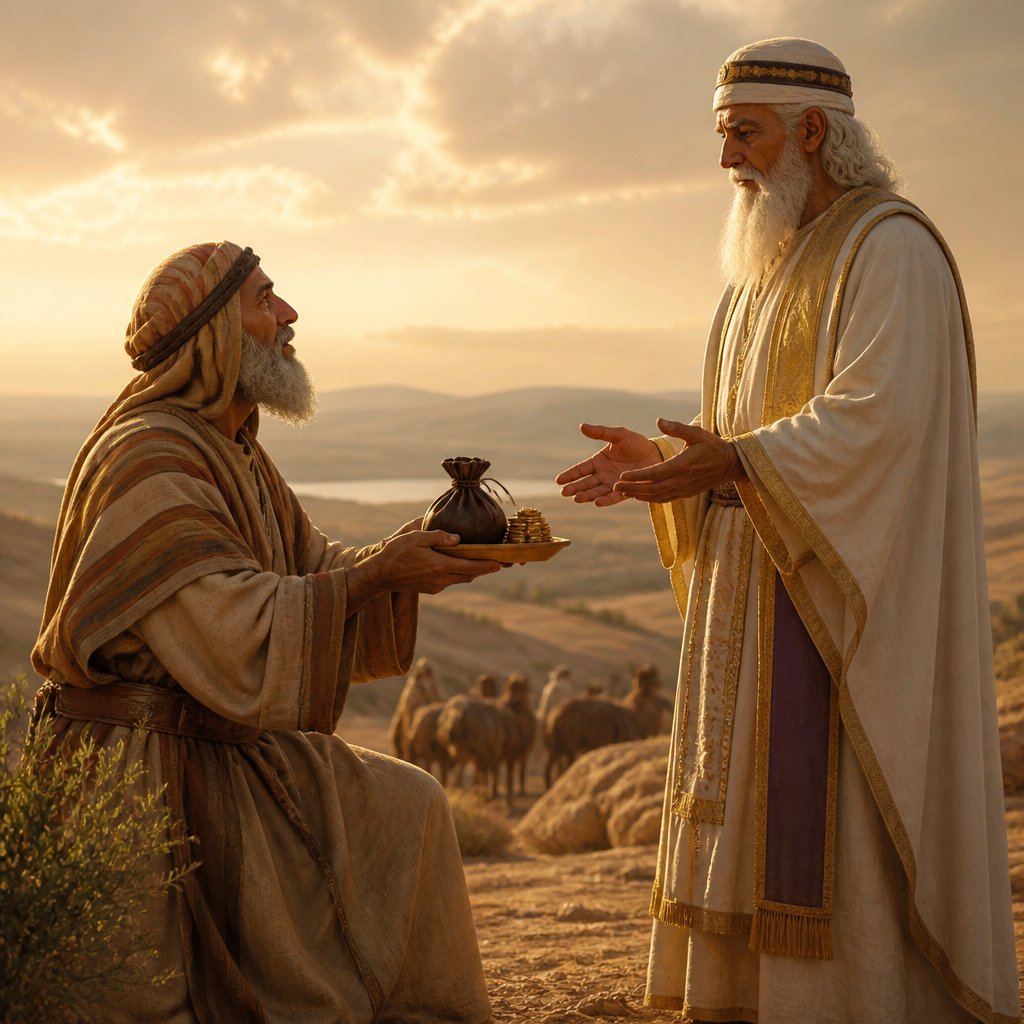
Hebrews 7:4 (KJV) states: "Now consider how great this man was, unto whom even the patriarch Abraham gave the tenth of the spoils."
This verse is part of a larger passage in the book of Hebrews that discusses the priesthood of Melchizedek and its superiority over the Levitical priesthood. To fully understand the meaning and significance of Hebrews 7:4, it is important to explore the context in which it appears and unpack its themes and symbolism.
The book of Hebrews was written to Jewish Christians who were facing persecution and struggling with doubts about their faith in Jesus as the Messiah. The author of Hebrews seeks to encourage and strengthen their faith by presenting Jesus as the ultimate high priest who is greater than any other priest or religious system. In this particular section of the book, the author focuses on the mysterious figure of Melchizedek, a priest-king who appears in the book of Genesis.
The verse in question begins with the phrase "Now consider how great this man was," prompting the readers to contemplate the significance and greatness of Melchizedek. It highlights the fact that even the revered patriarch Abraham acknowledged the greatness of Melchizedek by giving him a tenth of the spoils after a military victory. This act of giving tithes to Melchizedek demonstrates his superiority and authority as a priest-king, transcending the traditional boundaries of the Levitical priesthood.
One of the key themes in this passage is the concept of Jesus as a high priest in the order of Melchizedek. The author of Hebrews argues that Jesus' priesthood is superior to that of the Levitical priests because it is eternal and not based on earthly lineage or rituals. By drawing parallels between Jesus and Melchizedek, the author emphasizes the continuity and fulfillment of the Old Testament priesthood in the person of Jesus Christ.
Furthermore, the passage explores the themes of faith, obedience, and submission. The fact that Abraham, the father of the Jewish nation, willingly gave tithes to Melchizedek highlights his recognition of Melchizedek's authority and his own submission to it. This serves as a powerful example for the Jewish Christians to follow, demonstrating the importance of faith and obedience in acknowledging the authority of Jesus as the ultimate high priest.
Symbolically, Melchizedek represents a type or foreshadowing of Christ in the Old Testament. His appearance in the book of Genesis is shrouded in mystery, and his priesthood is described as without beginning or end, much like that of Jesus. This symbolism serves to underscore the continuity and fulfillment of God's redemptive plan throughout history, culminating in the person and work of Jesus Christ.
In conclusion, Hebrews 7:4 is a thought-provoking verse that prompts readers to consider the greatness of Melchizedek and the superiority of Jesus' priesthood. It conveys the themes of faith, obedience, and the continuity of God's redemptive plan, while also using symbolism to illustrate the significance of Jesus as the ultimate high priest. As a result, this verse holds profound theological and spiritual significance for Christians, reminding them of the timeless truth and power of Jesus' priesthood in their lives.
Get our apps


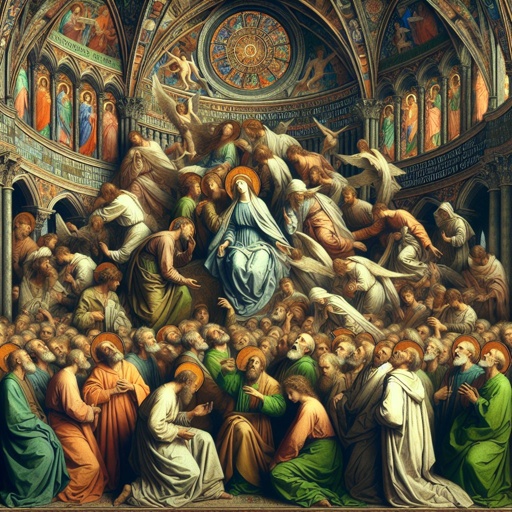
Artwork for Hebrews 7:4

Hebrews 7:4 - "Now consider how great this man was, unto whom even the patriarch Abraham gave the tenth of the spoils."
"Now consider how great this man was, unto whom even the patriarch Abraham gave the tenth of the spoils." - Hebrews 7:4
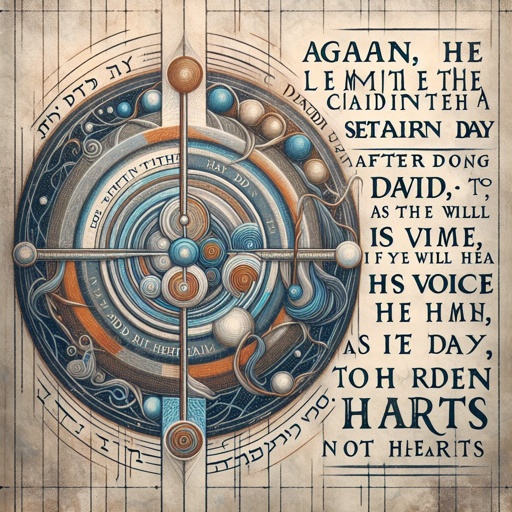
Hebrews 4:7 - "Again, he limiteth a certain day, saying in David, To day, after so long a time; as it is said, To day if ye will hear his voice, harden not your hearts."

Hebrews 7:7 - "And without all contradiction the less is blessed of the better."

Hebrews 4:9 - "There remaineth therefore a rest to the people of God."

Hebrews 7:20 - "And inasmuch as not without an oath he was made priest:"

"And without all contradiction the less is blessed of the better." - Hebrews 7:7

Hebrews 7:12 - "For the priesthood being changed, there is made of necessity a change also of the law."

Hebrews 7:24 - "But this man, because he continueth ever, hath an unchangeable priesthood."

Hebrews 7:22 - "By so much was Jesus made a surety of a better testament."

Hebrews 4:5 - "And in this place again, If they shall enter into my rest."

Hebrews 7:17 - "For he testifieth, Thou art a priest for ever after the order of Melchisedec."

Hebrews 7:10 - "For he was yet in the loins of his father, when Melchisedec met him."

Hebrews 7:18 - "For there is verily a disannulling of the commandment going before for the weakness and unprofitableness thereof."

Hebrews 10:4 - "For it is not possible that the blood of bulls and of goats should take away sins."

Hebrews 7:16 - "Who is made, not after the law of a carnal commandment, but after the power of an endless life."
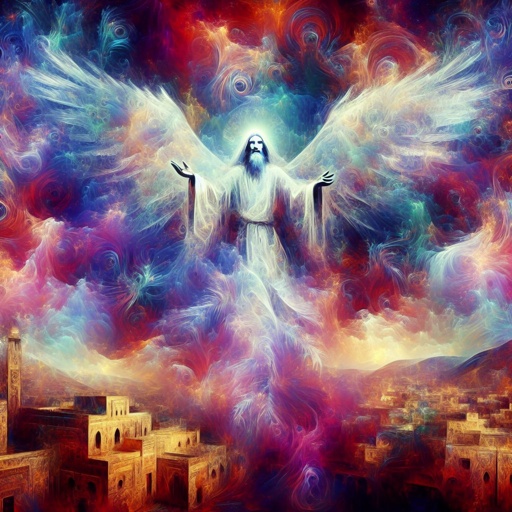
Hebrews 3:7 - "Wherefore (as the Holy Ghost saith, To day if ye will hear his voice,"

Hebrews 4:4 - "For he spake in a certain place of the seventh day on this wise, And God did rest the seventh day from all his works."

Hebrews 12:4 - "Ye have not yet resisted unto blood, striving against sin."

Hebrews 4:12 – "For the word of God is alive and active. Sharper than any double-edged sword."

Hebrews 8:7 - "For if that first covenant had been faultless, then should no place have been sought for the second."

Hebrews 7:15 - "And it is yet far more evident: for that after the similitude of Melchisedec there ariseth another priest,"
Hebrews 7:23 - "And they truly were many priests, because they were not suffered to continue by reason of death:"

Hebrews 7:8 - "And here men that die receive tithes; but there he receiveth them, of whom it is witnessed that he liveth."

Hebrews 4:12 – "For the word of God is alive and active. Sharper than any double-edged sword."

Hebrews 13:4 - "Marriage is honourable in all, and the bed undefiled: but whoremongers and adulterers God will judge."

Hebrews 5:4 - "And no man taketh this honour unto himself, but he that is called of God, as was Aaron."

Hebrews 1:7 - "And of the angels he saith, Who maketh his angels spirits, and his ministers a flame of fire."

Hebrews 3:4 - "For every house is builded by some man; but he that built all things is God."
!["For the word of God [is] quick, and powerful, and sharper than any twoedged sword, piercing even to the dividing asunder of soul and spirit, and of the joints and marrow, and [is] a discerner of the thoughts and intents of the heart." - Hebrews 4:12](https://media.bible.art/0705b859-7ae8-4ac8-9dce-49043e2ec43b-thumbnail.jpg)
"For the word of God [is] quick, and powerful, and sharper than any twoedged sword, piercing even to the dividing asunder of soul and spirit, and of the joints and marrow, and [is] a discerner of the thoughts and intents of the heart." - Hebrews 4:12