What does Hebrews 7:6 mean?
“But he whose descent is not counted from them received tithes of Abraham, and blessed him that had the promises.” — Hebrews 7:6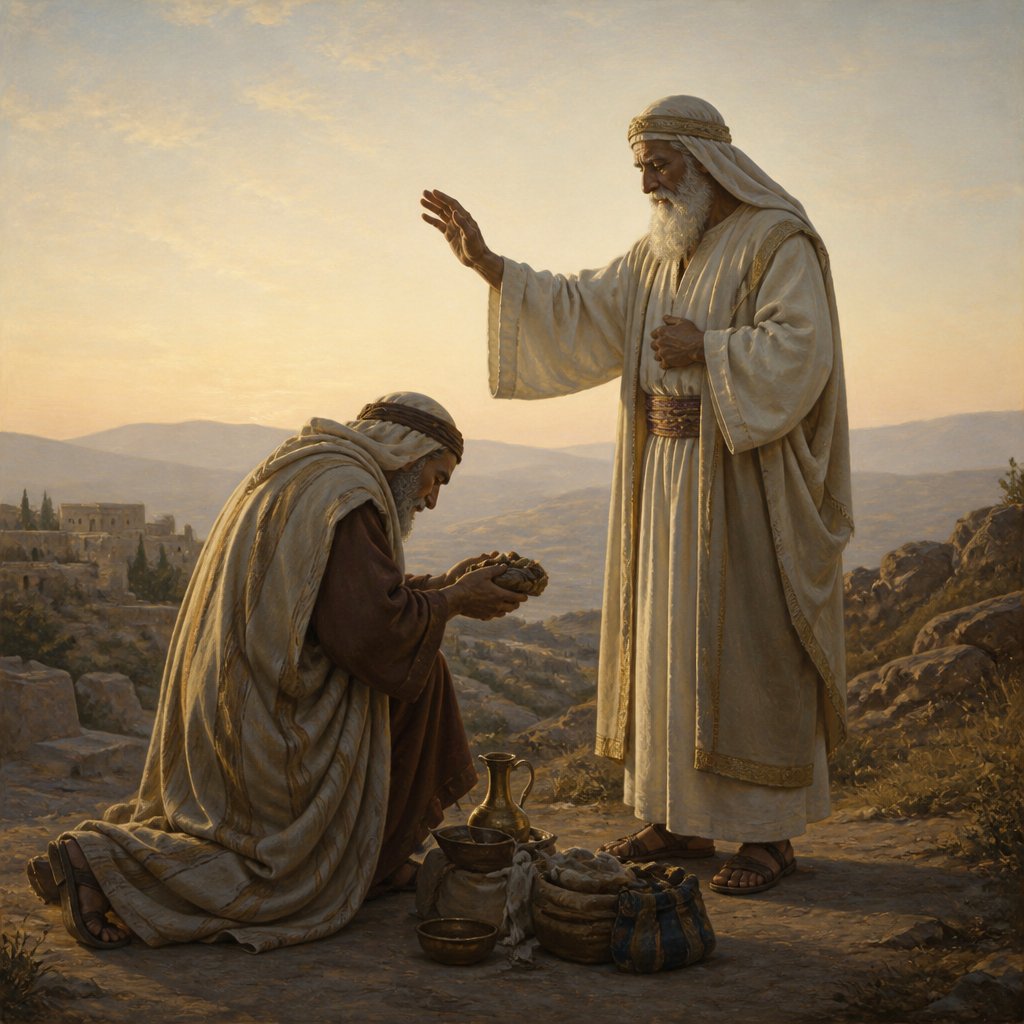
The Bible verse Hebrews 7:6 in the King James Version (KJV) reads: "But he whose descent is not counted from them received tithes of Abraham, and blessed him that had the promises." This verse is part of the larger passage in the book of Hebrews which discusses the priesthood of Jesus Christ and the superiority of his priesthood over the Levitical priesthood.
To understand the full meaning and significance of Hebrews 7:6, it is important to provide some context. The book of Hebrews was written to a group of Jewish Christians who were facing persecution and were tempted to return to Judaism. The author of Hebrews seeks to encourage and exhort them to remain steadfast in their faith in Jesus Christ, and to demonstrate the superiority of Christ and his priesthood over the Old Testament priesthood and sacrificial system.
In the preceding verses, the author of Hebrews discusses the story of Melchizedek, who was a mysterious and enigmatic figure in the Old Testament. In Hebrews 7:1-3, the author explains that Melchizedek was a king of Salem and a priest of God Most High, who blessed Abraham and received tithes from him. Melchizedek is described as being "without father, without mother, without descent, having neither beginning of days, nor end of life; but made like unto the Son of God; abideth a priest continually" (Hebrews 7:3, KJV).
In Hebrews 7:4-10, the author contrasts the priesthood of Melchizedek with the Levitical priesthood. He argues that the priesthood of Melchizedek is superior to the Levitical priesthood because Abraham, who was the father of the Jewish nation and the ancestor of the Levitical priests, paid tithes to Melchizedek and was blessed by him. This demonstrates that Melchizedek's priesthood is greater than that of the Levitical priests, who were still in the loins of Abraham when he paid tithes to Melchizedek. Therefore, the author concludes that the priesthood of Jesus Christ, who is a priest after the order of Melchizedek, is also superior to the Levitical priesthood.
In Hebrews 7:6 specifically, the author emphasizes the fact that Melchizedek, whose descent is not recorded in the genealogies of the Old Testament, received tithes from Abraham. This further emphasizes the superiority of Melchizedek's priesthood, as he was not descended from the Levitical line and yet received tithes from the patriarch of the Jewish nation. This serves as a foreshadowing of the priesthood of Jesus Christ, who is not a descendant of the Levitical line but is a priest after the order of Melchizedek.
The themes present in Hebrews 7:6 include the superiority of Christ's priesthood, the fulfillment of the Old Testament in Christ, and the continuity of God's plan of salvation throughout history. The context of Hebrews 7:6 within the broader passage further emphasizes the unique and unchanging nature of Christ's priesthood, and the author's argument for the sufficiency of Christ's atoning work for the forgiveness of sins.
In addition, there is rich symbolism in Hebrews 7:6, particularly in the figure of Melchizedek. Melchizedek serves as a type of Christ, prefiguring his role as a priest-king and his eternal priesthood. The fact that Melchizedek's descent is not recorded in the Old Testament genealogies points to his mysterious and transcendent nature, which mirrors that of Christ as the Son of God. The act of receiving tithes from Abraham and blessing him serves as an affirmation of Melchizedek's authority and superiority, which is then applied to Christ's priesthood.
In conclusion, Hebrews 7:6 is a significant verse within the broader context of the book of Hebrews, as it underscores the superiority of Christ's priesthood and the fulfillment of the Old Testament in him. The themes, context, and symbolism present within this verse contribute to the book's overall argument for the sufficiency of Christ's atoning work and the permanence of his priesthood. This verse serves as a reminder to believers of the unchanging nature of Christ's redemption and the security of their salvation in him.
Get our apps


Artwork for Hebrews 7:6

Hebrews 7:6 - "But he whose descent is not counted from them received tithes of Abraham, and blessed him that had the promises."
"But he whose descent is not counted from them received tithes of Abraham, and blessed him that had the promises." - Hebrews 7:6

Hebrews 6:7 - "For the earth which drinketh in the rain that cometh oft upon it, and bringeth forth herbs meet for them by whom it is dressed, receiveth blessing from God:"

Hebrews 6:1

Hebrews 7:7 - "And without all contradiction the less is blessed of the better."

Hebrews 6:1

Hebrews 6:3 - "And this will we do, if God permit."

Hebrews 7:20 - "And inasmuch as not without an oath he was made priest:"

"And without all contradiction the less is blessed of the better." - Hebrews 7:7

Hebrews 6:2 - "Of the doctrine of baptisms, and of laying on of hands, and of resurrection of the dead, and of eternal judgment."

Hebrews 6:5 - "And have tasted the good word of God, and the powers of the world to come,"

Hebrews 10:6 - "In burnt offerings and sacrifices for sin thou hast had no pleasure."

Hebrews 7:12 - "For the priesthood being changed, there is made of necessity a change also of the law."

Hebrews 7:24 - "But this man, because he continueth ever, hath an unchangeable priesthood."

Hebrews 7:22 - "By so much was Jesus made a surety of a better testament."

Hebrews 7:17 - "For he testifieth, Thou art a priest for ever after the order of Melchisedec."

Hebrews 7:10 - "For he was yet in the loins of his father, when Melchisedec met him."

Hebrews 7:18 - "For there is verily a disannulling of the commandment going before for the weakness and unprofitableness thereof."

"And this will we do, if God permit." - Hebrews 6:3

Hebrews 7:16 - "Who is made, not after the law of a carnal commandment, but after the power of an endless life."

Hebrews 6:15 - "And so, after he had patiently endured, he obtained the promise."

Hebrews 3:7 - "Wherefore (as the Holy Ghost saith, To day if ye will hear his voice,"

"For the earth which drinketh in the rain that cometh oft upon it, and bringeth forth herbs meet for them by whom it is dressed, receiveth blessing from God:" - Hebrews 6:7

Hebrews 6:6 - "If they shall fall away, to renew them again unto repentance; seeing they crucify to themselves the Son of God afresh, and put him to an open shame."

Hebrews 12:6 - "For whom the Lord loveth he chasteneth, and scourgeth every son whom he receiveth."

Hebrews 6:8 - "But that which beareth thorns and briers is rejected, and is nigh unto cursing; whose end is to be burned."

Hebrews 8:7 - "For if that first covenant had been faultless, then should no place have been sought for the second."

Hebrews 6:12 - "That ye be not slothful, but followers of them who through faith and patience inherit the promises."

Hebrews 6:14 - "Saying, Surely blessing I will bless thee, and multiplying I will multiply thee."

Hebrews 6:16 - "For men verily swear by the greater: and an oath for confirmation is to them an end of all strife."