What does Hebrews 7:9 mean?
“And as I may so say, Levi also, who receiveth tithes, payed tithes in Abraham.” — Hebrews 7:9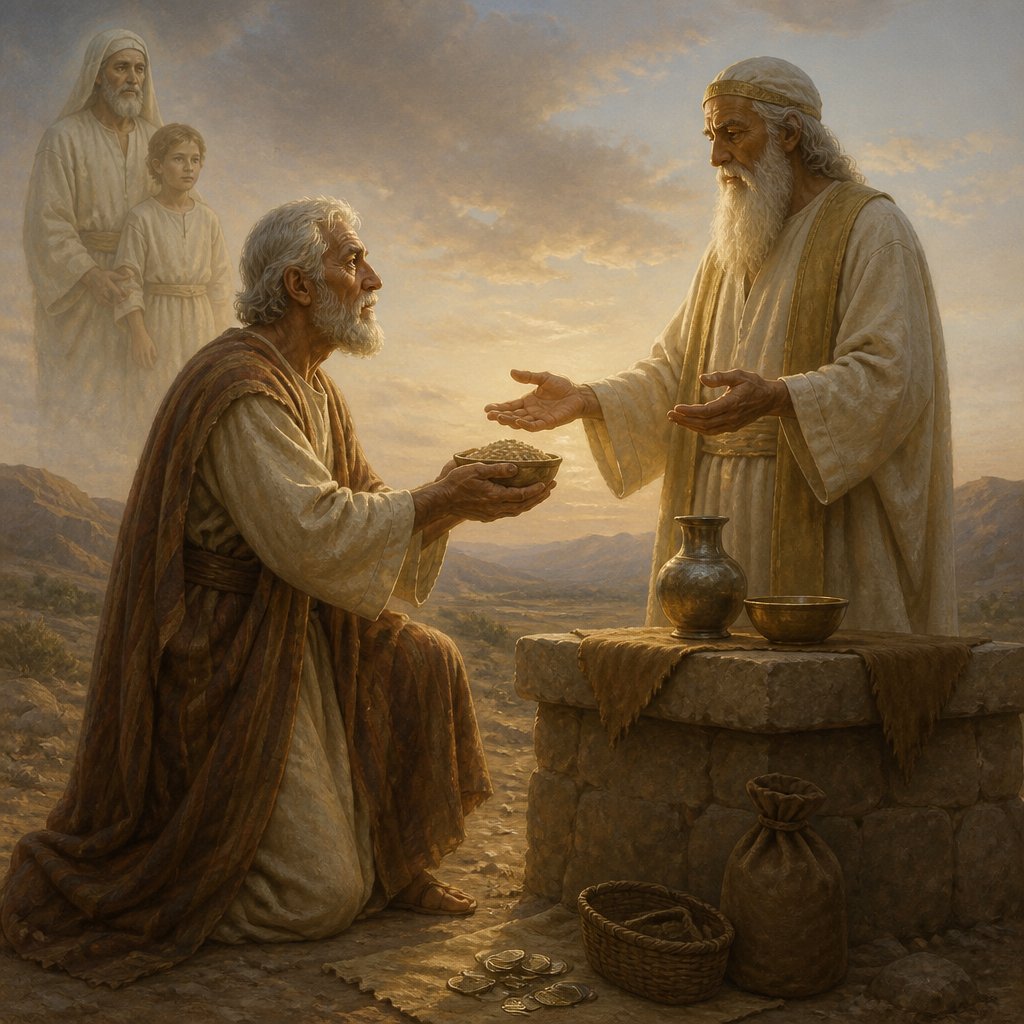
Hebrews 7:9 in the King James Version (KJV) states: "And as I may so say, Levi also, who receiveth tithes, payed tithes in Abraham."
In order to understand the significance of this verse, it is important to examine it within its broader context. The book of Hebrews was written to a Jewish Christian audience who were facing persecution and were tempted to return to the Old Testament sacrificial system. The author of Hebrews seeks to emphasize the supremacy of Jesus Christ and the new covenant that He has established.
The verse specifically references Levi, who was the ancestor of the priestly tribe of Levi. In the Old Testament, the Levites were given the responsibility of receiving tithes from the people of Israel, which were a tenth of their produce or income, and were to be given to support the priests and the temple. This system of tithing was an important aspect of the Israelite religious practices.
The verse goes on to explain that Levi, the one who received tithes from the people, actually paid tithes to Abraham. This refers to the account in the book of Genesis where Abraham, the patriarch of the nation of Israel, paid tithes to Melchizedek, who was a priest-king of Salem. This is significant because it demonstrates that Abraham, who was not a descendant of Levi, recognized the authority and superiority of Melchizedek. This establishes the precedence of Melchizedek's priesthood over that of the Levites.
This verse serves as an important piece of evidence in the larger argument of the book of Hebrews that Jesus Christ's priesthood is superior to that of the Levitical priesthood. The author of Hebrews presents Jesus as the ultimate high priest who is in the order of Melchizedek, not in the order of Levi. This is a radical departure from the Jewish understanding of priesthood and would have been a challenging concept for the Jewish Christians to grasp.
The broader theme of Hebrews 7 is the superiority of Christ's priesthood. The author argues that Jesus is not just a better high priest, but also part of a different, superior priestly order that predates the Levitical system and indeed transcends it. This is a powerful message for the Jewish Christians who were struggling to reconcile their faith in Christ with their traditional understanding of the priesthood and the law.
The symbolism in this verse is rich and significant. The payment of tithes by Levi through Abraham to Melchizedek serves as a symbolic representation of the priesthood of Christ, who is the ultimate high priest. It serves to establish the authority and superiority of Jesus' priesthood over the Levitical priesthood. The figure of Melchizedek represents a type of Christ, as a priest-king who is eternal and without a genealogy. This foreshadows the eternal and superior priesthood of Christ.
In conclusion, Hebrews 7:9 is a crucial verse in the broader argument of the book of Hebrews regarding the superiority of Christ's priesthood. It is a powerful demonstration of the authority and precedence of the priesthood of Melchizedek, and by extension, the priesthood of Jesus Christ. This verse would have served as a significant encouragement and challenge to the original audience, and continues to be a profound and meaningful proclamation of the supremacy of Christ's priesthood for believers today.
Get our apps


Artwork for Hebrews 7:9

Hebrews 7:9 - "And as I may so say, Levi also, who receiveth tithes, payed tithes in Abraham."
"And as I may so say, Levi also, who receiveth tithes, payed tithes in Abraham." - Hebrews 7:9

Hebrews 9:7 - "But into the second went the high priest alone once every year, not without blood, which he offered for himself, and for the errors of the people:"

Hebrews 7:7 - "And without all contradiction the less is blessed of the better."

Hebrews 4:9 - "There remaineth therefore a rest to the people of God."

Hebrews 9:16 - "For where a testament is, there must also of necessity be the death of the testator."
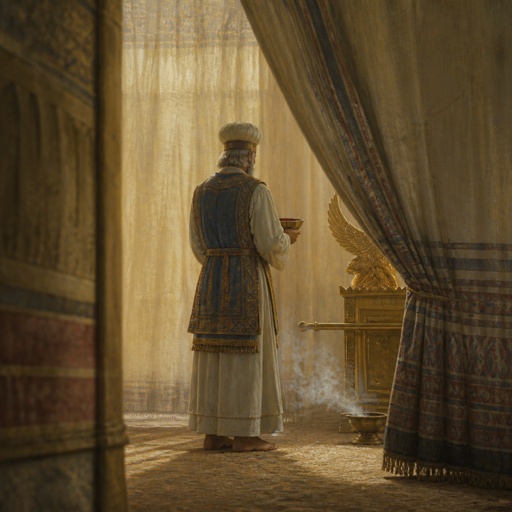
"But into the second went the high priest alone once every year, not without blood, which he offered for himself, and for the errors of the people:" - Hebrews 9:7

Hebrews 7:20 - "And inasmuch as not without an oath he was made priest:"

Hebrews 9:18 - "Whereupon neither the first testament was dedicated without blood."

Hebrews 9:27 - "And as it is appointed unto men once to die, but after this the judgment:"

"And without all contradiction the less is blessed of the better." - Hebrews 7:7

Hebrews 7:12 - "For the priesthood being changed, there is made of necessity a change also of the law."

Hebrews 7:24 - "But this man, because he continueth ever, hath an unchangeable priesthood."

Hebrews 7:22 - "By so much was Jesus made a surety of a better testament."

Hebrews 9:3 - "And after the second veil, the tabernacle which is called the Holiest of all;"

Hebrews 9:9 - "Which was a figure for the time then present, in which were offered both gifts and sacrifices, that could not make him that did the service perfect, as pertaining to the conscience;"

Hebrews 9:13 - "For if the blood of bulls and of goats, and the ashes of an heifer sprinkling the unclean, sanctifieth to the purifying of the flesh:"

Hebrews 7:17 - "For he testifieth, Thou art a priest for ever after the order of Melchisedec."

Hebrews 7:10 - "For he was yet in the loins of his father, when Melchisedec met him."

Hebrews 7:18 - "For there is verily a disannulling of the commandment going before for the weakness and unprofitableness thereof."

Hebrews 9:20 - "Saying, This is the blood of the testament which God hath enjoined unto you."

Hebrews 9:21 - "Moreover he sprinkled with blood both the tabernacle, and all the vessels of the ministry."

Hebrews 7:16 - "Who is made, not after the law of a carnal commandment, but after the power of an endless life."

Hebrews 9:17 - "For a testament is of force after men are dead: otherwise it is of no strength at all while the testator liveth."
Hebrews 3:7 - "Wherefore (as the Holy Ghost saith, To day if ye will hear his voice,"

Hebrews 9:2 - "For there was a tabernacle made; the first, wherein was the candlestick, and the table, and the shewbread; which is called the sanctuary."

Hebrews 9:1 - "Then verily the first covenant had also ordinances of divine service, and a worldly sanctuary."

Hebrews 9:22 - "And almost all things are by the law purged with blood; and without shedding of blood is no remission."

Hebrews 3:9 - "When your fathers tempted me, proved me, and saw my works forty years."

Hebrews 8:7 - "For if that first covenant had been faultless, then should no place have been sought for the second."