What does Hebrews 9:12 mean?
“Neither by the blood of goats and calves, but by his own blood he entered in once into the holy place, having obtained eternal redemption for us.” — Hebrews 9:12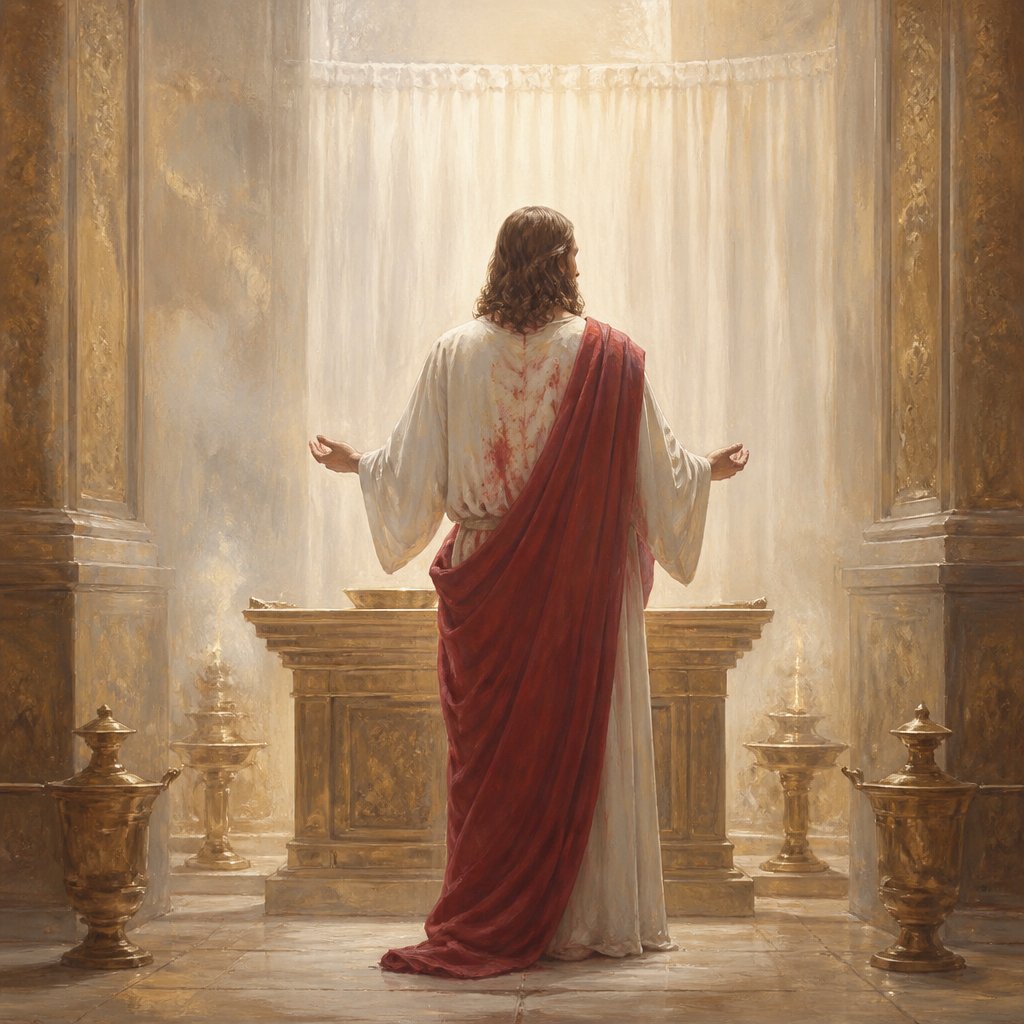
Hebrews 9:12 in the King James Version of the Bible states, "Neither by the blood of goats and calves, but by his own blood he entered in once into the holy place, having obtained eternal redemption for us." This verse is found in the New Testament, specifically in the Book of Hebrews, which was written to encourage Jewish believers to remain steadfast in their faith in Jesus Christ. The author of Hebrews emphasizes the superiority of Jesus' sacrifice over the sacrifices of the Old Testament, particularly those made with the blood of animals.
The verse begins by contrasting the blood of goats and calves with the blood of Jesus. In the Old Testament, the blood of goats and calves was used in the sacrificial system to atone for the sins of the people. However, these sacrifices were only temporary and had to be repeated year after year. The author of Hebrews is making the point that Jesus' sacrifice is far superior to these animal sacrifices because it was made with his own blood, and it provides eternal redemption.
The phrase "entered in once into the holy place" refers to Jesus' once-for-all sacrifice on the cross. In the Old Testament, the high priest would enter the Holy of Holies in the tabernacle or temple once a year on the Day of Atonement to make atonement for the sins of the people. However, Jesus, as the ultimate High Priest, entered into the true Holy of Holies in heaven with his own blood to obtain eternal redemption for all who believe in him. This underscores the finality and completeness of Jesus' sacrifice, as it does not need to be repeated.
The concept of "eternal redemption" is a central theme in this verse. The word "redemption" refers to the act of purchasing or setting free by payment of a ransom. In this case, Jesus' sacrifice on the cross was the payment for the redemption of humanity from the power and penalty of sin. The redemption obtained through Jesus' blood is not temporary or limited, but it is eternal in nature. This highlights the permanence and sufficiency of Jesus' atoning work, as it secures eternal salvation for all who believe in him.
The overarching theme of Hebrews 9:12 is the superiority and finality of Jesus' sacrifice. The author of Hebrews is urging his readers to put their full trust in Jesus Christ as the ultimate and complete High Priest who has obtained eternal redemption for them through his sacrifice on the cross. This verse emphasizes the once-for-all nature of Jesus' atoning work, drawing a sharp contrast with the repetitive and temporary nature of the Old Testament sacrificial system. Through this, it asserts the sufficiency and effectiveness of Jesus' sacrifice in providing eternal salvation for believers.
Symbolically, the blood of goats and calves in the Old Testament sacrificial system represents the temporary and incomplete nature of atonement for sin. In contrast, Jesus' own blood symbolizes the perfect and permanent atonement for sin. The imagery of entering into the holy place with his own blood denotes the access and reconciliation that Jesus provides for believers to come before God. The concept of eternal redemption symbolizes the ultimate freedom from the bondage of sin and the assurance of eternal life through faith in Jesus Christ.
In conclusion, Hebrews 9:12 is a powerful and profound declaration of the unique and unparalleled sacrifice of Jesus Christ. It emphasizes his once-for-all atoning work, his eternal redemption, and the sufficiency of his blood to cleanse believers from sin. This verse serves as a reminder to all believers of the incomparable value and effectiveness of Jesus' sacrifice, and it calls us to place our full trust in him for our eternal salvation.
Get our apps


Artwork for Hebrews 9:12

Hebrews 9:12 - "Neither by the blood of goats and calves, but by his own blood he entered in once into the holy place, having obtained eternal redemption for us."
"Neither by the blood of goats and calves, but by his own blood he entered in once into the holy place, having obtained eternal redemption for us." - Hebrews 9:12

Hebrews 12:9 - "Furthermore we have had fathers of our flesh which corrected us, and we gave them reverence: shall we not much rather be in subjection unto the Father of spirits, and live?"

Hebrews 12:8

Hebrews 12:12 - "Wherefore lift up the hands which hang down, and the feeble knees;"

Hebrews 12:29 - "For our God is a consuming fire."

Hebrews 4:9 - "There remaineth therefore a rest to the people of God."

Hebrews 9:16 - "For where a testament is, there must also of necessity be the death of the testator."

Hebrews 7:12 - "For the priesthood being changed, there is made of necessity a change also of the law."

The Plague of Boils - Exodus 9:8-12.

Hebrews 9:18 - "Whereupon neither the first testament was dedicated without blood."

Hebrews 9:27 - "And as it is appointed unto men once to die, but after this the judgment:"

Hebrews 12:4 - "Ye have not yet resisted unto blood, striving against sin."

Hebrews 12:21 - "And so terrible was the sight, that Moses said, I exceedingly fear and quake:)"

Hebrews 4:12 – "For the word of God is alive and active. Sharper than any double-edged sword."

"For our God is a consuming fire." - Hebrews 12:29

Hebrews 8:12 - "For I will be merciful to their unrighteousness, and their sins and their iniquities will I remember no more."

Hebrews 9:3 - "And after the second veil, the tabernacle which is called the Holiest of all;"

Hebrews 9:9 - "Which was a figure for the time then present, in which were offered both gifts and sacrifices, that could not make him that did the service perfect, as pertaining to the conscience;"

Hebrews 4:12 – "For the word of God is alive and active. Sharper than any double-edged sword."
!["For our God [is] a consuming fire." - Hebrews 12:29](https://media.bible.art/d7477ab1-fc4c-4821-93d4-74621f3df94b-thumbnail.jpg)
"For our God [is] a consuming fire." - Hebrews 12:29

Hebrews 9:13 - "For if the blood of bulls and of goats, and the ashes of an heifer sprinkling the unclean, sanctifieth to the purifying of the flesh:"

Hebrews 9:20 - "Saying, This is the blood of the testament which God hath enjoined unto you."

Hebrews 9:21 - "Moreover he sprinkled with blood both the tabernacle, and all the vessels of the ministry."
!["For the word of God [is] quick, and powerful, and sharper than any twoedged sword, piercing even to the dividing asunder of soul and spirit, and of the joints and marrow, and [is] a discerner of the thoughts and intents of the heart." - Hebrews 4:12](https://media.bible.art/0705b859-7ae8-4ac8-9dce-49043e2ec43b-thumbnail.jpg)
"For the word of God [is] quick, and powerful, and sharper than any twoedged sword, piercing even to the dividing asunder of soul and spirit, and of the joints and marrow, and [is] a discerner of the thoughts and intents of the heart." - Hebrews 4:12

Hebrews 12:6 - "For whom the Lord loveth he chasteneth, and scourgeth every son whom he receiveth."

Hebrews 6:12 - "That ye be not slothful, but followers of them who through faith and patience inherit the promises."

Hebrews 9:17 - "For a testament is of force after men are dead: otherwise it is of no strength at all while the testator liveth."

Hebrews 9:2 - "For there was a tabernacle made; the first, wherein was the candlestick, and the table, and the shewbread; which is called the sanctuary."

Hebrews 9:1 - "Then verily the first covenant had also ordinances of divine service, and a worldly sanctuary."