What does Hebrews 9:17 mean?
“For a testament is of force after men are dead: otherwise it is of no strength at all while the testator liveth.” — Hebrews 9:17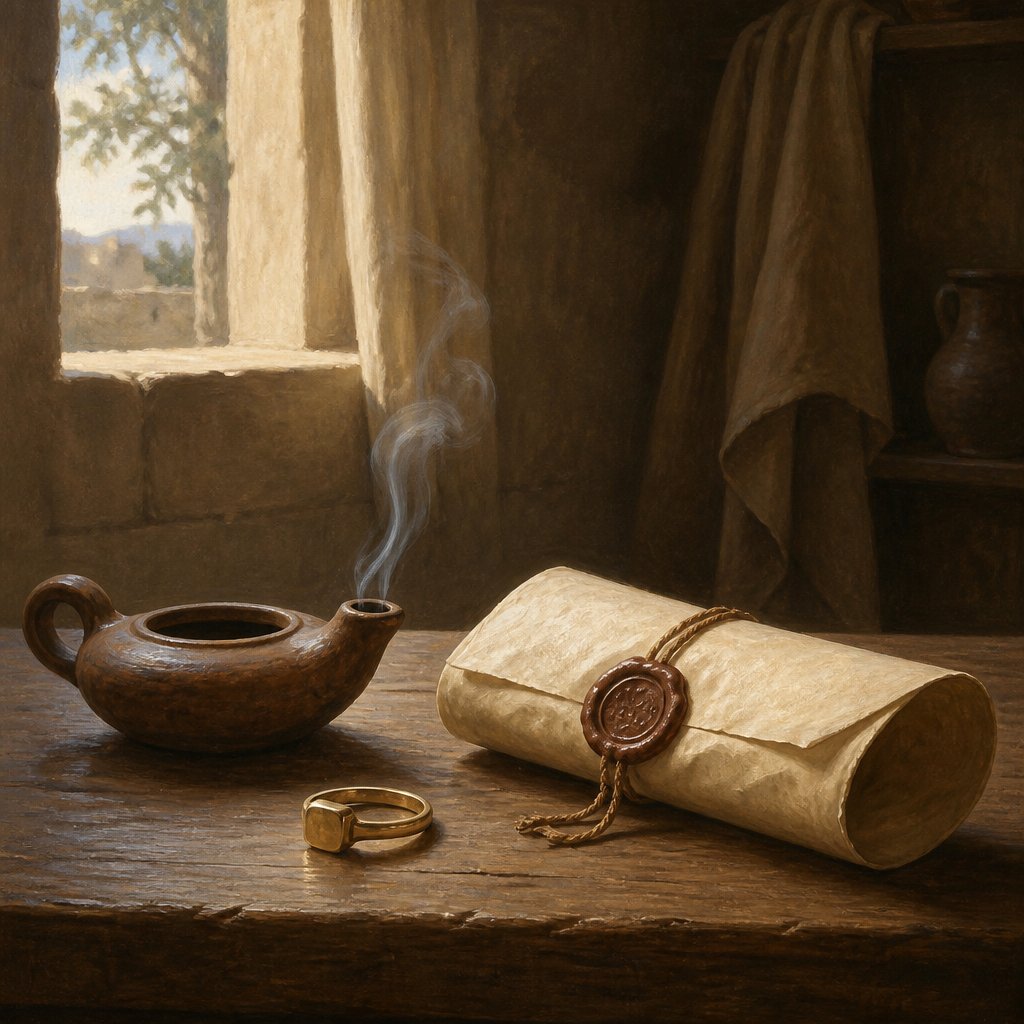
The verse Hebrews 9:17 from the King James Version (KJV) of the Bible says, "For a testament is of force after men are dead: otherwise it is of no strength at all while the testator liveth." This verse is found in the New Testament of the Bible, specifically in the book of Hebrews, which is attributed to the apostle Paul.
The concept of a "testament" or "covenant" is central to the understanding of this verse. In biblical times, a testament or covenant was a legally binding agreement between two parties, often sealed with a sacrifice or a solemn oath. This verse refers to the fact that a covenant only comes into effect after the death of the one who made it, known as the testator. Until the testator dies, the terms of the covenant are not in force.
One of the essential themes of this verse is the concept of the new covenant in Christ. In the preceding verses, the author of Hebrews discusses the Old Testament rituals and sacrifices and contrasts them with the perfect and complete sacrifice of Jesus Christ. The author emphasizes that Jesus' death on the cross is the ultimate and final sacrifice that ratifies the new covenant between God and humanity. This new covenant, established through the blood of Christ, is now in force and supersedes the old covenant.
The context of Hebrews 9:17 is important in understanding its significance. The book of Hebrews was written to encourage Jewish Christians who were facing persecution and tempted to revert to their former Jewish practices. The author sought to demonstrate the superiority and sufficiency of Christ and His sacrifice over the Old Testament rituals and sacrifices. The verse serves to underscore the finality and efficacy of Christ's sacrifice, which brings about the new covenant and secures salvation for believers.
Symbolism plays a significant role in understanding the deeper meaning of this verse. The testator, Jesus Christ, is represented as the one who establishes the new covenant through His sacrificial death. His blood is the seal of the covenant, signifying its permanence and irrevocability. The contrast between the Old Testament sacrifices, which were temporary and had to be repeatedly offered, and Christ's once-for-all sacrifice, highlights the superiority of the new covenant.
Furthermore, the verse also communicates the principle of the law of inheritance. In legal terms, a will or testament only takes effect after the death of the one who made it. Similarly, the inheritance promised in the new covenant, including eternal life and the blessings of God's kingdom, is only realized through the death of Christ. His death paves the way for believers to inherit the promises of God and receive the benefits of the new covenant.
In conclusion, Hebrews 9:17 conveys the profound truth of the new covenant established through the sacrificial death of Jesus Christ. It emphasizes the finality and efficacy of His sacrifice, contrasting it with the temporary and insufficient nature of the Old Testament sacrifices. The verse reinforces the central theme of Christ's redemptive work and the blessings of the new covenant for believers. As such, it serves as a powerful reminder of the security and permanence of the believer's hope in Christ.
Get our apps


Artwork for Hebrews 9:17

Hebrews 9:17 - "For a testament is of force after men are dead: otherwise it is of no strength at all while the testator liveth."
"For a testament is of force after men are dead: otherwise it is of no strength at all while the testator liveth." - Hebrews 9:17

Hebrews 10:17 - "And their sins and iniquities will I remember no more."

Hebrews 4:9 - "There remaineth therefore a rest to the people of God."

Hebrews 7:17 - "For he testifieth, Thou art a priest for ever after the order of Melchisedec."

Hebrews 9:16 - "For where a testament is, there must also of necessity be the death of the testator."

Hebrews 9:18 - "Whereupon neither the first testament was dedicated without blood."

Hebrews 9:27 - "And as it is appointed unto men once to die, but after this the judgment:"
Hebrews 3:17 - "But with whom was he grieved forty years? was it not with them that had sinned, whose carcases fell in the wilderness?"

Hebrews 9:3 - "And after the second veil, the tabernacle which is called the Holiest of all;"
"And their sins and iniquities will I remember no more." - Hebrews 10:17

Hebrews 9:9 - "Which was a figure for the time then present, in which were offered both gifts and sacrifices, that could not make him that did the service perfect, as pertaining to the conscience;"

Hebrews 9:13 - "For if the blood of bulls and of goats, and the ashes of an heifer sprinkling the unclean, sanctifieth to the purifying of the flesh:"

Hebrews 9:20 - "Saying, This is the blood of the testament which God hath enjoined unto you."

Hebrews 9:21 - "Moreover he sprinkled with blood both the tabernacle, and all the vessels of the ministry."

Hebrews 7:17 - "For he testifieth, Thou art a priest for ever after the order of Melchisedec."
Hebrews 7:17 - "For he testifieth, Thou art a priest for ever after the order of Melchisedec."

Hebrews 9:2 - "For there was a tabernacle made; the first, wherein was the candlestick, and the table, and the shewbread; which is called the sanctuary."

Hebrews 9:1 - "Then verily the first covenant had also ordinances of divine service, and a worldly sanctuary."

Hebrews 9:22 - "And almost all things are by the law purged with blood; and without shedding of blood is no remission."

Hebrews 3:9 - "When your fathers tempted me, proved me, and saw my works forty years."

Hebrews 6:17 - "Wherein God, willing more abundantly to shew unto the heirs of promise the immutability of his counsel, confirmed it by an oath:"

Hebrews 9:5 - "And over it the cherubims of glory shadowing the mercyseat; of which we cannot now speak particularly."
"There remaineth therefore a rest to the people of God." - Hebrews 4:9

Hebrews 6:9 - "But, beloved, we are persuaded better things of you, and things that accompany salvation, though we thus speak."

Hebrews 7:9 - "And as I may so say, Levi also, who receiveth tithes, payed tithes in Abraham."

Hebrews 9:8 - "The Holy Ghost this signifying, that the way into the holiest of all was not yet made manifest, while as the first tabernacle was yet standing:"

Hebrews 9:6 - "Now when these things were thus ordained, the priests went always into the first tabernacle, accomplishing the service of God."

Hebrews 9:10 - "Which stood only in meats and drinks, and divers washings, and carnal ordinances, imposed on them until the time of reformation."

1 Samuel 9:17 - "And when Samuel saw Saul, the LORD said unto him, Behold the man whom I spake to thee of! this same shall reign over my people."