What does Isaiah 10:28 mean?
“He is come to Aiath, he is passed to Migron; at Michmash he hath laid up his carriages:” — Isaiah 10:28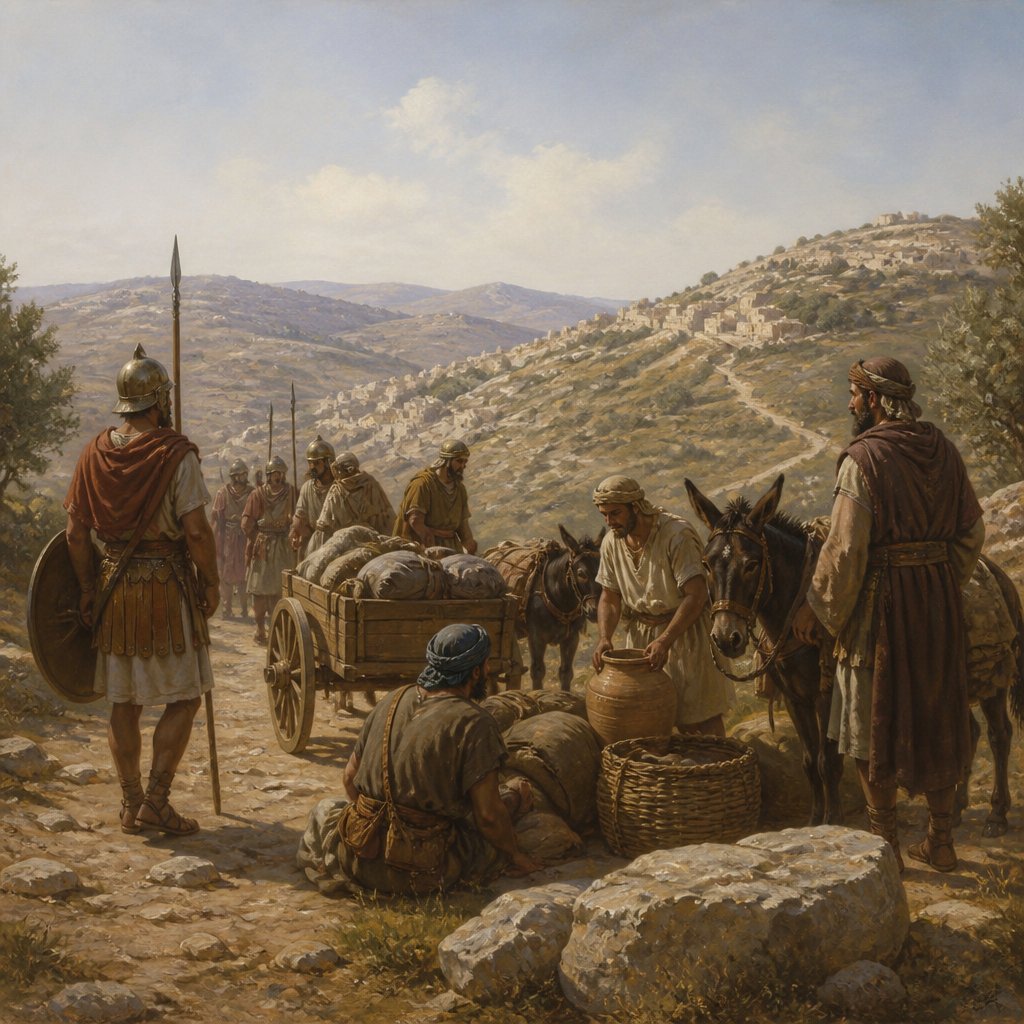
Isaiah 10:28 in the King James Version of the Bible reads: "He is come to Aiath, he is passed to Migron; at Michmash he hath laid up his carriages."
This verse comes from the book of Isaiah, which is a prophetic book in the Old Testament. The prophet Isaiah lived during a critical period in Israel's history. The nation was divided, with the northern kingdom of Israel and the southern kingdom of Judah facing threats from powerful neighboring empires. Isaiah's prophecies often addressed the political and spiritual challenges facing the people of Israel.
In Isaiah 10:28, the prophet describes the advance of an invading army. The cities of Aiath and Migron are mentioned, along with the location of Michmash. The mention of "he" in this verse likely refers to the Assyrian army, which was known for its military conquests in the ancient Near East. The arrival of the Assyrian army at these cities would have struck fear into the hearts of the people of Israel, as they faced the threat of invasion and destruction.
One of the key themes in this verse is the sovereignty of God in the midst of political upheaval and military conflict. Throughout the book of Isaiah, we see the prophet emphasizing the ultimate authority and control of God over the affairs of nations. Even as powerful armies advance and lay siege to cities, ultimately it is God who is in control. This theme provides comfort and reassurance to the people of Israel, reminding them that their hope and security are ultimately found in God's faithfulness.
Another important theme in this verse is the consequences of disobedience and the need for repentance. Throughout the book of Isaiah, the prophet warns the people of Israel about the consequences of their sin and disobedience. The impending invasion by the Assyrian army was seen as a result of Israel's unfaithfulness to God's covenant and their failure to live according to His commands. The threat of military conquest served as a wake-up call for the people to turn back to God and seek His forgiveness and mercy.
In terms of historical context, the mention of Aiath, Migron, and Michmash would have been familiar to the original audience of Isaiah's prophecies. These were strategic locations in the region, and their mention would have evoked a sense of the impending danger facing the people of Israel. The Assyrian army's advance towards these cities would have been seen as a direct threat to the security and stability of the nation.
Symbolically, the mention of the Assyrian army's arrival at these cities serves as a powerful image of the looming threat and the need for vigilance and faithfulness. The cities mentioned in the verse become symbols of the vulnerability of the people of Israel and the urgent need for them to turn back to God.
In conclusion, Isaiah 10:28 is a verse that speaks to the sovereignty of God, the consequences of disobedience, and the historical context of the prophet's message. It serves as a reminder to readers of the ultimate authority and control of God in the midst of political turmoil and military conflict. It also underscores the importance of faithfulness and repentance in the face of impending danger. The verse provides timeless lessons about the nature of God and the necessity of seeking His will in all circumstances.
Get our apps


Artwork for Isaiah 10:28

Isaiah 10:28 - "He is come to Aiath, he is passed to Migron; at Michmash he hath laid up his carriages:"
"He is come to Aiath, he is passed to Migron; at Michmash he hath laid up his carriages:" - Isaiah 10:28

Isaiah 28:10 - "For precept must be upon precept, precept upon precept; line upon line, line upon line; here a little, and there a little:"

Isaiah 28:12

Isaiah 28:12

Isaiah 28:28 - "Bread corn is bruised; because he will not ever be threshing it, nor break it with the wheel of his cart, nor bruise it with his horsemen."

Isaiah 28:9-10 - "Whom shall he teach knowledge? and whom shall he make to understand doctrine? them that are weaned from the milk, and drawn from the breasts. For precept must be upon precept, precept upon precept; line upon line, line upon line; here a little, and there a little."

Isaiah 14:28 - "In the year that king Ahaz died was this burden."
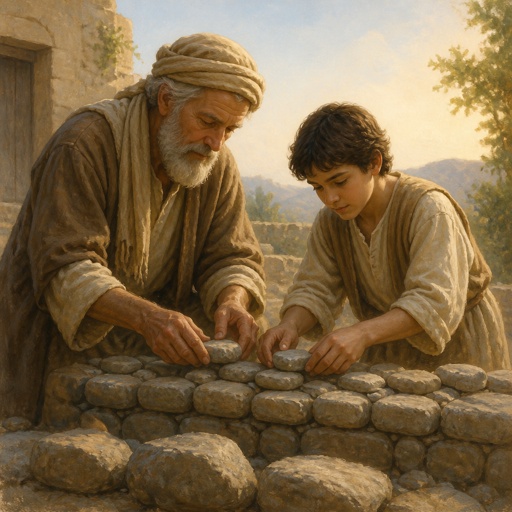
"For precept must be upon precept, precept upon precept; line upon line, line upon line; here a little, and there a little:" - Isaiah 28:10

Genesis 28:10

Isaiah 28:11 - "For with stammering lips and another tongue will he speak to this people."

Isaiah 28:3 - "The crown of pride, the drunkards of Ephraim, shall be trodden under feet:"

Isaiah 28:8 - "For all tables are full of vomit and filthiness, so that there is no place clean."

Genesis 10:28 - "And Obal, and Abimael, and Sheba,"

isaiah 41:10

isaiah 41:10

isaiah 41:10

isaiah 41:10

isaiah 41:10

isaiah 41:10

isaiah 41:10

isaiah 41:10
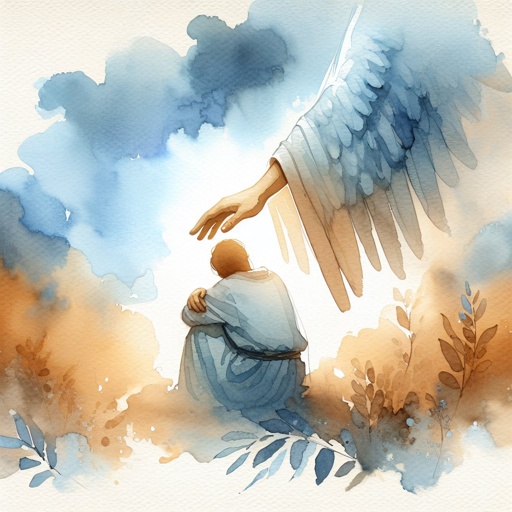
isaiah 41:10

isaiah 41:10

isaiah 41:10

isaiah 41:10

isaiah 41:10

isaiah 41:10

isaiah 41:10

isaiah 41:10