What does Isaiah 11:9 mean?
“They shall not hurt nor destroy in all my holy mountain: for the earth shall be full of the knowledge of the LORD, as the waters cover the sea.” — Isaiah 11:9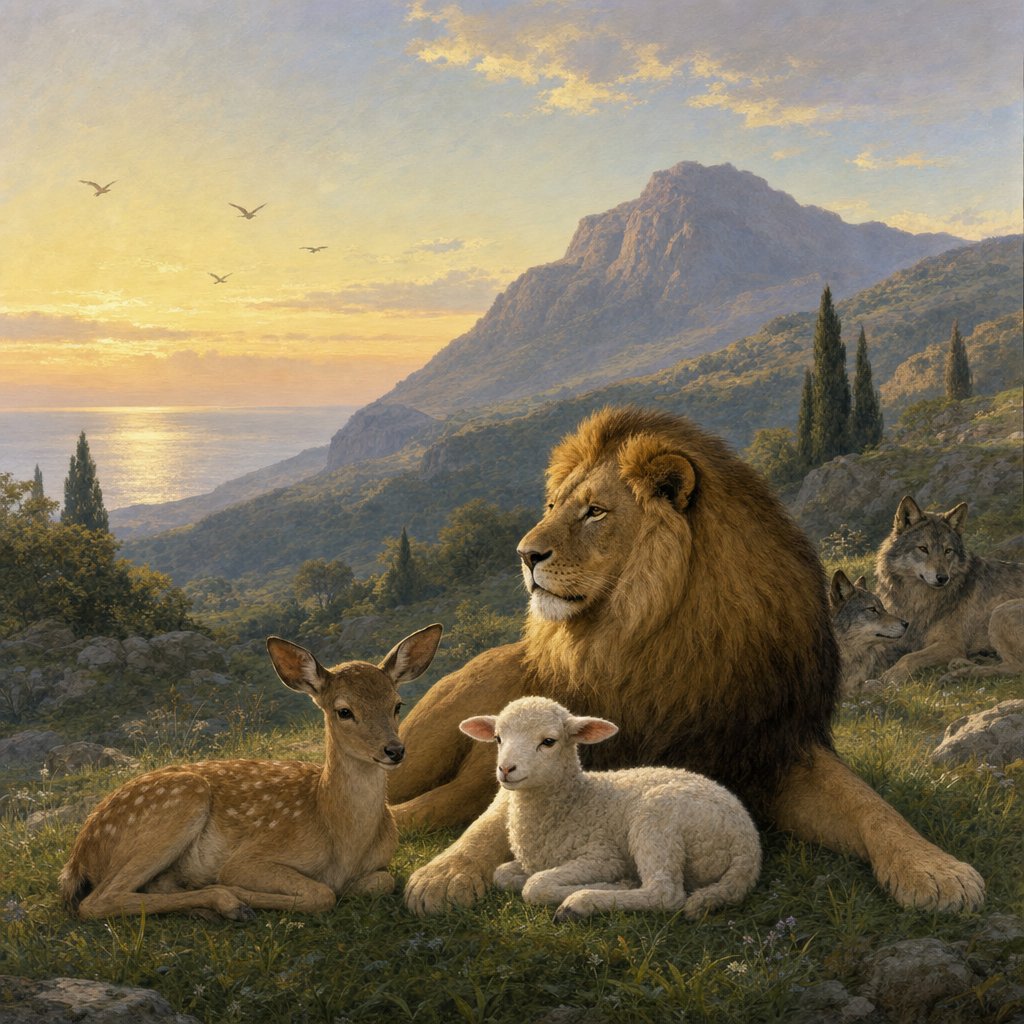
Isaiah 11:9 in the KJV reads, “They shall not hurt nor destroy in all my holy mountain: for the earth shall be full of the knowledge of the LORD, as the waters cover the sea.” In its plain sense, the verse declares a coming condition of creation in which harm, violence, and ruin cease within God’s appointed realm, and the reason given is not merely a change in politics or temperament but a worldwide fulness of “the knowledge of the LORD,” so pervasive and steady that it is compared to the sea completely covered by water. The statement is both moral and cosmic: it speaks of human conduct (“hurt” and “destroy”) and of the environment in which such conduct becomes unthinkable because the true knowledge of God saturates the world.
The immediate context is Isaiah 11’s vision of the righteous rule of the promised king who comes from Jesse’s line. The chapter opens with the “rod out of the stem of Jesse” and a “Branch” who judges with righteousness, smites wickedness, and establishes equity. This rule is marked by the Spirit of the LORD resting upon him and by a judging that reaches deeper than appearances. Against that backdrop, Isaiah describes a transformed order that includes the famous images of predator and prey dwelling together and a little child leading them. Isaiah 11:9 functions like a climax and explanation: the peace pictured in the earlier verses is not sentimental fantasy; it is the outworking of the LORD’s reign and the worldwide diffusion of the LORD’s knowledge. The verse anchors the idyllic animal imagery in a theological cause: harmony is the fruit of God being truly known.
The phrase “They shall not hurt nor destroy” gathers up the entire atmosphere of the preceding vision. “Hurt” points to injury and aggression; “destroy” reaches to ruin and devastation. Together they describe the collapse of the violent patterns that characterize a fallen world, whether that violence appears as open bloodshed, oppression, predation, or the subtler ways power consumes the weak. Isaiah is not merely forecasting reduced conflict; he is presenting a world in which the impulses and structures that produce harm are brought under the righteous government described earlier in the chapter. The peace is comprehensive enough to be expressed in terms of creatures that do not naturally coexist without violence, suggesting not only changed behavior but a deeper reordering under the Creator’s rule.
“In all my holy mountain” is a dense symbol. In Isaiah’s language, the “mountain” evokes Zion, the place of God’s dwelling and government, the center from which His law and salvation are made known. Calling it “my holy mountain” emphasizes divine ownership and the reality of holiness as separation unto God. Holiness in Scripture is not simply moral cleanliness; it is the sphere where God’s presence sets the terms of life. In that sphere, hurt and destruction are out of place. At the same time, Isaiah often uses Zion imagery to point beyond a small geographical point to a kingdom reality—God’s reign established and recognized. So “in all my holy mountain” signals both the sanctified domain where God rules and the breadth of that domain as it expands in the prophetic vision. What begins as Zion’s holiness becomes the pattern for the world’s renewal.
The verse then gives the reason: “for the earth shall be full of the knowledge of the LORD.” This is not mere information about God, but the covenantal, experiential, obedient knowledge that Scripture regularly treats as life-shaping. In Isaiah 11, the coming king rules in righteousness and truth; the people and the world are brought into alignment with God’s character. When the LORD is known as He is—holy, just, faithful, and sovereign—false worship collapses, injustice loses its justification, and violence loses its spiritual fuel. The statement also has a missionary breadth. It is “the earth,” not only Israel, that becomes full. The knowledge of the LORD extends outward, answering the darkness of ignorance and idolatry that elsewhere in Isaiah is tied to oppression and judgment. The verse therefore carries an eschatological weight: it points to a future state in which God’s self-revelation is universally acknowledged, producing universal consequences.
The closing comparison, “as the waters cover the sea,” is one of Scripture’s strongest images for totality. Water does not merely touch the sea; it fills it, envelops it, defines it. The metaphor suggests that the knowledge of the LORD will be pervasive, not patchy; deep, not superficial; surrounding and sustaining, not occasional. It also implies inevitability and completeness. Just as the sea is not partly wet, the earth in this vision is not partly informed about God; it is full. This comparison turns “knowledge” into an atmosphere in which life is lived, and it explains why “hurt” and “destroy” disappear: a world immersed in the LORD’s knowledge becomes a world shaped by His ways.
The symbolism of peace among animals earlier in the chapter, culminating in Isaiah 11:9, can be read as a portrait of reconciliation that reaches beyond human society. Predation and fear are vivid pictures of enmity, domination, and vulnerability. By placing the end of harm “in all my holy mountain” and tying it to the earth’s fulness of divine knowledge, Isaiah ties reconciliation to worship and truth. Peace is not merely the absence of conflict; it is the presence of God’s holy order. The verse therefore speaks to the significance of the Messiah’s reign: righteous judgment establishes a world where creation no longer functions according to the curse’s violence, but according to the Creator’s holiness.
In sum, Isaiah 11:9 proclaims a coming reality under the LORD’s king in which violence is abolished within God’s holy domain because the earth becomes saturated with the true knowledge of the LORD. Its context links it to the righteous rule of the Branch from Jesse; its key symbols—“holy mountain,” “knowledge of the LORD,” and “as the waters cover the sea”—declare that the deepest remedy for destruction is not human reform alone but the universal, penetrating revelation of God that transforms the world’s moral and spiritual climate.
Get our apps


Artwork for Isaiah 11:9

Isaiah 11:9 - "They shall not hurt nor destroy in all my holy mountain: for the earth shall be full of the knowledge of the LORD, as the waters cover the sea."
"They shall not hurt nor destroy in all my holy mountain: for the earth shall be full of the knowledge of the LORD, as the waters cover the sea." - Isaiah 11:9
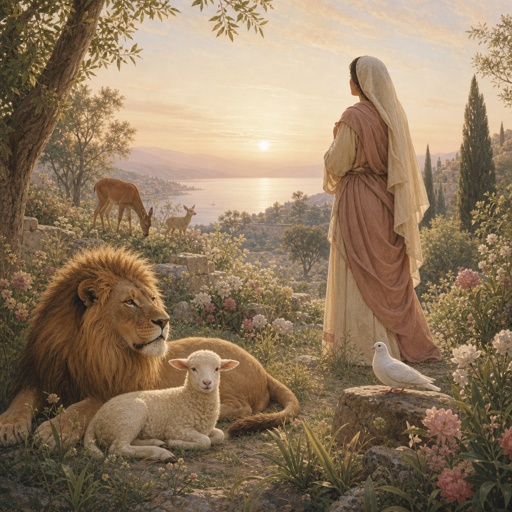
"They shall not hurt nor destroy in all my holy mountain: for the earth shall be full of the knowledge of the LORD, as the waters cover the sea." - Isaiah 11:9
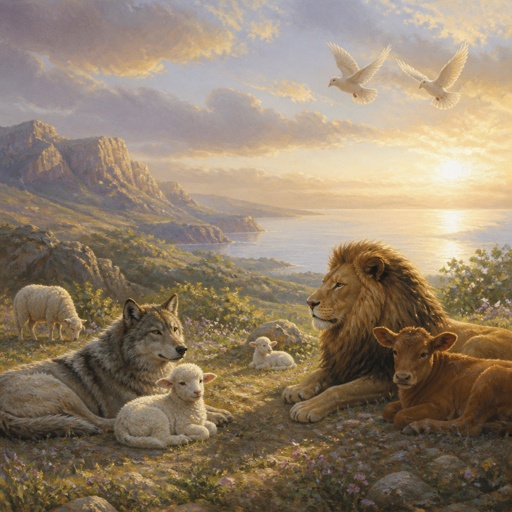
"They shall not hurt nor destroy in all my holy mountain: for the earth shall be full of the knowledge of the LORD, as the waters cover the sea." - Isaiah 11:9

Isaiah 11:1-9

Isaiah 11:1-9

Isaiah 11:1-9

Isaiah 11:1

Isaiah 9:11 - "Therefore the LORD shall set up the adversaries of Rezin against him, and join his enemies together;"
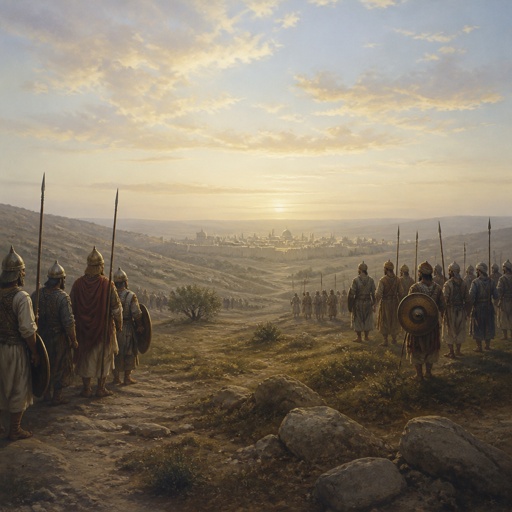
"Therefore the LORD shall set up the adversaries of Rezin against him, and join his enemies together;" - Isaiah 9:11

Isaiah 11

Isaiah 9:6

Isaiah 9:6

Isaiah 9:6

Isaiah 55:11

Isaiah 9:6

Isaiah 50:7–9

Isaiah 9:1-4

Isaiah 9:9 - "And all the people shall know, even Ephraim and the inhabitant of Samaria, that say in the pride and stoutness of heart,"

Isaiah 10:9 - "Is not Calno as Carchemish? is not Hamath as Arpad? is not Samaria as Damascus?"
Luke 11:9

Revelation 11:9

Isaiah 28:11 - "For with stammering lips and another tongue will he speak to this people."

Revelation 9:11

Luke 11:9

Isaiah 43:11 - "I, even I, am the LORD; and beside me there is no saviour."

Isaiah 30:9 - "That this is a rebellious people, lying children, children that will not hear the law of the LORD:"

Isaiah 9:16 - "For the leaders of this people cause them to err; and they that are led of them are destroyed."

Isaiah 19:9 - "Moreover they that work in fine flax, and they that weave networks, shall be confounded."

Isaiah 9:8 - "¶ The Lord sent a word into Jacob, and it hath lighted upon Israel."