What does Isaiah 14:25 mean?
“That I will break the Assyrian in my land, and upon my mountains tread him under foot: then shall his yoke depart from off them, and his burden depart from off their shoulders.” — Isaiah 14:25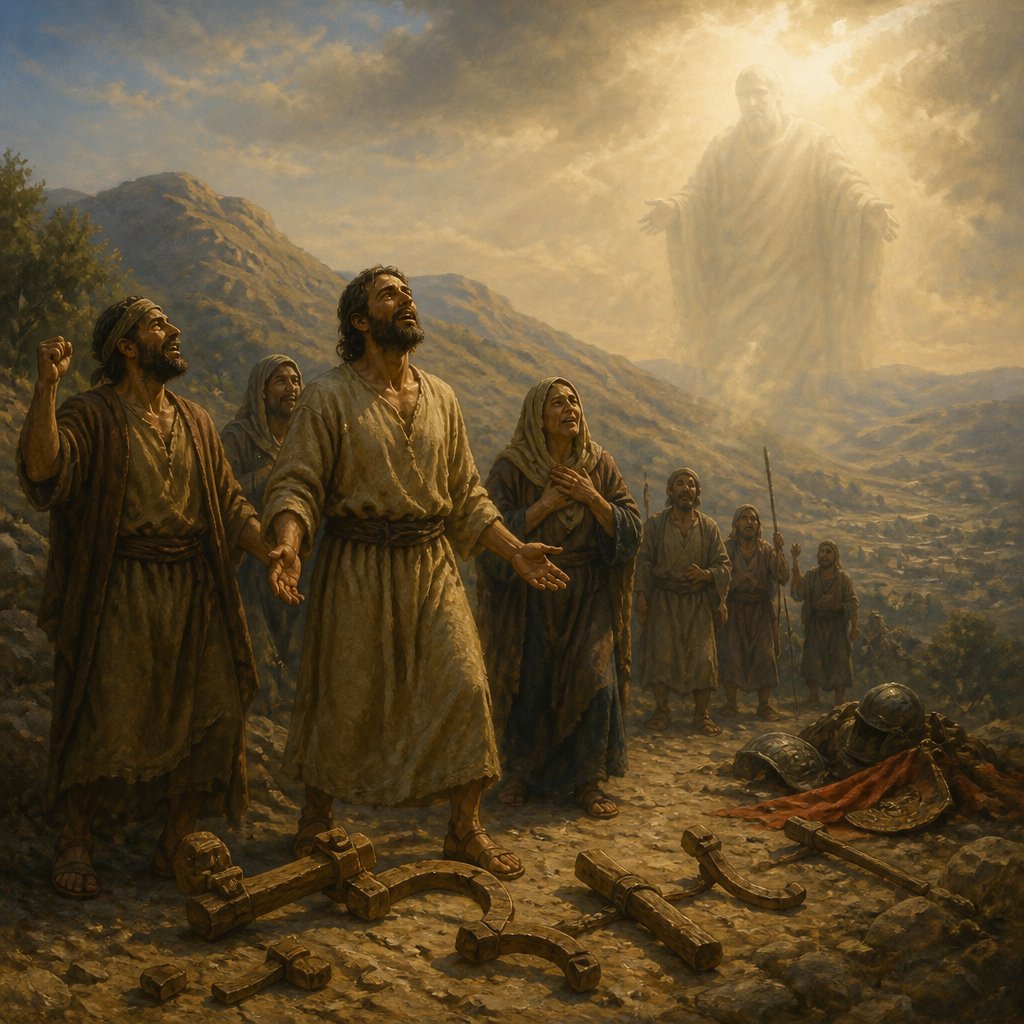
Isaiah 14:25 (KJV) says, "That I will break the Assyrian in my land, and upon my mountains tread him under foot: then shall his yoke depart from off them, and his burden depart from off their shoulders."
This verse from the book of Isaiah, a major prophet in the Old Testament, is a proclamation of God's ultimate authority and power over the nations, specifically referencing the Assyrian empire. The book of Isaiah was written during a time of political unrest and upheaval in Israel, and the prophet Isaiah was called upon to deliver messages of warning, judgment, and hope to the people of Israel.
Contextually, this verse comes in the middle of a passage in which God is addressing the downfall of the Assyrian empire. The Assyrians had been a constant threat and oppressor of Israel, and they had become overtly arrogant and prideful in their conquests. However, God assures the people of Israel that He will intervene and bring about justice and deliverance for them.
The verse begins with the declaration, "That I will break the Assyrian in my land, and upon my mountains tread him under foot." This illustrates the imagery of God as a mighty conqueror who will crush the Assyrians and bring an end to their tyranny over Israel. The use of "my land" and "my mountains" emphasizes God's ownership and sovereignty over the land and people of Israel, and His commitment to protect and defend them against their enemies.
The imagery of treading the Assyrian under foot also symbolizes the defeat and subjugation of their power, as well as the restoration of peace and security for Israel. It's important to note that this act of judgment is not just for the sake of Israel, but also for the sake of God's own honor and glory, which had been desecrated by the Assyrians' pride and arrogance.
The verse continues, "then shall his yoke depart from off them, and his burden depart from off their shoulders." This is a promise of liberation and freedom for the people of Israel. The "yoke" and "burden" here represent the heavy oppression and subjugation imposed by the Assyrians, and their removal signifies the restoration of independence and autonomy for Israel. This is a powerful message of hope for the Israelites, as it reassures them that God will not allow them to be crushed under the weight of their oppressors, but will instead bring about their deliverance.
In a broader theological context, this verse also serves as a reminder of God's faithfulness to His people and His commitment to justice. It illustrates God's role as the ultimate authority and defender of the weak and oppressed, and His ability to bring about the downfall of even the most powerful empires. It also underscores the importance of trusting in God's sovereignty and relying on Him for deliverance in times of trouble.
Overall, Isaiah 14:25 is a powerful declaration of God's sovereignty over the nations and His commitment to deliver His people from their oppressors. It offers hope and assurance to the people of Israel, and serves as a timeless reminder of God's faithfulness and justice.
Get our apps


Artwork for Isaiah 14:25

Isaiah 14:25

Isaiah 14:25 - "That I will break the Assyrian in my land, and upon my mountains tread him under foot: then shall his yoke depart from off them, and his burden depart from off their shoulders."
"That I will break the Assyrian in my land, and upon my mountains tread him under foot: then shall his yoke depart from off them, and his burden depart from off their shoulders." - Isaiah 14:25

Matthew 25: 14-25

Isaiah 44:25

Genesis 25-14

Genesis 25:14 - "And Mishma, and Dumah, and Massa,"

Luke 14:25 - 33

Isaiah 14:12

isaiah 5:14

Isaiah 14:14 - "I will ascend above the heights of the clouds; I will be like the most High."

Isaiah 45:25 - "In the LORD shall all the seed of Israel be justified, and shall glory."

Isaiah 3:25 - "Thy men shall fall by the sword, and thy mighty in the war."

Isaiah 40:25 - "To whom then will ye liken me, or shall I be equal? saith the Holy One."

Isaiah 10:25 - "For yet a very little while, and the indignation shall cease, and mine anger in their destruction."
"And Mishma, and Dumah, and Massa," - Genesis 25:14

Isaiah 14:28 - "In the year that king Ahaz died was this burden."

Proverbs 14:25 - "A true witness delivereth souls: but a deceitful witness speaketh lies."

Acts 14:25 - "And when they had preached the word in Perga, they went down into Attalia:"

1 Samuel 14:25 - "And all they of the land came to a wood; and there was honey upon the ground."

Isaiah 25:3 - "Therefore shall the strong people glorify thee, the city of the terrible nations shall fear thee."

Deuteronomy 25:14 - "Thou shalt not have in thine house divers measures, a great and a small."

Matthew 14:25 - "And in the fourth watch of the night Jesus went unto them, walking on the sea."

Luke 14:25 - "¶ And there went great multitudes with him: and he turned, and said unto them,"

Isaiah 44:25 - "That frustrateth the tokens of the liars, and maketh diviners mad; that turneth wise men backward, and maketh their knowledge foolish;"

Isaiah 14:7 - "The whole earth is at rest, and is quiet: they break forth into singing."

Isaiah 25:7 - "And he will destroy in this mountain the face of the covering cast over all people, and the vail that is spread over all nations."

Proverbs 25:14 - "Whoso boasteth himself of a false gift is like clouds and wind without rain."

John 14:25 - "These things have I spoken unto you, being yet present with you."

Isaiah 14:5 - "The LORD hath broken the staff of the wicked, and the sceptre of the rulers."