What does Isaiah 16:9 mean?
“Therefore I will bewail with the weeping of Jazer the vine of Sibmah: I will water thee with my tears, O Heshbon, and Elealeh: for the shouting for thy summer fruits and for thy harvest is fallen.” — Isaiah 16:9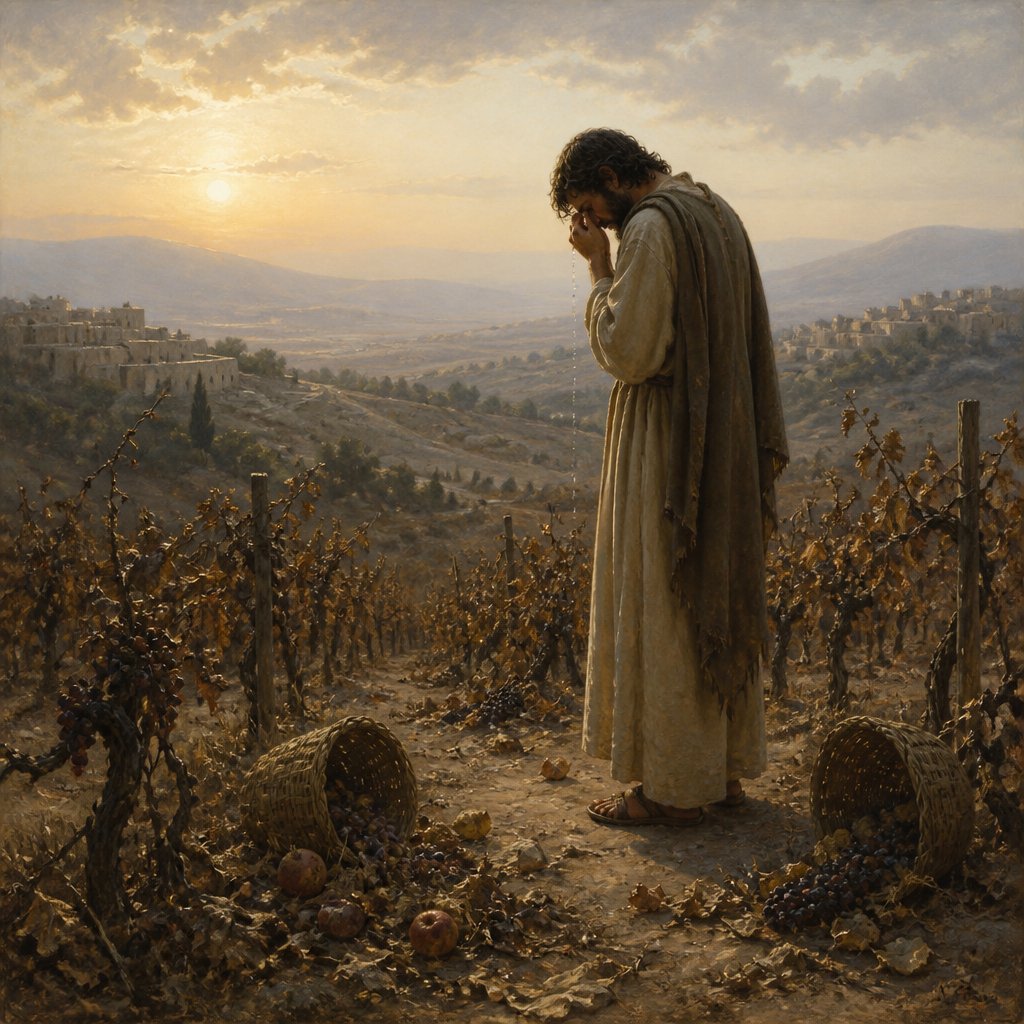
Isaiah 16:9 in the King James Version (KJV) of the Bible reads, "Therefore I will bewail with the weeping of Jazer the vine of Sibmah: I will water thee with my tears, O Heshbon, and Elealeh: for the shouting for thy summer fruits and for thy harvest is fallen."
This verse comes from the book of Isaiah in the Old Testament, which is filled with prophecies and warnings to the people of Israel. In this particular verse, Isaiah is lamenting the loss of the fruits and harvest of the land as a result of the destruction and devastation that has come upon the people.
The verse is filled with rich symbolism and imagery that conveys a sense of grief and loss. The mention of weeping and tears suggests deep sorrow and lamentation. The vine of Sibmah is a powerful symbol of fertility and abundance, and the weeping of Jazer indicates a mourning for the loss of this fertility. The watering of Heshbon and Elealeh with tears further emphasizes the depth of the sorrow and the sense of desolation that has come upon the land.
The mention of summer fruits and harvest falling points to the destruction and loss of the bountiful blessings that the people once enjoyed. The shouting for these fruits and harvest represents the joy and celebration that would normally accompany the successful gathering of these provisions. However, now that these blessings have fallen, there is a sense of devastation and mourning.
The context of this verse is important for understanding its significance. In the preceding verses, Isaiah prophesies about the judgment that will come upon the land of Moab, a neighboring nation of Israel. The destruction and devastation that Isaiah describes in this verse are a result of this judgment. The people of Moab are being punished for their pride and arrogance, and the once fertile and prosperous land will be reduced to desolation.
This verse also carries a broader spiritual and moral message. The loss of the fruits and harvest can be seen as a metaphor for the spiritual barrenness and moral decay that comes as a result of turning away from God. The weeping and mourning depicted in the verse can be understood as a reflection of the consequences of sin and disobedience to God's will. The imagery of tears and mourning underscores the seriousness of the judgment that is being faced.
In a broader sense, this verse speaks to the universal themes of loss, suffering, and the consequences of disobedience. It serves as a warning about the dangers of pride and the importance of remaining faithful to God. The imagery used in this verse creates a powerful and evocative picture of grief and desolation, serving as a poignant reminder of the consequences of turning away from God.
In conclusion, Isaiah 16:9 in the King James Version of the Bible carries deep and profound meaning, through its rich symbolism and imagery. It serves as a warning about the consequences of pride and disobedience and the devastation that can result from turning away from God. The verse conveys a sense of grief and loss, while also serving as a powerful reminder of the importance of remaining faithful to God's will.
Get our apps


Artwork for Isaiah 16:9

Isaiah 16:9 - "¶ Therefore I will bewail with the weeping of Jazer the vine of Sibmah: I will water thee with my tears, O Heshbon, and Elealeh: for the shouting for thy summer fruits and for thy harvest is fallen."
"¶ Therefore I will bewail with the weeping of Jazer the vine of Sibmah: I will water thee with my tears, O Heshbon, and Elealeh: for the shouting for thy summer fruits and for thy harvest is fallen." - Isaiah 16:9

Isaiah 9:16 - "For the leaders of this people cause them to err; and they that are led of them are destroyed."
"For the leaders of this people cause them to err; and they that are led of them are destroyed." - Isaiah 9:16

Isaiah 9:6

Isaiah 9:6

Isaiah 9:6

Isaiah 9:6

Isaiah 11:1-9

Isaiah 50:7–9

Isaiah 11:1-9

Isaiah 9:1-4

Isaiah 11:1-9

Isaiah 9:9 - "And all the people shall know, even Ephraim and the inhabitant of Samaria, that say in the pride and stoutness of heart,"

Genesis 16:9

Rev 9:16

Isaiah 8:16 - "Bind up the testimony, seal the law among my disciples."

Isaiah 32:16 - "Then judgment shall dwell in the wilderness, and righteousness remain in the fruitful field."

Isaiah 40:16 - "And Lebanon is not sufficient to burn, nor the beasts thereof sufficient for a burnt offering."

2 Kings 20:16 - "And Isaiah said unto Hezekiah, Hear the word of the LORD."

Isaiah 16:13 - "This is the word that the LORD hath spoken concerning Moab since that time."

Isaiah 2:16 - "And upon all the ships of Tarshish, and upon all pleasant pictures."

Isaiah 10:9 - "Is not Calno as Carchemish? is not Hamath as Arpad? is not Samaria as Damascus?"

Isaiah 5:16 - "But the LORD of hosts shall be exalted in judgment, and God that is holy shall be sanctified in righteousness."

John 16:9 - "Of sin, because they believe not on me;"

Isaiah 30:9 - "That this is a rebellious people, lying children, children that will not hear the law of the LORD:"

Isaiah 43:16 - "Thus saith the LORD, which maketh a way in the sea, and a path in the mighty waters;"

Isaiah 19:9 - "Moreover they that work in fine flax, and they that weave networks, shall be confounded."

Isaiah 9:8 - "¶ The Lord sent a word into Jacob, and it hath lighted upon Israel."

Isaiah 9:15 - "The ancient and honourable, he is the head; and the prophet that teacheth lies, he is the tail."