What does Isaiah 30:18 mean?
"¶ And therefore will the LORD wait, that he may be gracious unto you, and therefore will he be exalted, that he may have mercy upon you: for the LORD is a God of judgment: blessed are all they that wait for him." - Isaiah 30:18

Isaiah 30:18 in the KJV reads, “And therefore will the LORD wait, that he may be gracious unto you, and therefore will he be exalted, that he may have mercy upon you: for the LORD is a God of judgment: blessed are all they that wait for him.” The meaning of the verse comes into view when it is heard against its immediate setting in Isaiah 30, where Judah is rebuked for seeking safety in human policy and foreign alliance—especially the leaning upon Egypt—rather than resting in the LORD. The chapter exposes a restless unbelief that prefers visible strength and quick solutions, and it portrays God’s people trying to secure peace by their own counsel. Into that atmosphere, Isaiah 30:18 sounds like a turning of the divine face back toward a people who have been running from him: the LORD is not pictured as eager to destroy, but as deliberately “wait[ing]” with a purpose, so that grace and mercy might have their rightful moment and rightful shape.
The opening, “And therefore,” ties the verse to what precedes and follows: it is not “therefore” because Judah deserved kindness, but “therefore” in the sense that, after exposing their folly and after declaring the consequences of their stubbornness, God’s own character governs what comes next. His waiting is not weakness and not indifference. It is patient sovereignty. The LORD “wait[s], that he may be gracious unto you,” which presents grace as something God chooses to bestow in his time, not something people can manipulate by alliances, payments, or pressure. Judah had been acting as if salvation could be arranged by human speed and human strength; God answers by showing that salvation is governed by divine timing and divine generosity. The waiting of God becomes, in effect, a mirror held up to the frantic waiting of human unbelief: they hurry into Egypt, but God waits to give what Egypt cannot give.
The verse then repeats the same structure: “and therefore will he be exalted, that he may have mercy upon you.” In the KJV phrasing, God’s exaltation is connected to his mercy. This is a profound reversal of how people often think of exaltation. The LORD is “exalted” not only when he judges evil, but also when he shows mercy in a way that proves he is God. Mercy here is not sentimental leniency; it is divine compassion that restores and rescues while still upholding what is right. When the LORD is the one who saves—rather than Egypt, rather than human strategy—then the LORD alone is seen as high, weighty, and glorious. His mercy exalts him because it displays a majesty that needs no borrowed strength and no political props. In the flow of Isaiah 30, Judah’s schemes diminish God in their imagination; God’s mercy re-exalts him in reality.
Then comes the grounding statement: “for the LORD is a God of judgment.” In KJV usage, “judgment” does not only mean punishment; it also carries the sense of right rule, just decision, and moral government. This line guards the earlier promises from being misunderstood. God’s grace is not the suspension of justice, and his mercy is not the denial of truth. He is the God who weighs matters rightly and acts rightly. That means two things at once. It means Judah cannot expect that rebellion will be treated as harmless; the chapter makes plain that self-willed refusal brings chastening. But it also means that when God does show grace and mercy, it is not arbitrary; it is righteous, wise, and perfectly measured. His timing is part of his judgment: he knows when to discipline, when to deliver, when to humble, and when to heal.
The final clause gathers all of this into a beatitude: “blessed are all they that wait for him.” Here the earlier statement, “the LORD wait,” is answered by the call for the people to wait. God’s waiting and man’s waiting meet, but they are not the same. God waits in sovereign patience to give grace and mercy in the way that magnifies his name; people are blessed when they wait in dependent trust, refusing the temptation to grasp at Egypt-like substitutes. Within Isaiah 30, waiting is the opposite of frantic self-rescue. It is a quiet reliance that acknowledges God as the true source of salvation. The blessing is not merely the eventual outcome, but the posture itself: waiting for him aligns the heart with reality, because God actually is the God of judgment, and therefore the only safe refuge is his will.
The themes running through Isaiah 30:18 are the tension between human impatience and divine patience, the contrast between self-made security and God-given salvation, and the way God’s glory is revealed not only in power but in mercy. There is symbolism in the language of “waiting” itself. Waiting suggests delay, but in Scripture delay is often the stage upon which faith is proved and idols are exposed. Judah’s alliance with Egypt functioned like an idol—something visible and impressive that promised safety. God’s call, by contrast, is toward the invisible faithfulness of the LORD. When the LORD “wait[s]” to be gracious, he is, in a sense, letting false refuges show their emptiness so that his grace will be recognized as grace, not as something credited to human cleverness. His mercy, then, is not only rescue from danger, but rescue from misplaced trust.
The significance of the verse is that it holds together what people commonly separate: grace and judgment, mercy and exaltation, divine patience and human responsibility. Isaiah 30:18 insists that the LORD’s willingness to show mercy does not come from a weakening of justice, but from the fullness of his righteous character. It also insists that the human response to that character is not manipulation or haste, but waiting—an active dependence that refuses to run ahead of God. The verse, read within its chapter, becomes both a warning and an invitation: a warning against seeking deliverance through “Egypt” in whatever form it takes, and an invitation to trust the LORD’s timing because his very waiting is aimed at being gracious, his exaltation is displayed in mercy, his judgment is perfectly right, and therefore those who wait for him are truly blessed.
Have questions about Isaiah 30:18?
Dive deeper into this scripture with Bible Chat — an AI-powered tool for exploring God's Word through conversation. Ask questions, get context, and grow in your understanding of the Bible.
Get Our Apps


Isaiah 30:18 Artwork

"¶ And therefore will the LORD wait, that he may be gracious unto you, and therefore will he be exalted, that he may have mercy upon you: for the LORD is a God of judgment: blessed are all they that wait for him." - Isaiah 30:18

Isaiah 30:18 - "¶ And therefore will the LORD wait, that he may be gracious unto you, and therefore will he be exalted, that he may have mercy upon you: for the LORD is a God of judgment: blessed are all they that wait for him."

Isaiah 30:18-19 - "And therefore will the LORD wait, that he may be gracious unto you, and therefore will he be exalted, that he may have mercy upon you: for the LORD is a God of judgment: blessed are all they that wait for him. For the people shall dwell in Zion at Jerusalem: thou shalt weep no more: he will be very gracious unto thee at the voice of thy cry; when he shall hear it, he will answer thee."

"¶ And therefore will the LORD wait, that he may be gracious unto you, and therefore will he be exalted, that he may have mercy upon you: for the LORD is a God of judgment: blessed are all they that wait for him." - Isaiah 30:18

"¶ And therefore will the LORD wait, that he may be gracious unto you, and therefore will he be exalted, that he may have mercy upon you: for the LORD is a God of judgment: blessed are all they that wait for him." - Isaiah 30:18
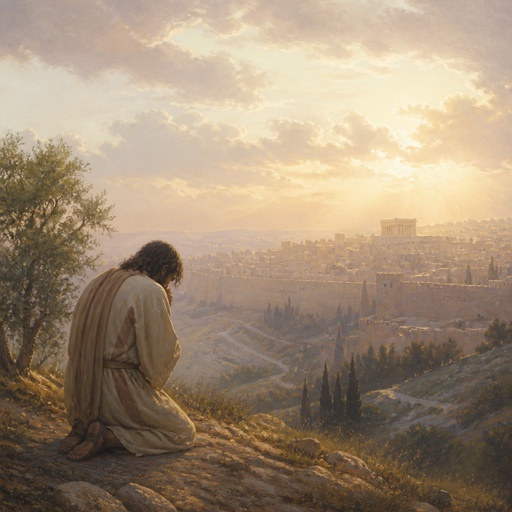
"And therefore will the LORD wait, that he may be gracious unto you, and therefore will he be exalted, that he may have mercy upon you: for the LORD is a God of judgment: blessed are all they that wait for him. For the people shall dwell in Zion at Jerusalem: thou shalt weep no more: he will be very gracious unto thee at the voice of thy cry; when he shall hear it, he will answer thee." - Isaiah 30:18-19

Genesis 18-30

1 Samuel 30:18

Isaiah 30:4 - "For his princes were at Zoan, and his ambassadors came to Hanes."

Isaiah 30:9 - "That this is a rebellious people, lying children, children that will not hear the law of the LORD:"

Isaiah 1:30 - "For ye shall be as an oak whose leaf fadeth, and as a garden that hath no water."

Isaiah 29:18

Isaiah 30:30 - "And the LORD shall cause his glorious voice to be heard, and shall shew the lighting down of his arm, with the indignation of his anger, and with the flame of a devouring fire, with scattering, and tempest, and hailstones."

Isaiah 30:31 - "For through the voice of the LORD shall the Assyrian be beaten down, which smote with a rod."

Isaiah 40:30 - "Even the youths shall faint and be weary, and the young men shall utterly fall:"

Proverbs 30:18-19 – "There are three things that are too amazing for me, four that I do not understand."

Isaiah 43:18-19

Isaiah 30:3 - "Therefore shall the strength of Pharaoh be your shame, and the trust in the shadow of Egypt your confusion."

Isaiah 43:18-19

Proverbs 30:18-19 – "There are three things that are too amazing for me, four that I do not understand."

Isaiah 30:8 - "¶ Now go, write it before them in a table, and note it in a book, that it may be for the time to come for ever and ever:"

Proverbs 30:18 - "There be three things which are too wonderful for me, yea, four which I know not:"

Matthew 18:30 - "And he would not: but went and cast him into prison, till he should pay the debt."

Isaiah 2:18 - "And the idols he shall utterly abolish."

Luke 18:30 - "Who shall not receive manifold more in this present time, and in the world to come life everlasting."

Isaiah 30:7 - "For the Egyptians shall help in vain, and to no purpose: therefore have I cried concerning this, Their strength is to sit still."

Isaiah 30:5 - "They were all ashamed of a people that could not profit them, nor be an help nor profit, but a shame, and also a reproach."

Isaiah 10:30 - "Lift up thy voice, O daughter of Gallim: cause it to be heard unto Laish, O poor Anathoth."

Isaiah 30:2 - "That walk to go down into Egypt, and have not asked at my mouth; to strengthen themselves in the strength of Pharaoh, and to trust in the shadow of Egypt!"

1 Samuel 30:18 - "And David recovered all that the Amalekites had carried away: and David rescued his two wives."