What does Isaiah 32:13 mean?
“Upon the land of my people shall come up thorns and briers; yea, upon all the houses of joy in the joyous city:” — Isaiah 32:13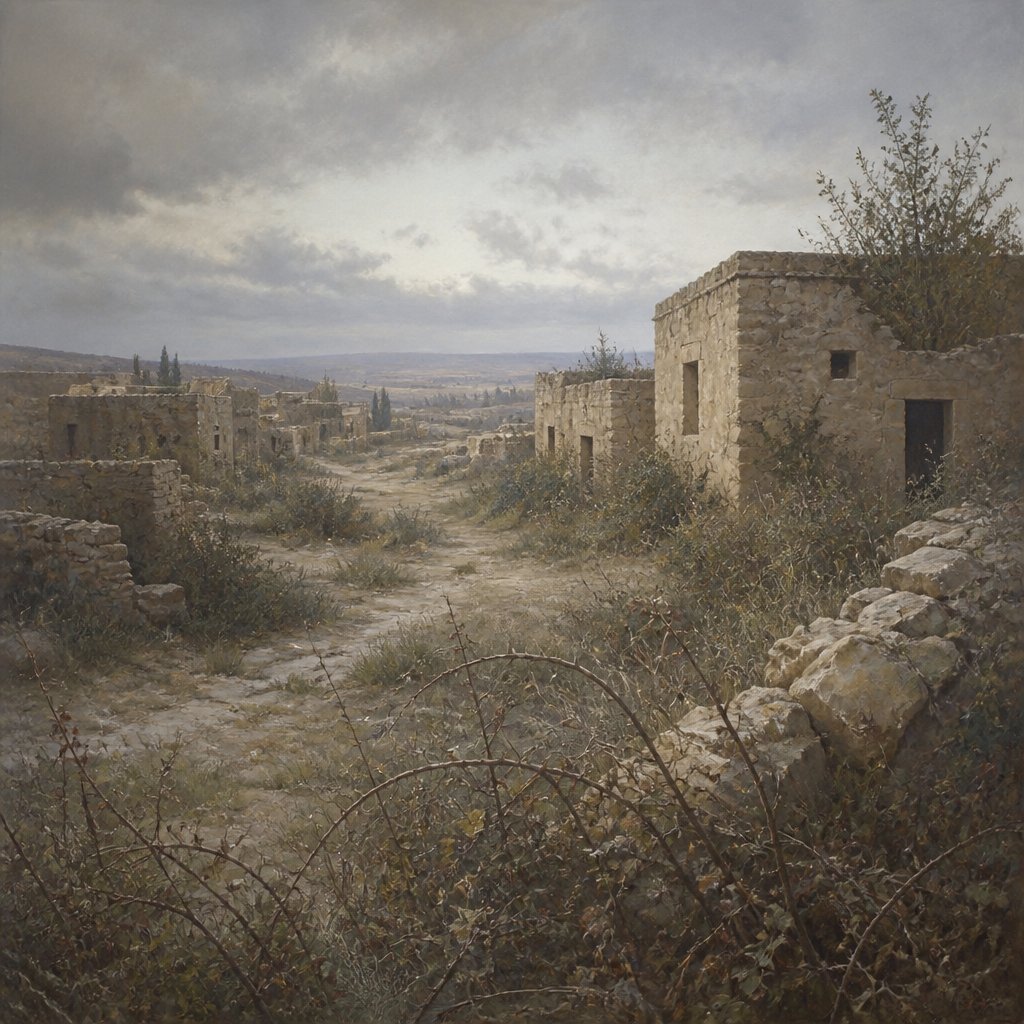
Isaiah 32:13 in the King James Version reads, "Upon the land of my people shall come up thorns and briers; yea, upon all the houses of joy in the joyous city."
This passage from the book of Isaiah is a prophetic warning of impending judgment upon the people of Judah. Throughout the book, Isaiah serves as a messenger of God, delivering both messages of judgment and messages of hope to the people. In this particular verse, Isaiah describes the coming of thorns and briers upon the land and the houses of joy in the city, symbolizing the desolation and destruction that will befall Judah.
The imagery of thorns and briers in this verse signifies the consequences of the people's disobedience and sin. In the Bible, thorns and briers are often used as symbols of the curse that came upon the earth as a result of Adam and Eve's disobedience in the Garden of Eden. In Genesis 3:17-18, God tells Adam, "Cursed is the ground because of you; through painful toil you will eat food from it all the days of your life. It will produce thorns and thistles for you, and you will eat the plants of the field." This curse on the land serves as a reminder of the consequences of sin and disobedience.
In the context of Isaiah 32:13, the coming of thorns and briers upon the land represents the judgment that will be brought upon the people of Judah due to their rebellion against God. The houses of joy in the joyous city symbolize the prosperity and wealth of the people, which will be turned to desolation and sorrow as a result of God's judgment. This verse serves as a warning to the people, reminding them of the consequences of their actions and calling them to repentance.
One of the overarching themes of this verse is the justice and righteousness of God. Throughout the book of Isaiah, God's judgment is presented as a necessary consequence of the people's sin, but it is also seen as a means of purification and restoration. The coming of thorns and briers upon the land serves as a reminder of the consequences of sin, but it also serves as a call to repentance and a promise of restoration.
Another theme present in this verse is the sovereignty of God. The imagery of thorns and briers coming upon the land is a reminder that God is in control of all things, and that his will cannot be thwarted. Despite the impending judgment, there is hope in the knowledge that God is ultimately in control and that his purposes will be fulfilled.
In addition to its thematic significance, the imagery of thorns and briers in this verse also carries symbolic meaning. Thorns and briers are often associated with obstacles, hindrances, and suffering. In the New Testament, Jesus used thorns to illustrate the cares and worries of life that can choke out the word of God (Mark 4:7). The coming of thorns and briers upon the land can be understood as a metaphor for the difficulties and trials that the people will face as a result of their disobedience. It serves as a warning for the people to turn back to God and seek His forgiveness.
In conclusion, Isaiah 32:13 from the King James Version of the Bible serves as a prophetic warning of impending judgment upon the people of Judah. The imagery of thorns and briers represents the consequences of the people's sin and rebellion, but it also serves as a call to repentance and a reminder of the justice and sovereignty of God. This verse carries deep thematic and symbolic significance, serving as a powerful reminder of the consequences of disobedience and the hope of restoration through God's mercy and grace.
Get our apps


Artwork for Isaiah 32:13

Isaiah 32:13 - "Upon the land of my people shall come up thorns and briers; yea, upon all the houses of joy in the joyous city:"
"Upon the land of my people shall come up thorns and briers; yea, upon all the houses of joy in the joyous city:" - Isaiah 32:13

2 Chronicles 32:32 - "Now the rest of the acts of Hezekiah, and his goodness, behold, they are written in the vision of Isaiah the prophet, the son of Amoz, and in the book of the kings of Judah and Israel."

Isaiah 32:12 - "They shall lament for the teats, for the pleasant fields, for the fruitful vine."

Isaiah 32:16 - "Then judgment shall dwell in the wilderness, and righteousness remain in the fruitful field."

Isaiah 32:17 - "And the work of righteousness shall be peace; and the effect of righteousness quietness and assurance for ever."

Isaiah 32:1 - "Behold, a king shall reign in righteousness, and princes shall rule in judgment."

Isaiah 32:8 - "But the liberal deviseth liberal things; and by liberal things shall he stand."

Isaiah 32:3 - "And the eyes of them that see shall not be dim, and the ears of them that hear shall hearken."

Isaiah 32:5 - "The vile person shall be no more called liberal, nor the churl said to be bountiful."

Jeremiah 32:13 - "¶ And I charged Baruch before them, saying,"

Isaiah 32:19 - "When it shall hail, coming down on the forest; and the city shall be low in a low place."

Isaiah 32:18 - "And my people shall dwell in a peaceable habitation, and in sure dwellings, and in quiet resting places;"

2 Chronicles 32:20 - "And for this cause Hezekiah the king, and the prophet Isaiah the son of Amoz, prayed and cried to heaven."

Isaiah 32:20 - "Blessed are ye that sow beside all waters, that send forth thither the feet of the ox and the ass."

Isaiah 32:4 - "The heart also of the rash shall understand knowledge, and the tongue of the stammerers shall be ready to speak plainly."

Isaiah 13:1 - "The burden of Babylon, which Isaiah the son of Amoz did see."

Isaiah 32:15 - "Until the spirit be poured upon us from on high, and the wilderness be a fruitful field, and the fruitful field be counted for a forest."

isaiah 32:2-3 emphasis on Jesus Christ being unnatractive

Mark 13:32 - "¶ But of that day and that hour knoweth no man, no, not the angels which are in heaven, neither the Son, but the Father."

Isaiah 41:13

isaiah 6:13

Isaiah 14:32 - "What shall one then answer the messengers of the nation? That the LORD hath founded Zion, and the poor of his people shall trust in it."

Isaiah 32:10 - "Many days and years shall ye be troubled, ye careless women: for the vintage shall fail, the gathering shall not come."

Isaiah 37:32 - "For out of Jerusalem shall go forth a remnant, and they that escape out of mount Zion: the zeal of the LORD of hosts shall do this."

"Now the rest of the acts of Hezekiah, and his goodness, behold, they are written in the vision of Isaiah the prophet, the son of Amoz, and in the book of the kings of Judah and Israel." - 2 Chronicles 32:32

Isaiah 32:9 - "¶ Rise up, ye women that are at ease; hear my voice, ye careless daughters; give ear unto my speech."

Acts 13:32 - "And we declare unto you glad tidings, how that the promise which was made unto the fathers,"

"They shall lament for the teats, for the pleasant fields, for the fruitful vine." - Isaiah 32:12

Isaiah 32:7 - "The instruments also of the churl are evil: he deviseth wicked devices to destroy the poor with lying words, even when the needy speaketh right."