What does Isaiah 36:1 mean?
“Now it came to pass in the fourteenth year of king Hezekiah, that Sennacherib king of Assyria came up against all the defenced cities of Judah, and took them.” — Isaiah 36:1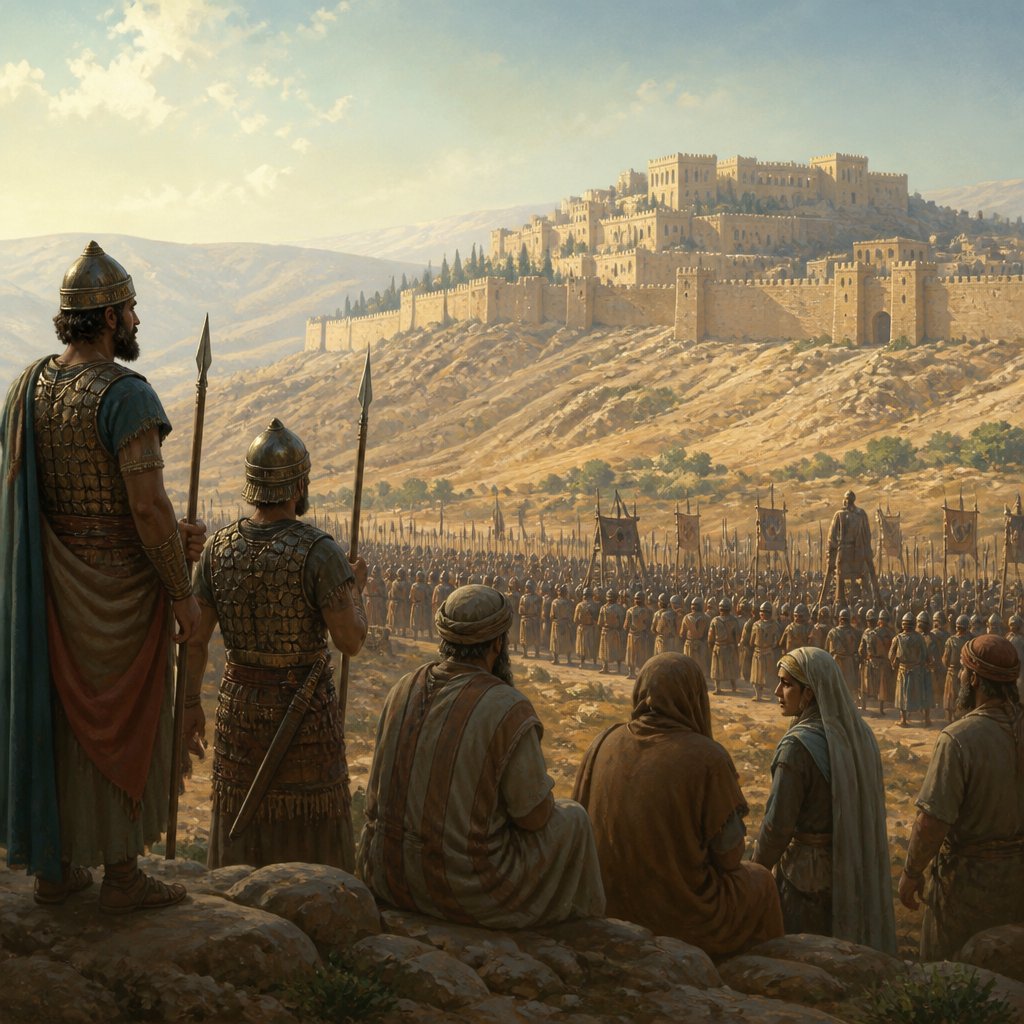
The Bible verse Isaiah 36:1 in the King James Version (KJV) reads: "Now it came to pass in the fourteenth year of king Hezekiah, that Sennacherib king of Assyria came up against all the defenced cities of Judah, and took them." This verse is part of a larger narrative found in the book of Isaiah, which is a prophetic book in the Old Testament of the Bible. The book of Isaiah is traditionally attributed to the prophet Isaiah, who lived in the 8th century BCE in the kingdom of Judah. The context of this verse is a time of political turmoil and uncertainty for the kingdom of Judah.
The passage from Isaiah 36:1 is the beginning of a historical account of the invasion of the Assyrian king Sennacherib on the kingdom of Judah. Sennacherib, the king of Assyria, was a powerful and ruthless ruler who sought to expand his empire by conquering the surrounding nations. Hezekiah, the king of Judah, was faced with the daunting task of defending his kingdom against the formidable Assyrian army. The verse sets the stage for the events that follow, highlighting the gravity of the situation and the imminent threat facing the people of Judah.
The themes and overarching message of this verse and the subsequent narrative in Isaiah 36 center on the sovereignty of God, the importance of faithfulness, and the fulfillment of prophecy. In the face of the Assyrian invasion, Hezekiah and the people of Judah were confronted with the need to trust in God's protection and deliverance. The verse serves as a reminder of the historical and spiritual importance of remaining faithful to God, especially in times of adversity and seemingly insurmountable challenges.
The Assyrian invasion also serves as a backdrop for the overarching theme of redemption and restoration in the book of Isaiah. Throughout the book, Isaiah prophesies about the future salvation and deliverance of God's people, a message that is particularly relevant in the context of the Assyrian threat. The invasion becomes a platform for Isaiah to proclaim the promise of God's ultimate victory and the restoration of Judah.
Symbolism plays a significant role in understanding the deeper meaning of this verse and its relevance to the broader biblical narrative. The Assyrian army and its invasion symbolize the forces of evil and oppression that seek to overpower God's people. In contrast, Hezekiah represents the faithful leader who relies on God's strength and guidance in the face of adversity. This symbolizes the ongoing struggle between good and evil, and the enduring faithfulness of God's people.
Furthermore, the verse serves as a historical and prophetic marker of the fulfillment of God's promises. The invasion of the Assyrian king Sennacherib was a pivotal event in the history of Judah, and the subsequent deliverance of the kingdom by God's hand served as a testament to the faithfulness of God and the fulfillment of His prophecies. This historical account underscores the reliability and trustworthiness of God's word, and it reinforces the enduring message of hope and redemption found throughout the Bible.
In conclusion, the verse Isaiah 36:1 in the King James Version conveys a timeless message of faithfulness, redemption, and the sovereignty of God. The Assyrian invasion and the subsequent deliverance of Judah serve as pivotal moments in the history of God's people and as a testament to God's faithfulness. The verse carries significant thematic and symbolic weight, illustrating the ongoing struggle between good and evil, the importance of trusting in God's protection, and the fulfillment of His promises. This narrative from the book of Isaiah continues to resonate with readers today, serving as a source of encouragement and hope in the face of adversity.
Get our apps


Artwork for Isaiah 36:1

Isaiah 36:1 - "Now it came to pass in the fourteenth year of king Hezekiah, that Sennacherib king of Assyria came up against all the defenced cities of Judah, and took them."
"Now it came to pass in the fourteenth year of king Hezekiah, that Sennacherib king of Assyria came up against all the defenced cities of Judah, and took them." - Isaiah 36:1

Isaiah 36:21 - "But they held their peace, and answered him not a word: for the king's commandment was, saying, Answer him not."

Isaiah 36:14 - "Thus saith the king, Let not Hezekiah deceive you: for he shall not be able to deliver you."

Isaiah 36:19 - "Where are the gods of Hamath and Arphad? where are the gods of Sepharvaim? and have they delivered Samaria out of my hand?"

Isaiah 36:13 - "Then Rabshakeh stood, and cried with a loud voice in the Jews' language, and said, Hear ye the words of the great king, the king of Assyria."

Isaiah 36:3 - "Then came forth unto him Eliakim, Hilkiah's son, which was over the house, and Shebna the scribe, and Joah, Asaph's son, the recorder."

Acts2:36

Isaiah 36:17 - "Until I come and take you away to a land like your own land, a land of corn and wine, a land of bread and vineyards."

1 Corinthians 14:36

1 Corinthians 15:36

1 Corinthians 14:36

Isaiah 36:20 - "Who are they among all the gods of these lands, that have delivered their land out of my hand, that the LORD should deliver Jerusalem out of my hand?"

Isaiah 36:15 - "Neither let Hezekiah make you trust in the LORD, saying, The LORD will surely deliver us: this city shall not be delivered into the hand of the king of Assyria."

Isaiah 36:9 - "How then wilt thou turn away the face of one captain of the least of my master's servants, and put thy trust on Egypt for chariots and for horsemen?"

Luke 5:36

Isaiah 36:4 - "¶ And Rabshakeh said unto them, Say ye now to Hezekiah, Thus saith the great king, the king of Assyria, What confidence is this wherein thou trustest?"

Isaiah 36:10 - "And am I now come up without the LORD against this land to destroy it? the LORD said unto me, Go up against this land, and destroy it."

Isaiah 36:22 - "¶ Then came Eliakim, the son of Hilkiah, that was over the household, and Shebna the scribe, and Joah, the son of Asaph, the recorder, to Hezekiah with their clothes rent, and told him the words of Rabshakeh."

1 Corinthians 14:36-40

1 Corinthians 14:36-37

Isaiah 36:18 - "Beware lest Hezekiah persuade you, saying, The LORD will deliver us. Hath any of the gods of the nations delivered his land out of the hand of the king of Assyria?"

Isaiah 37:36 - "Then the angel of the LORD went forth, and smote in the camp of the Assyrians a hundred and fourscore and five thousand: and when they arose early in the morning, behold, they were all dead corpses."

Isaiah 36:5 - "I say, sayest thou, (but they are but vain words) I have counsel and strength for war: now on whom dost thou trust, that thou rebellest against me?"

Isaiah 36:2 - "And the king of Assyria sent Rabshakeh from Lachish to Jerusalem unto king Hezekiah with a great army. And he stood by the conduit of the upper pool in the highway of the fuller's field."

Romana 11:33-36

Isaiah 36:6 - "Lo, thou trustest in the staff of this broken reed, on Egypt; whereon if a man lean, it will go into his hand, and pierce it: so is Pharaoh king of Egypt to all that trust in him."

Job 36:1 - "Elihu also proceeded, and said,"

Psalms 36 verse 3-6

"But they held their peace, and answered him not a word: for the king's commandment was, saying, Answer him not." - Isaiah 36:21