What does Isaiah 49:1 mean?
“Listen, O isles, unto me; and hearken, ye people, from far; The LORD hath called me from the womb; from the bowels of my mother hath he made mention of my name.” — Isaiah 49:1
Isaiah 49:1 in the King James Version of the Bible states, "Listen, O isles, unto me; and hearken, ye people, from far; The Lord hath called me from the womb; from the bowels of my mother hath he made mention of my name." This verse is part of the book of Isaiah, which is often referred to as the "Fifth Gospel" due to its focus on the coming of the Messiah and the redemption of Israel. In this verse, the prophet Isaiah is declaring his divine calling and the special role he has been given by God.
The book of Isaiah was written during a time of great turmoil for the nation of Israel. The people had turned away from God and were facing the consequences of their disobedience. Isaiah, as a prophet, was called to deliver messages of both judgment and hope to the nation. This verse represents a specific calling that Isaiah received from God, and it serves as a reminder of God's sovereignty and his intimate knowledge of each individual.
The verse begins with the command to "Listen, O isles, unto me; and hearken, ye people, from far." This is a call to all nations and people to pay attention to the words that Isaiah is about to speak. It emphasizes the universal nature of Isaiah's message and the fact that God's plans are not limited to one group of people. The inclusivity of this call reflects God's desire for all people to hear his word and come to know him.
The next part of the verse declares, "The Lord hath called me from the womb; from the bowels of my mother hath he made mention of my name." This statement reveals the personal and intimate relationship that Isaiah has with God. It emphasizes the fact that Isaiah's calling as a prophet was not a result of chance or circumstance, but rather a deliberate act of God from the moment of his conception. The mentioning of his name from the bowels of his mother signifies that God had a plan for Isaiah long before he was even born, and that he was set apart for a special purpose.
This verse also carries a message of hope and encouragement for the people of Israel. Despite their current state of disobedience and exile, God has not forgotten them. The fact that he called Isaiah from the womb and made mention of his name before his birth demonstrates his faithfulness to his chosen people. This serves as a reminder that God's plans are always carried out in his perfect timing, and that he has a purpose for each individual, even in the midst of difficult circumstances.
The themes of calling, sovereignty, and faithfulness are prominent in this verse. It speaks to the universal nature of God's message and his desire for all people to hear and respond to him. It also serves as a reminder of God's intimate knowledge of each person and his ability to work out his plans in their lives. In the context of the book of Isaiah, this verse contributes to the overarching message of hope and redemption for Israel. It reaffirms God's commitment to his people and his promise to bring about a future restoration.
Symbolically, this verse can be seen as a representation of God's ultimate plan for redemption through the coming of Jesus Christ. Isaiah's calling from the womb foreshadows the birth of the Messiah, who was also called by God for a specific purpose. The mention of his name before his birth aligns with the prophecy of the coming savior, and serves as a reminder of God's faithfulness to fulfill his promises. Additionally, the call to all nations and people to listen mirrors the Great Commission given by Jesus to spread the gospel to the ends of the earth.
In conclusion, Isaiah 49:1 in the King James Version of the Bible is a powerful declaration of Isaiah's divine calling and a reminder of God's sovereignty and faithfulness. It carries a message of hope and inclusivity, emphasizing God's desire for all people to hear his word and respond to him. Symbolically, it also points to the ultimate plan of redemption through the coming of Jesus Christ. This verse serves as a timeless reminder of God's intimate knowledge of each individual and his ability to work out his plans in their lives.
Get our apps


Artwork for Isaiah 49:1

Isaiah 49 1-7

Isaiah 49:1 - "Listen, O isles, unto me; and hearken, ye people, from far; The LORD hath called me from the womb; from the bowels of my mother hath he made mention of my name."

"Listen, O isles, unto me; and hearken, ye people, from far; The LORD hath called me from the womb; from the bowels of my mother hath he made mention of my name." - Isaiah 49:1

Isaiah 49:24 - "¶ Shall the prey be taken from the mighty, or the lawful captive delivered?"

Isaiah 49:11 - "And I will make all my mountains a way, and my highways shall be exalted."

Isaiah 49:16 Behold, I have inscribed you Jerusalem on the palms of My hands; your walls are ever before Me

Isaiah 49:14 - "But Zion said, The LORD hath forsaken me, and my Lord hath forgotten me."

Isaiah 49:3 - "And said unto me, Thou art my servant, O Israel, in whom I will be glorified."

Isaiah 49:12 - "Behold, these shall come from far: and, lo, these from the north and from the west; and these from the land of Sinim."

Isaiah 49:17 - "Thy children shall make haste; thy destroyers and they that made thee waste shall go forth of thee."

Isaiah 49:16 - "Behold, I have graven thee upon the palms of my hands; thy walls are continually before me."
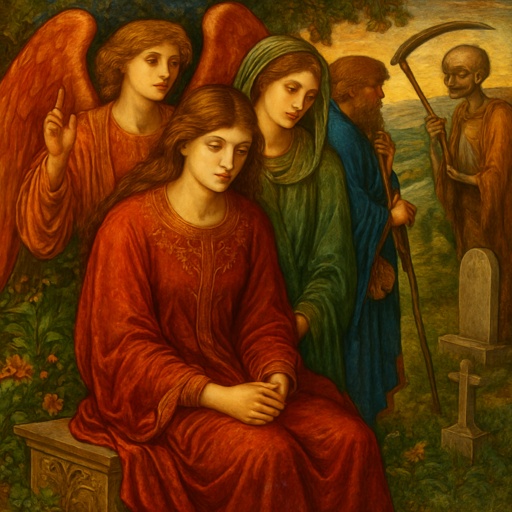
Psalm 49

Genesis 49:9

Jeremiah 3:49

Isaiah 49:9 - "That thou mayest say to the prisoners, Go forth; to them that are in darkness, Shew yourselves. They shall feed in the ways, and their pastures shall be in all high places."

1 Samuel 17:49
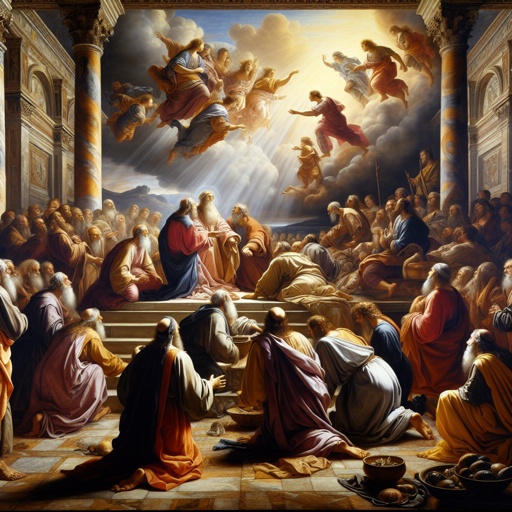
1 Samuel 17:49

"¶ Shall the prey be taken from the mighty, or the lawful captive delivered?" - Isaiah 49:24

1 Samuel 17:49

1 Samuel 17:49

Isaiah 49:15 - "Can a woman forget her sucking child, that she should not have compassion on the son of her womb? yea, they may forget, yet will I not forget thee."
!["Behold, I have graven thee upon the palms of [my] hands; thy walls [are] continually before me." - Isaiah 49:16](https://media.bible.art/b07c325d-8129-47ec-bf44-63ea459287ab-thumbnail.jpg)
"Behold, I have graven thee upon the palms of [my] hands; thy walls [are] continually before me." - Isaiah 49:16

Isaiah 49:13 - "¶ Sing, O heavens; and be joyful, O earth; and break forth into singing, O mountains: for the LORD hath comforted his people, and will have mercy upon his afflicted."

1 Samuel 17:45-49

Isaiah 49:19 - "For thy waste and thy desolate places, and the land of thy destruction, shall even now be too narrow by reason of the inhabitants, and they that swallowed thee up shall be far away."

Isaiah 49:25 - "But thus saith the LORD, Even the captives of the mighty shall be taken away, and the prey of the terrible shall be delivered: for I will contend with him that contendeth with thee, and I will save thy children."

"And I will make all my mountains a way, and my highways shall be exalted." - Isaiah 49:11
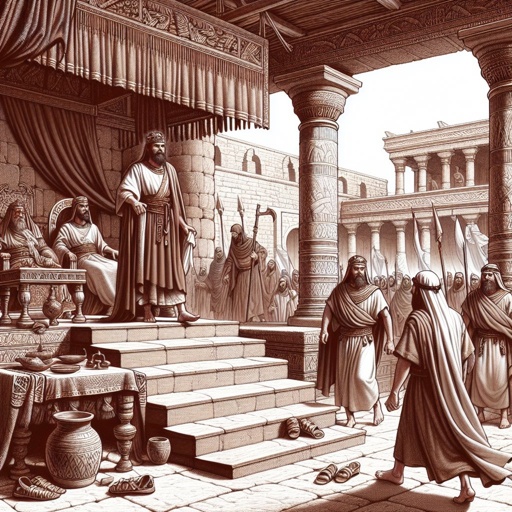
1 Chronicles 1:49 - "And when Shaul was dead, Baal-hanan the son of Achbor reigned in his stead."

Isaiah 49:4 - "Then I said, I have laboured in vain, I have spent my strength for nought, and in vain: yet surely my judgment is with the LORD, and my work with my God."

"But Zion said, The LORD hath forsaken me, and my Lord hath forgotten me." - Isaiah 49:14