What does Isaiah 55:1 mean?
“Ho, every one that thirsteth, come ye to the waters, and he that hath no money; come ye, buy, and eat; yea, come, buy wine and milk without money and without price.” — Isaiah 55:1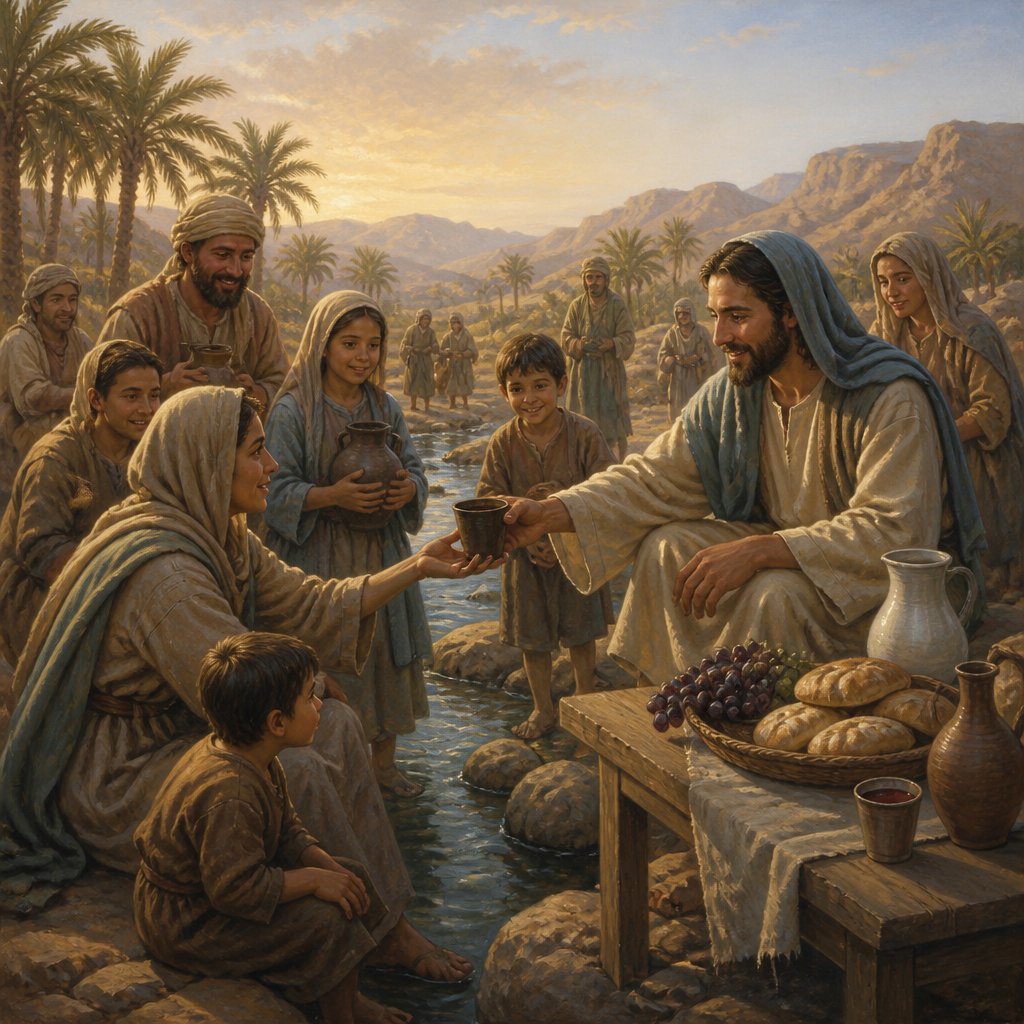
Isaiah 55:1 in the King James Version reads, “Ho, every one that thirsteth, come ye to the waters, and he that hath no money; come ye, buy, and eat; yea, come, buy wine and milk without money and without price.” Its meaning opens like a public proclamation. The verse begins with “Ho,” an urgent cry meant to arrest attention, like a herald calling out in a street. What follows is not addressed to the already satisfied but to “every one that thirsteth,” to those who feel lack, need, emptiness, guilt, weariness, or longing. Thirst in Scripture commonly stands for a deep inward necessity that ordinary resources cannot finally cure. Isaiah’s invitation therefore assumes that the human soul can be parched even when the hands are full, and that the most desperate poverty may be spiritual rather than material.
The immediate context strengthens this. Isaiah 55 comes as a sweeping invitation after the great promise of redemption in the previous chapter, where the servant of the LORD has borne sin and brought peace. In that light, Isaiah 55:1 is the opening call of a covenant offer that flows out of what God has already purposed to give. The chapter is framed as God’s gracious summons: not a bargain struck by equals, but mercy announced by the One who can provide what no one can purchase. The verse’s repeated “come” presses the point that the decisive movement is toward God’s provision, not toward self-supply. The needy are not told first to become worthy, but to come as needy.
The symbolism is drawn from the most basic realities of life. “Waters” evokes what is essential for survival, cleansing, and refreshment. In a land where drought meant death, water signified rescue and life itself. To tell the thirsty to “come ye to the waters” is to say that God has what is truly necessary and that it is accessible by invitation. Yet the imagery intensifies: “buy, and eat,” and then “buy wine and milk.” Food and drink are not merely for bare survival but for nourishment, strength, joy, and fullness. “Milk” suggests rich sustenance, what builds and restores. “Wine” suggests gladness and celebration, the kind of abundance that goes beyond mere necessity. Together, water, milk, and wine portray not a stingy ration but a complete provision: cleansing and life, sustaining nourishment, and rejoicing.
At the center of the verse is an intentional paradox: “he that hath no money; come ye, buy.” Buying normally requires currency; Isaiah puts the poor person—specifically the one who has nothing—at the front of the line. This is the verse’s great theme of grace: “without money and without price.” It does not mean the gift is cheap or without cost in any ultimate sense; rather, it means the cost is not borne by the recipient and cannot be met by the recipient. The soul’s greatest need is not something one can earn, barter for, or achieve. The language of buying underscores that what is offered is real and valuable, not imaginary, yet it is given freely by God’s generosity. The invitation overturns every attempt to make spiritual life a transaction of human merit. It also rebukes despair, because even the penniless are not excluded; lack is not a barrier but the very condition named in the call.
The verse also carries covenant overtones. In the verses that follow in Isaiah 55, the LORD speaks of an “everlasting covenant,” and of “the sure mercies of David,” which signals God’s faithful promise and royal provision. Isaiah 55:1 functions like the doorway into that promise: come to receive what God gives because God is faithful to give it. This makes the invitation both personal and public. It is personal because it addresses “every one,” singling out the individual thirst. It is public because it is an open call, not restricted to a privileged class. The structure of the verse reinforces this openness by repetition: “come,” “come,” “come.” The door is not hidden; it is held open.
In significance, Isaiah 55:1 presents the gospel-shaped logic of Scripture in prophetic form: God offers life to the needy, satisfaction to the hungry, cleansing and joy to the thirsty, and He offers it in a way that excludes boasting, because it is “without money and without price.” The verse exposes false refuges—whatever a person tries to use as payment, whether morality, status, ritual, knowledge, or effort—and replaces them with a simple summons to receive. The hunger and thirst are not shameful here; they are the very signs that one is being addressed. The promise is that true satisfaction is found not in what one can afford, but in what God freely supplies.
Get our apps


Artwork for Isaiah 55:1

Isaiah 55:1 - "Ho, every one that thirsteth, come ye to the waters, and he that hath no money; come ye, buy, and eat; yea, come, buy wine and milk without money and without price."

Isaiah 55:1 "Ho! Everyone who thirsts, Come to the waters; And you who have no money, Come, buy and eat. Yes, come, buy wine and milk Without money and without price.

Isaiah 55:1-2 - "Ho, everyone that thirsteth, come ye to the waters, and he that hath no money; come ye, buy, and eat; yea, come, buy wine and milk without money and without price. Wherefore do ye spend money for that which is not bread? and your labor for that which satisfieth not? hearken diligently unto me, and eat ye that which is good, and let your soul delight itself in fatness."
Isaiah 55:1-3 - "Ho, every one that thirsteth, come ye to the waters, and he that hath no money; come ye, buy, and eat; yea, come, buy wine and milk without money and without price. Wherefore do ye spend money for that which is not bread? and your labour for that which satisfieth not? hearken diligently unto me, and eat ye that which is good, and let your soul delight itself in fatness. Incline your ear, and come unto me: hear, and your soul shall live; and I will make an everlasting covenant with you, even the sure mercies of David."
"Ho, every one that thirsteth, come ye to the waters, and he that hath no money; come ye, buy, and eat; yea, come, buy wine and milk without money and without price." - Isaiah 55:1
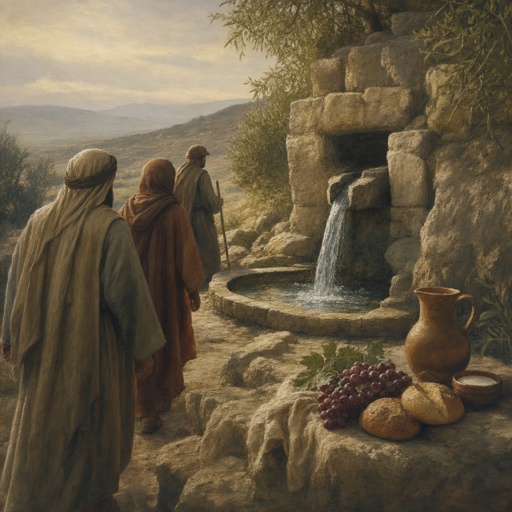
"Ho, every one that thirsteth, come ye to the waters, and he that hath no money; come ye, buy, and eat; yea, come, buy wine and milk without money and without price." - Isaiah 55:1
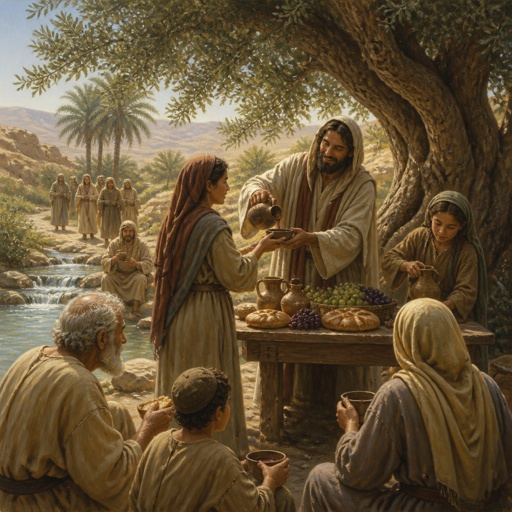
"Ho, everyone that thirsteth, come ye to the waters, and he that hath no money; come ye, buy, and eat; yea, come, buy wine and milk without money and without price. Wherefore do ye spend money for that which is not bread? and your labor for that which satisfieth not? hearken diligently unto me, and eat ye that which is good, and let your soul delight itself in fatness." - Isaiah 55:1-2
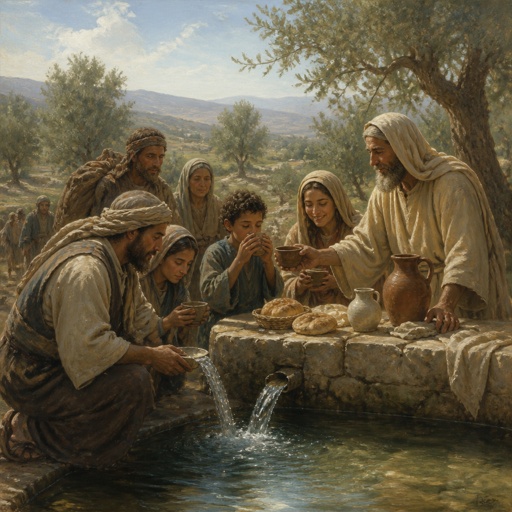
"Ho, everyone that thirsteth, come ye to the waters, and he that hath no money; come ye, buy, and eat; yea, come, buy wine and milk without money and without price. Wherefore do ye spend money for that which is not bread? and your labor for that which satisfieth not? hearken diligently unto me, and eat ye that which is good, and let your soul delight itself in fatness." - Isaiah 55:1-2
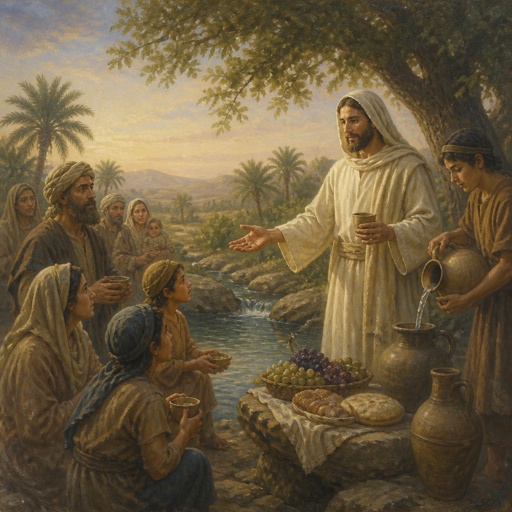
"Ho, every one that thirsteth, come ye to the waters, and he that hath no money; come ye, buy, and eat; yea, come, buy wine and milk without money and without price. Wherefore do ye spend money for that which is not bread? and your labour for that which satisfieth not? hearken diligently unto me, and eat ye that which is good, and let your soul delight itself in fatness. Incline your ear, and come unto me: hear, and your soul shall live; and I will make an everlasting covenant with you, even the sure mercies of David." - Isaiah 55:1-3

Isaiah 55:11

Isaiah 55:4 - "Behold, I have given him for a witness to the people, a leader and commander to the people."

Isaiah 55:8 - "¶ For my thoughts are not your thoughts, neither are your ways my ways, saith the LORD."

Isaiah5:5-7

Isaiah 55:6 - "¶ Seek ye the LORD while he may be found, call ye upon him while he is near:"

Instead of the thorn shall come up the fir tree, and instead of the brier shall come up the myrtle tree: and it shall be to the LORD for a name, for an everlasting sign that shall not be cut off. Isaiah 55:13 (KJV)

Isaiah 55:9 - "For as the heavens are higher than the earth, so are my ways higher than your ways, and my thoughts than your thoughts."

Luke 1:54-55

Isaiah 55:3 - "Incline your ear, and come unto me: hear, and your soul shall live; and I will make an everlasting covenant with you, even the sure mercies of David."

Instead of the thorn shall come up the fir tree, and instead of the brier shall come up the myrtle tree: and it shall be to the LORD for a name, for an everlasting sign that shall not be cut off. Isaiah 55:13 (KJV)

Instead of the thorn shall come up the fir tree, and instead of the brier shall come up the myrtle tree: and it shall be to the LORD for a name, for an everlasting sign that shall not be cut off. Isaiah 55:13 (KJV)

Instead of the thorn shall come up the fir tree, and instead of the brier shall come up the myrtle tree: and it shall be to the LORD for a name, for an everlasting sign that shall not be cut off. Isaiah 55:13 (KJV)

Isaiah 55:13 - "Instead of the thorn shall come up the fir tree, and instead of the brier shall come up the myrtle tree: and it shall be to the LORD for a name, for an everlasting sign that shall not be cut off."

"For as the rain cometh down, and the snow from heaven, and returneth not thither, but watereth the earth, and maketh it bring forth and bud, that it may give seed to the sower, and bread to the eater:" - Isaiah 55:10

Isaiah 55:10 - "For as the rain cometh down, and the snow from heaven, and returneth not thither, but watereth the earth, and maketh it bring forth and bud, that it may give seed to the sower, and bread to the eater:"

"So shall my word be that goeth forth out of my mouth: it shall not return unto me void, but it shall accomplish that which I please, and it shall prosper in the thing whereto I sent it." - Isaiah 55:11

Instead of the thorn shall come up the fir tree, and instead of the brier shall come up the myrtle tree: and it shall be to the LORD for a name, for an everlasting sign that shall not be cut off. Isaiah 55:13(KJV)

Instead of the thorn shall come up the fir tree, and instead of the brier shall come up the myrtle tree: and it shall be to the LORD for a name, for an everlasting sign that shall not be cut off. Isaiah 55:13 (KJV)

Isaiah 55:12 - "For ye shall go out with joy, and be led forth with peace: the mountains and the hills shall break forth before you into singing, and all the trees of the field shall clap their hands."

"Behold, I have given him for a witness to the people, a leader and commander to the people." - Isaiah 55:4

Luke 1:55 - "As he spake to our fathers, to Abraham, and to his seed for ever."