What does Isaiah 57:15 mean?
“For thus saith the high and lofty One that inhabiteth eternity, whose name is Holy; I dwell in the high and holy place, with him also that is of a contrite and humble spirit, to revive the spirit of the humble, and to revive the heart of the contrite ones.” — Isaiah 57:15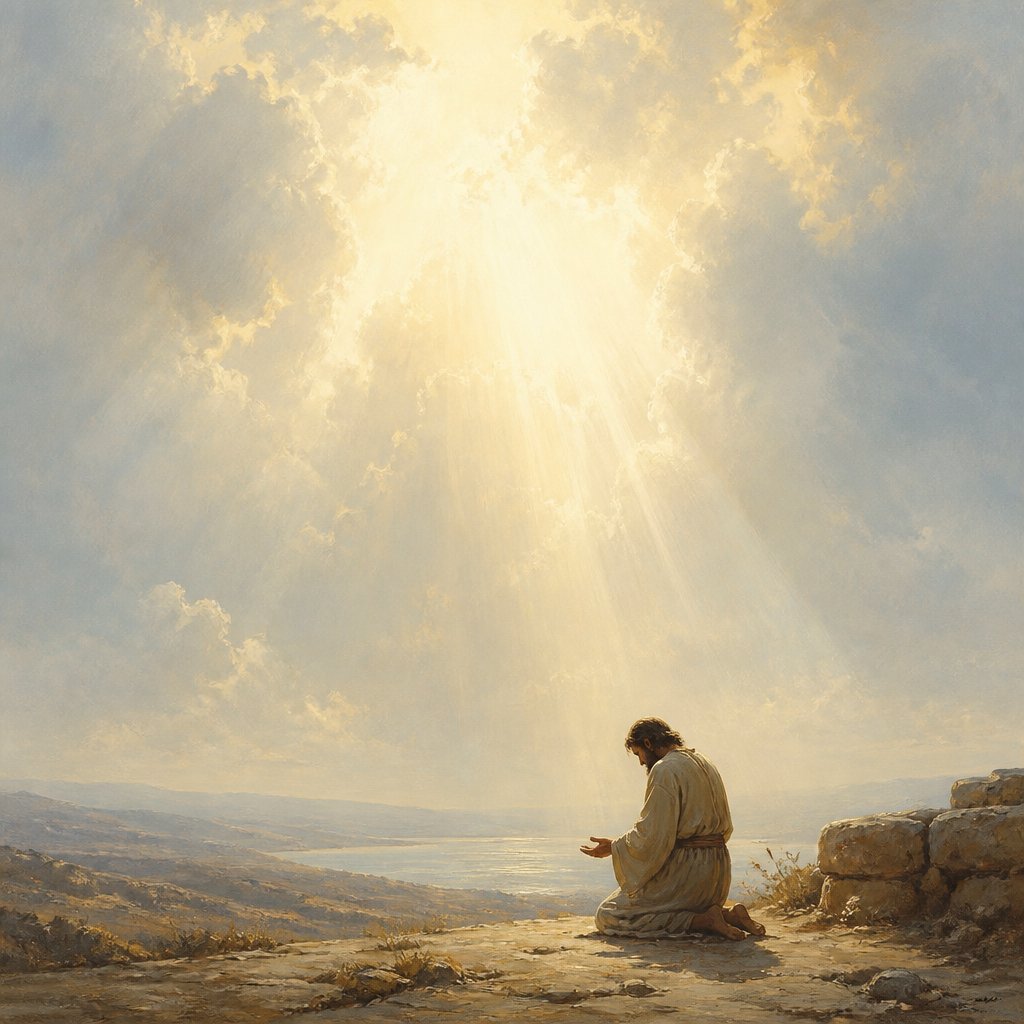
Isaiah 57:15 in the KJV speaks with the voice of the LORD Himself, lifting the reader’s eyes to who God is and then lowering the reader’s eyes to whom God draws near. The verse reads: “For thus saith the high and lofty One that inhabiteth eternity, whose name is Holy; I dwell in the high and holy place, with him also that is of a contrite and humble spirit, to revive the spirit of the humble, and to revive the heart of the contrite ones.” Its meaning turns on a holy paradox: the God who is infinitely exalted chooses, without ceasing to be exalted, to be present with the lowly.
The opening titles set the context for everything that follows. “The high and lofty One” establishes transcendence. God is not merely higher than men in degree, but categorically above them. He “inhabiteth eternity,” language that stretches beyond the ordinary sense of time; it presents God as the One who is not bound by the passing of days and years, the One for whom eternity is not a distant place but a dwelling. Then the verse adds, “whose name is Holy,” which in Scripture is not a label but a revelation of character. Holiness here is God’s set-apartness, His moral purity, and His absolute otherness. The verse begins, then, with the strongest possible emphasis that God is glorious, timeless, and morally perfect.
From that height the verse moves to “I dwell in the high and holy place,” which fits what has just been said. The “high and holy place” symbolizes the sphere of God’s majesty and purity, the place of His enthronement and unapproachable light. Yet the sentence does not end there. It adds an astonishing second dwelling: “with him also that is of a contrite and humble spirit.” The symbolism is deliberate. God’s “high and holy place” is not traded for the low place; rather, God’s presence spans both. The same LORD who is enthroned in holiness is also near to the one who is broken and bowed in spirit. The verse is not saying that humility earns God’s attention as a wage; it is saying that the Holy One chooses to make His nearness known, in a special way, to those who are not hardened, proud, or self-justifying.
The words “contrite” and “humble” are central to the theme. “Contrite” conveys a crushed or broken condition, not mere sadness but an inward breaking under the weight of sin, guilt, and helplessness before God. “Humble spirit” is the opposite of the lifted-up heart that insists on its own way. In the broader flow of Isaiah, this humility stands in contrast to idolatry, rebellion, and the self-confident religion that can multiply outward acts while resisting God inwardly. Isaiah repeatedly exposes pride and false worship and calls for a heart that trembles at God’s word. Isaiah 57:15 fits that message by showing the kind of person to whom the Holy One comes close: not the one who pretends innocence, but the one who confesses need.
The verse then explains the purpose of this divine nearness with two parallel phrases: “to revive the spirit of the humble, and to revive the heart of the contrite ones.” “Revive” implies restoration of life, strength, and hope. The imagery is of something that has been brought low—fainting, discouraged, or spiritually deadened—and is then renewed by God’s own action. The “spirit” and “heart” point to the inner person, the seat of will, affection, conscience, and devotion. The Holy One does not merely correct behavior from afar; He renews inward life. The repetition of “revive” intensifies the promise: God’s presence with the humbled is not passive companionship but active healing and renewal.
In terms of context, Isaiah 57 addresses the tragedy of a people drifting into sin and spiritual adultery, turning aside after idols and trusting in substitutes for God. Against that backdrop, Isaiah 57:15 functions as a theological anchor and a pastoral invitation. It announces that God remains “high and lofty” and “Holy,” so sin is not minimized. But it also announces that God is accessible to the repentant and broken, so judgment is not His last word for those who turn. The verse therefore holds together two truths that must not be separated: God’s holiness and God’s condescension. The Holy One is not drawn to pride, because pride competes with His glory; but He draws near to contrition, because contrition agrees with the truth about God and the truth about ourselves.
The significance of the verse is that it defines the meeting point between divine majesty and human need. It corrects the misconception that God’s greatness makes Him distant in the sense of indifferent. His dwelling “in the high and holy place” does not mean He is unreachable to faith and repentance; it means that any approach must be compatible with holiness. The one posture compatible with holiness is not self-exaltation but humility, not defensiveness but contrition. The verse also corrects the opposite misconception: that God’s nearness requires Him to lower His standards. He remains “Holy” even as He comes near, and it is precisely His holy presence that “revive[s]” the contrite, because His life and purity are what heal what sin has broken.
Isaiah 57:15, then, is a portrait of God’s character and God’s way with people. It proclaims a God who is eternally enthroned and yet personally involved; a God whose holiness does not repel the penitent but welcomes them into renewal; a God who chooses to make the humble His habitation so that the crushed heart might live again. In KJV terms, the Holy One inhabiting eternity dwells with the contrite, not to affirm their brokenness as an end, but “to revive” them—to restore inward life where pride had dried it up and where sin had wounded it—so that the humbled may be raised, not into self-confidence, but into renewed communion with the God who is both high and near.
Get our apps


Artwork for Isaiah 57:15

Isaiah 57:15 - "For thus saith the high and lofty One that inhabiteth eternity, whose name is Holy; I dwell in the high and holy place, with him also that is of a contrite and humble spirit, to revive the spirit of the humble, and to revive the heart of the contrite ones."

Isaiah 57:15 For thus says the High and Lofty One Who inhabits eternity, whose name is Holy: "I dwell in the high and holy place, With him who has a contrite and humble spirit, To revive the spirit of the humble, And to revive the heart of the contrite ones.

Isaiah 57:15 For thus says the High and Lofty One Who inhabits eternity, whose name is Holy: "I dwell in the high and holy place, With him who has a contrite and humble spirit, To revive the spirit of the humble, And to revive the heart of the contrite ones.
!["For thus saith the high and lofty One that inhabiteth eternity, whose name [is] Holy; I dwell in the high and holy [place], with him also [that is] of a contrite and humble spirit, to revive the spirit of the humble, and to revive the heart of the contrite ones." - Isaiah 57:15](https://media.bible.art/64ff74ba-61dc-4265-83c8-54925d686544-thumbnail.jpg)
"For thus saith the high and lofty One that inhabiteth eternity, whose name [is] Holy; I dwell in the high and holy [place], with him also [that is] of a contrite and humble spirit, to revive the spirit of the humble, and to revive the heart of the contrite ones." - Isaiah 57:15
"For thus saith the high and lofty One that inhabiteth eternity, whose name is Holy; I dwell in the high and holy place, with him also that is of a contrite and humble spirit, to revive the spirit of the humble, and to revive the heart of the contrite ones." - Isaiah 57:15

Isaiah 57:1-2

Isaiah 57:21 - "There is no peace, saith my God, to the wicked."

Joshua 15:57 - "Cain, Gibeah, and Timnah; ten cities with their villages:"

Isaiah 57:12 - "I will declare thy righteousness, and thy works; for they shall not profit thee."

Isaiah 57:3 - "¶ But draw near hither, ye sons of the sorceress, the seed of the adulterer and the whore."

Isaiah 57:20 - "But the wicked are like the troubled sea, when it cannot rest, whose waters cast up mire and dirt."

"There is no peace, saith my God, to the wicked." - Isaiah 57:21

Isaiah 57:2 - "He shall enter into peace: they shall rest in their beds, each one walking in his uprightness."

Isaiah 57:5 - "Enflaming yourselves with idols under every green tree, slaying the children in the valleys under the clifts of the rocks?"

Isaiah 57:19 - "I create the fruit of the lips; Peace, peace to him that is far off, and to him that is near, saith the LORD; and I will heal him."

1 Corinthians 15:57 - "But thanks be to God, which giveth us the victory through our Lord Jesus Christ."

Isaiah 57:14 - "And shall say, Cast ye up, cast ye up, prepare the way, take up the stumblingblock out of the way of my people."

Isaiah 57:17 - "For the iniquity of his covetousness was I wroth, and smote him: I hid me, and was wroth, and he went on frowardly in the way of his heart."

Isaiah 57:7 - "Upon a lofty and high mountain hast thou set thy bed: even thither wentest thou up to offer sacrifice."
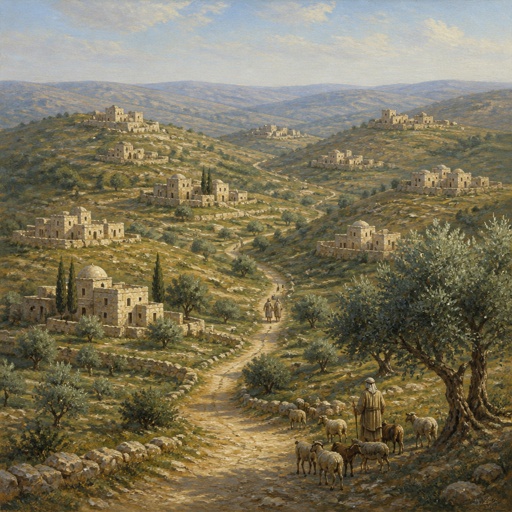
"Cain, Gibeah, and Timnah; ten cities with their villages:" - Joshua 15:57

Isaiah 57:20-21 - "But the wicked are like the troubled sea, when it cannot rest, whose waters cast up mire and dirt. There is no peace, says my God, for the wicked."

Isaiah 57:16 - "For I will not contend for ever, neither will I be always wroth: for the spirit should fail before me, and the souls which I have made."

Isaiah 57:1 - "The righteous perisheth, and no man layeth it to heart: and merciful men are taken away, none considering that the righteous is taken away from the evil to come."

Isaiah 57:18 - "I have seen his ways, and will heal him: I will lead him also, and restore comforts unto him and to his mourners."

Isaiah 57:9 - "And thou wentest to the king with ointment, and didst increase thy perfumes, and didst send thy messengers far off, and didst debase thyself even unto hell."

Isaiah 57:10 - "Thou art wearied in the greatness of thy way; yet saidst thou not, There is no hope: thou hast found the life of thine hand; therefore thou wast not grieved."

1 Corinthians 15:56-57 - "The sting of death is sin, and the power of sin is the law. But thanks be to God! He gives us the victory through our Lord Jesus Christ."

Isaiah 57:4 - "Against whom do ye sport yourselves? against whom make ye a wide mouth, and draw out the tongue? are ye not children of transgression, a seed of falsehood,"

"I will declare thy righteousness, and thy works; for they shall not profit thee." - Isaiah 57:12

"¶ But draw near hither, ye sons of the sorceress, the seed of the adulterer and the whore." - Isaiah 57:3