What does James 1:5 mean?
“If any of you lack wisdom, let him ask of God, that giveth to all men liberally, and upbraideth not; and it shall be given him.” — James 1:5
“James 1:5” in the King James Version reads, “If any of you lack wisdom, let him ask of God, that giveth to all men liberally, and upbraideth not; and it shall be given him.” In plain sense, the verse speaks to a common human condition—lack—and to God’s ready answer—wisdom granted in response to prayer. Yet its meaning becomes fuller when it is read in its immediate context, within the themes of James, and within the spiritual imagery James has already set in motion in the opening lines of his epistle.
The verse sits inside James’s opening exhortation about trials. Just before it, James has said, “My brethren, count it all joy when ye fall into divers temptations; Knowing this, that the trying of your faith worketh patience. But let patience have her perfect work, that ye may be perfect and entire, wanting nothing.” The word “temptations” there carries the sense of testings and trials, and James is insisting that such seasons can be received with holy joy because God uses them to form endurance, maturity, and wholeness. When he then says, “If any of you lack wisdom,” he is not changing the subject, but pressing further into it. Trials expose what we do not have: steadiness, perspective, self-command, clarity, and the ability to choose rightly. Wisdom, in this setting, is not merely information, nor a clever answer, but the God-given capacity to understand how to walk through a trial in a way that honors the Lord. It is the ability to interpret suffering truthfully, to discern what obedience looks like when life is confusing, and to act with faith rather than impulse.
The condition “If any of you lack wisdom” is stated without shame, as though spiritual need is assumed. James does not tell the believer to hide deficiency or to compensate by self-reliance; he directs the believer to prayer. The phrase “let him ask of God” is simple and imperative. The remedy for lack is not first found in one’s own strength, nor in the world’s counsel, but in turning toward God as the fountain of what is needed. The verse therefore carries a relational meaning: wisdom is not only a principle; it is a gift received from a living God who hears. To ask is to admit dependence. That is already part of wisdom, because it aligns the soul with reality: the creature needs the Creator.
James then describes God’s manner of giving: “that giveth to all men liberally, and upbraideth not.” The word “liberally” signals generosity and openness. God is not pictured as rationing wisdom as though it were scarce, nor as granting it only to a spiritual elite. The phrase “to all men” in the flow of the verse underscores that the invitation is broad. Whoever lacks may ask; whoever asks may receive. This does not erase the moral seriousness found elsewhere in James, but it highlights God’s readiness to help those who come to him. In this sense, the verse reveals God’s character as a giver. Wisdom is presented as something God delights to supply, because it helps his people endure trials faithfully and become “perfect and entire.”
Equally important is the phrase “and upbraideth not.” To upbraid is to reproach, to scold, to cast past failures in the face of the one asking. James is telling the believer that God is not like a grudging benefactor who reminds you of your ignorance as the price of receiving help. The symbolism here is moral rather than visual: God is portrayed not as a humiliator but as a generous Father. In the context of trials, this matters deeply. Affliction often tempts people to think God is against them, disappointed in them, or tired of their weakness. James counters that suspicion. When a believer asks for wisdom, God gives without attaching contempt. The act of asking is not an invitation for divine ridicule; it is the appointed path to divine supply.
The promise concludes with certainty: “and it shall be given him.” James does not present this as a vague possibility but as a pledged outcome. The verse thus functions as reassurance to Christians under pressure. Trials can make a person feel trapped in impossible decisions, as though the right path cannot be found. James asserts that wisdom is obtainable because God himself provides it in answer to prayer. The significance is not only that wisdom exists, but that God is accessible and willing.
When this verse is read with the lines that follow, its meaning is sharpened even more. James continues, “But let him ask in faith, nothing wavering.” That shows that the asking envisioned in James 1:5 is not a mere religious formality; it is an approach to God that trusts his goodness and his promise. James is teaching that the believer should not be divided in heart—torn between reliance on God and reliance on other ultimate supports—because a wavering spirit is unstable. Wisdom is promised, but the posture of reception is faith, the settled confidence that God gives as he has said.
The major themes gathered in James 1:5 are therefore humility, dependence, divine generosity, and practical holiness under trial. Wisdom in James is not abstract speculation; it is the skill of righteous living. Its immediate purpose is endurance with joy, and its long-term fruit is spiritual maturity. The verse also carries a quiet comfort: the God to whom you pray for wisdom is not reluctant, not stingy, not contemptuous. He “giveth” and “upbraideth not.” In a world where asking for help can bring embarrassment, James presents prayer as the safe and appointed means by which lack is met. The believer’s deficiencies, exposed by trials, become the very occasion to know God as the liberal giver of wisdom, and to learn that what is needed for faithful living is not finally manufactured within, but received from above.
Get our apps


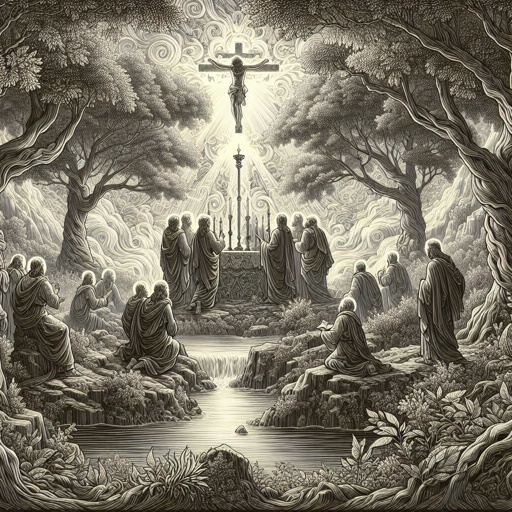
Artwork for James 1:5

James 1:5-20

James 1:5 - "If any of you lack wisdom, let him ask of God, that giveth to all men liberally, and upbraideth not; and it shall be given him."

James 1:5-6 - "If any of you lacks wisdom, you should ask God, who gives generously to all without finding fault, and it will be given to you. But when you ask, you must believe and not doubt, because the one who doubts is like a wave of the sea, blown and tossed by the wind."

James 1:5 - If any of you lacks wisdom, you should ask God, who gives generously to all without finding fault, and it will be given to you.

James 1:5 - If any of you lacks wisdom, you should ask God, who gives generously to all without finding fault, and it will be given to you.

James 1:5 - If any of you lacks wisdom, you should ask God, who gives generously to all without finding fault, and it will be given to you.

"If any of you lack wisdom, let him ask of God, that giveth to all men liberally, and upbraideth not; and it shall be given him." - James 1:5

"If any of you lack wisdom, let him ask of God, that giveth to all men liberally, and upbraideth not; and it shall be given him." - James 1:5

James 1:5 - If any of you lacks wisdom, you should ask God, who gives generously to all without finding fault, and it will be given to you.

James 1:5 - If any of you lacks wisdom, you should ask God, who gives generously to all without finding fault, and it will be given to you.

James 1:5 - If any of you lacks wisdom, you should ask God, who gives generously to all without finding fault, and it will be given to you.

James 1:5 - If any of you lacks wisdom, you should ask God, who gives generously to all without finding fault, and it will be given to you.

James 1:5 - If any of you lacks wisdom, you should ask God, who gives generously to all without finding fault, and it will be given to you.

"If any of you lacks wisdom, you should ask God, who gives generously to all without finding fault, and it will be given to you. But when you ask, you must believe and not doubt, because the one who doubts is like a wave of the sea, blown and tossed by the wind." - James 1:5-6

James 5:1 - "Go to now, ye rich men, weep and howl for your miseries that shall come upon you."

Mark 5:37 - "And he suffered no man to follow him, save Peter, and James, and John the brother of James."

James 5:16

James 5:16

James 5:16

James 5:16
James 21:5-120

James 5:14-15

James 1:1 - "James, a servant of God and of the Lord Jesus Christ, to the twelve tribes which are scattered abroad, greeting."

James 5:7 – "Be patient, then, brothers and sisters, until the Lord’s coming."

James 5:7 – "Be patient, then, brothers and sisters, until the Lord’s coming."

James 5:2 - "Your riches are corrupted, and your garments are motheaten."

James 5:5 - "Ye have lived in pleasure on the earth, and been wanton; ye have nourished your hearts, as in a day of slaughter."

James

"And he suffered no man to follow him, save Peter, and James, and John the brother of James." - Mark 5:37

James 5:6 - "Ye have condemned and killed the just; and he doth not resist you."