What does James 2:17 mean?
“Even so faith, if it hath not works, is dead, being alone.” — James 2:17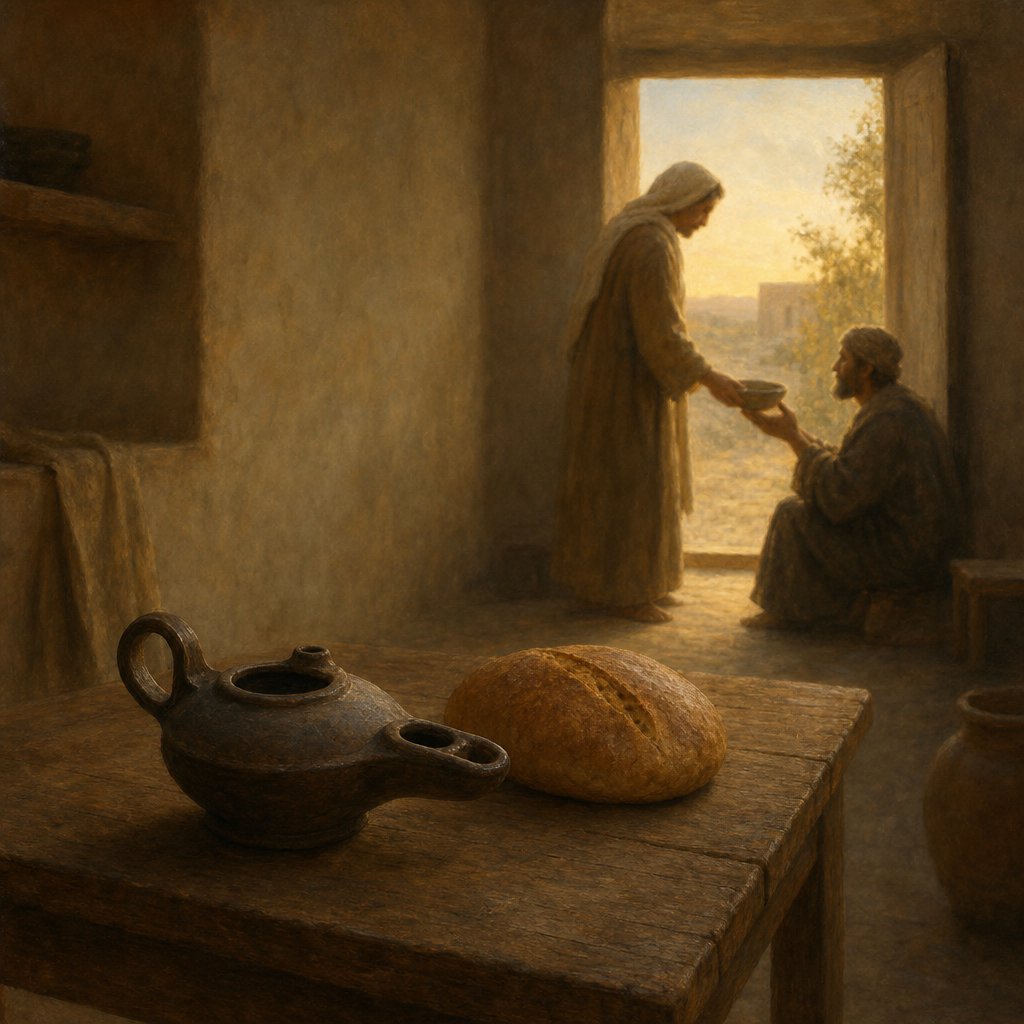
James 2:17 in the King James Version reads, “Even so faith, if it hath not works, is dead, being alone.” In that single sentence James is not offering a new definition of faith as mere religious opinion, nor is he reducing salvation to moral effort; he is exposing the nature of living faith by showing what it inevitably produces. The verse stands like a verdict at the close of an argument: if faith is left “alone,” unaccompanied by the obedient, merciful, and practical actions that faith naturally brings forth, then that faith is not merely weak or immature, but “dead.” The word “dead” is not a polite critique. It is the language of lifelessness, of something that may retain an outward form but lacks the inward reality and power that marks life.
The context in James 2 explains why James speaks so sharply. He has been confronting a kind of religion that can talk rightly while acting wrongly. Earlier in the chapter he condemns “respect of persons,” the practice of honoring the wealthy and sidelining the poor, even within the assembly. That sin is not treated as a minor social failure but as a contradiction of the “royal law” and a violation that makes one a “transgressor.” James then presses the point by bringing faith down from the realm of claims into the realm of conduct. He presents the scenario of seeing “a brother or sister” who is “naked, and destitute of daily food,” and responding only with words of blessing while providing nothing needed. Those pious words, detached from tangible mercy, do not heal hunger or cover nakedness. They reveal a faith that remains on the lips rather than moving through the hands. When James then says, “Even so,” he ties that example directly to the principle: as empty well-wishing does not meet bodily need, so a faith that never expresses itself in obedient love does not meet the standard of spiritual life.
A major theme of the verse is that faith is meant to be operative, not ornamental. In James’s reasoning, works are not a rival source of righteousness competing with faith; they are faith’s evidence and expression. He is arguing against a “faith” that consists only in affirmation. That is why, just after this, he can say that a man may claim, “Thou hast faith, and I have works,” and he answers, “shew me thy faith without thy works, and I will shew thee my faith by my works.” The issue is visibility and reality: faith that is real does something. It yields obedience, generosity, endurance, impartiality, purity of speech, and mercy toward the needy—precisely the kinds of concerns James has already been urging throughout the epistle. Faith is not merely an inward sentiment that remains private; it is a living principle that takes shape in outward life.
The symbolism of “dead” in James 2:17 is also significant. Death in Scripture often denotes separation: the body without the spirit is dead, and James later uses that exact comparison, “For as the body without the spirit is dead, so faith without works is dead also.” The image implies that works are to faith what breath is to a body—not the body’s identity, but the evidence that life is present. A corpse may resemble a living person in outline, yet it cannot respond, act, or bear fruit. In the same way, a confession of faith may have the vocabulary of belief, yet if it does not respond to God with obedience and to neighbors with mercy, it remains inert. James is not praising works as a separate spiritual life-source; he is saying that where life is, motion and fruit follow.
Another theme is the unity of doctrine and discipleship. James will not allow a person to shelter behind correct statements while disregarding the practical demands of the gospel. This is why he brings up the example that “the devils also believe, and tremble.” That statement is meant to unsettle the reader: there is a kind of belief that recognizes truth yet remains in rebellion. By placing such “belief” in the same discussion, James shows that mental assent alone is not what he means by saving faith. The faith he is describing is the kind that submits, obeys, and loves. In this light, “being alone” is not just a description of isolation but a diagnosis: faith has been detached from the very fruits that would prove it genuine.
James 2:17 also carries the theme of mercy as the natural language of faith. Earlier in the chapter James has insisted that God has chosen “the poor of this world rich in faith,” and he warns that “judgment without mercy” awaits the merciless, concluding, “and mercy rejoiceth against judgment.” When James says that faith without works is dead, the works most immediately in view are not ceremonial displays but merciful deeds—help offered to real people in real need. This grounds the verse in the everyday: true faith does not only attend religious gatherings or speak religious phrases; it moves toward the vulnerable, refuses partiality, and bears the cost of compassion. James is pressing the reader to understand that the gospel creates a new kind of life, and that life has an observable shape.
The significance of James 2:17, then, is that it safeguards the integrity of Christian profession. It warns against self-deception, against assuming that saying one has faith is the same thing as possessing faith. It also calls the believer to a wholeness in which trust in God and obedience to God are not separated, and love for God is not severed from love for neighbor. The verse is meant to pierce complacency and to bring faith into its proper fullness: faith that lives, faith that labors, faith that gives, faith that obeys. In James’s plain and forceful phrase, faith “being alone” is faith emptied of its living character; but faith joined to works is faith shown to be alive.
Get our apps


Artwork for James 2:17

James 2:17 - "Even so faith, if it hath not works, is dead, being alone."

"Even so faith, if it hath not works, is dead, being alone." - James 2:17
"Even so faith, if it hath not works, is dead, being alone." - James 2:17

James 2:17-18 - "So also faith by itself, if it does not have works, is dead. But someone will say, “You have faith and I have works.” Show me your faith apart from your works, and I will show you my faith by my works."
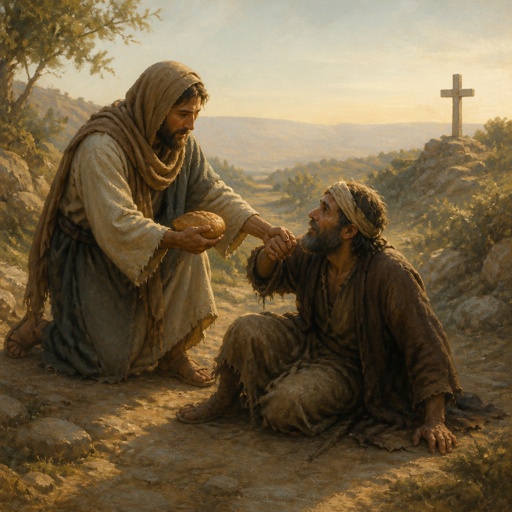
"So also faith by itself, if it does not have works, is dead. But someone will say, “You have faith and I have works.” Show me your faith apart from your works, and I will show you my faith by my works." - James 2:17-18
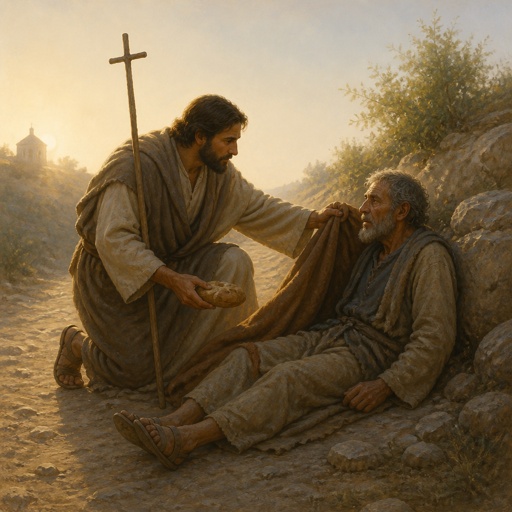
"So also faith by itself, if it does not have works, is dead. But someone will say, “You have faith and I have works.” Show me your faith apart from your works, and I will show you my faith by my works." - James 2:17-18
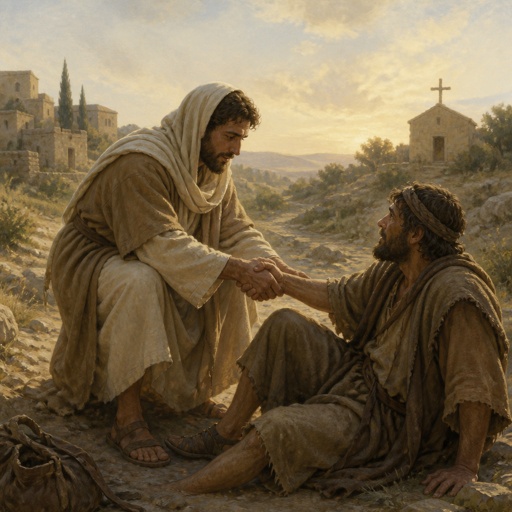
"So also faith by itself, if it does not have works, is dead. But someone will say, “You have faith and I have works.” Show me your faith apart from your works, and I will show you my faith by my works." - James 2:17-18

JAMES 4:17

James 1:17

James 1:17

James 1:17

James 1:17

James 1:17

Mark 3:17 - "And James the son of Zebedee, and John the brother of James; and he surnamed them Boanerges, which is, The sons of thunder:"

James 1:17-22

James 4:17 - "Therefore to him that knoweth to do good, and doeth it not, to him it is sin."

Matthew 17:1-3: After six days Jesus took with him Peter, James and John the brother of James, and led them up a high mountain by themselves. 2 There he was transfigured before them. His face shone like the sun, and his clothes became as white as the light. 3 Just then there appeared before them Moses and Elijah, talking with Jesus.

James 2:2-4

Matthew 17:1-3: After six days Jesus took with him Peter, James and John the brother of James, and led them up a high mountain by themselves. 2 There he was transfigured before them. His face shone like the sun, and his clothes became as white as the light. 3 Just then there appeared before them Moses and Elijah, talking with Jesus.

Matthew 17:1-3: After six days Jesus took with him Peter, James and John the brother of James, and led them up a high mountain by themselves. 2 There he was transfigured before them. His face shone like the sun, and his clothes became as white as the light. 3 Just then there appeared before them Moses and Elijah, talking with Jesus.

Genesis 2:17 KJVA (17) But of the tree of the knowledge of good and evil, thou shalt not eat of it: for in the day that thou eatest thereof thou shalt surely die.
James 2:15-17 - "If a brother or sister is poorly clothed and lacking in daily food, and one of you says to them, “Go in peace, be warmed and filled,” without giving them the things needed for the body, what good is that? So also faith by itself, if it does not have works, is dead."

james 2:26

"And James the son of Zebedee, and John the brother of James; and he surnamed them Boanerges, which is, The sons of thunder:" - Mark 3:17

James 1:2-13

James 1: 2-4

James 1:2-13

James 1:2-4

Matthew 17:1 - "And after six days Jesus taketh Peter, James, and John his brother, and bringeth them up into an high mountain apart,"

James 3:17 - "But the wisdom that is from above is first pure, then peaceable, gentle, and easy to be intreated, full of mercy and good fruits, without partiality, and without hypocrisy."