What does Jeremiah 17:11 mean?
"As the partridge sitteth on eggs, and hatcheth them not; so he that getteth riches, and not by right, shall leave them in the midst of his days, and at his end shall be a fool." - Jeremiah 17:11
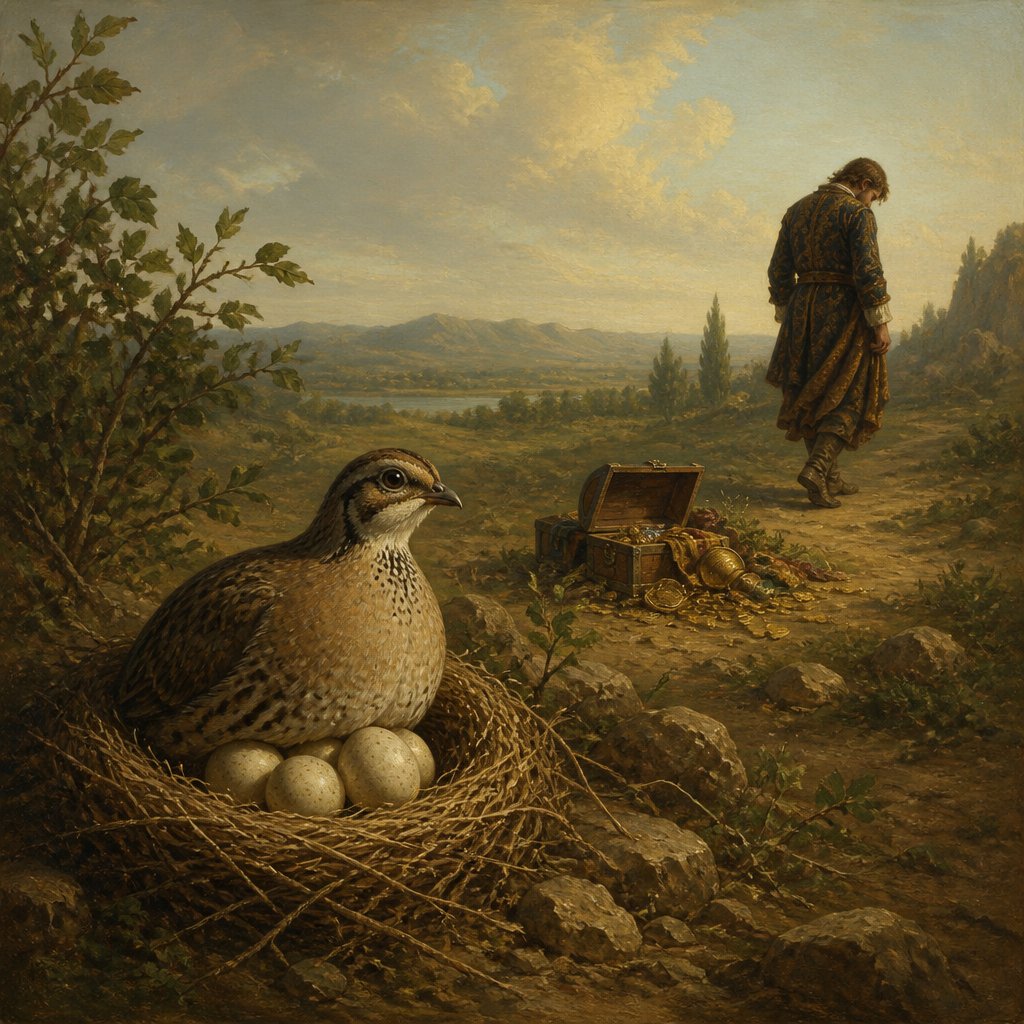
The verse Jeremiah 17:11 from the King James Version of the Bible reads, "As the partridge sitteth on eggs, and hatcheth them not; so he that getteth riches, and not by right, shall leave them in the midst of his days, and at his end shall be a fool." This verse is part of a passage in the book of Jeremiah that addresses the sinful nature of the people of Judah and warns of the consequences they will face if they continue to trust in their own ways rather than in God.
The passage in which this verse is found elucidates the human tendency to seek after wealth and possessions at any cost, often at the expense of moral and ethical considerations. The imagery of a partridge sitting on eggs and not hatching them is used to illustrate the futility and emptiness of acquiring wealth through dishonest means. The partridge represents the person who gains riches through deceit and wrongful means, but ultimately will not be able to enjoy the fruits of their labor. This is because their wealth is not gained by right or by the will of God, and therefore it will not endure.
One of the key themes of this verse is the concept of ill-gotten gains, and the fleeting nature of wealth acquired through dishonesty. The verse emphasizes the transitory nature of material possessions and the fact that they do not bring true fulfillment or lasting satisfaction. The imagery of the partridge sitting on eggs that will never hatch emphasizes the unproductive and ultimately fruitless nature of ill-gotten wealth. This serves as a warning to those who seek after riches through deceit, reminding them that their wealth will not bring them true happiness or security.
The passage also speaks to the idea of divine justice and retribution. It warns that those who acquire wealth through deceit and dishonesty will ultimately be made to pay for their actions. The phrase "so he that getteth riches, and not by right, shall leave them in the midst of his days, and at his end shall be a fool" is a stark reminder of the consequences that will befall those who pursue wealth through unscrupulous means. It suggests that such individuals will not only lose their ill-gotten gains, but will also suffer humiliation and disgrace in the end.
The verse serves as a moral and ethical lesson, cautioning against the pursuit of wealth at any cost and emphasizing the importance of honesty and integrity in all aspects of life. It underscores the biblical principle that true prosperity and success come from living a righteous and upright life, and that material wealth acquired through dishonesty is ultimately worthless and will not bring lasting happiness or fulfillment.
In addition to its moral and ethical implications, the verse also holds a deeper spiritual meaning. It points to the importance of placing one's trust in God rather than in worldly possessions. It reminds believers that true security and satisfaction can only be found in a relationship with God, and that the pursuit of material wealth should not be the primary focus of one's life. The verse encourages a shift in perspective, away from the temporary and fleeting nature of material possessions, and towards the eternal and enduring blessings that come from a life of faith and obedience to God.
In conclusion, the verse Jeremiah 17:11 from the King James Version of the Bible conveys a powerful message about the fleeting nature of ill-gotten wealth, the importance of moral and ethical conduct, and the ultimate futility of pursuing material possessions at the expense of spiritual well-being. It serves as a cautionary tale, reminding believers of the importance of placing their trust in God and living a life of integrity and righteousness. The verse's rich imagery and profound moral and spiritual lessons make it a timeless and relevant teaching for all who seek to live a life of faith and obedience.
Have questions about Jeremiah 17:11?
Dive deeper into this scripture with Bible Chat — an AI-powered tool for exploring God's Word through conversation. Ask questions, get context, and grow in your understanding of the Bible.
Get Our Apps


Jeremiah 17:11 Artwork

Jeremiah 17:11 - "As the partridge sitteth on eggs, and hatcheth them not; so he that getteth riches, and not by right, shall leave them in the midst of his days, and at his end shall be a fool."
"As the partridge sitteth on eggs, and hatcheth them not; so he that getteth riches, and not by right, shall leave them in the midst of his days, and at his end shall be a fool." - Jeremiah 17:11
Jeremiah 11:17 - "For the LORD of hosts, that planted thee, hath pronounced evil against thee, for the evil of the house of Israel and of the house of Judah, which they have done against themselves to provoke me to anger in offering incense unto Baal."

Exodus 17:11

Jeremiah 17:17 - "Be not a terror unto me: thou art my hope in the day of evil."

Jeremiah 11:1 - "The word that came to Jeremiah from the LORD, saying,"

Jeremiah 29:11-13

Jeremiah 29:11-13

Jeremiah 17:7-8

Jeremiah 29:11-13

Jeremiah 29:11-13

Jeremiah 17:7-8

Jeremiah 17:7-8

Jeremiah 17:7-8

Jeremiah 29:11

Jeremiah 29:11

Jeremiah 29:11

Jeremiah 29:11

Revelation 1:7

Ephesians 1:7

Ephesians 1:7

Jeremiah 39:11 - "¶ Now Nebuchadrezzar king of Babylon gave charge concerning Jeremiah to Nebuzar-adan the captain of the guard, saying,"

Revelation 1:7

Jeremiah 33:2-11

Jeremiah 33:2-11

Numbers 11:17

"The word that came to Jeremiah from the LORD, saying," - Jeremiah 11:1

Jeremiah 28:17 - "So Hananiah the prophet died the same year in the seventh month."

Jeremiah 7:17 - "¶ Seest thou not what they do in the cities of Judah and in the streets of Jerusalem?"

Jeremiah 17:12 - "¶ A glorious high throne from the beginning is the place of our sanctuary."