What does Jeremiah 1:8 mean?
“Be not afraid of their faces: for I am with thee to deliver thee, saith the LORD.” — Jeremiah 1:8
“Be not afraid of their faces: for I am with thee to deliver thee, saith the LORD.” (Jeremiah 1:8, KJV)
In Jeremiah 1 the LORD is not giving a general maxim about courage; he is speaking into a specific calling that has already been declared over Jeremiah’s life. The chapter opens by locating Jeremiah in real history, “in the days of Josiah” and stretching forward toward the dark years that would culminate in judgment upon Judah. Jeremiah is being appointed as a prophet in a turbulent, resistant age, and the verse belongs to the moment when Jeremiah shrinks back from that appointment. He says, “Ah, Lord GOD! behold, I cannot speak: for I am a child” (Jeremiah 1:6, KJV). The LORD answers that Jeremiah’s sense of inadequacy is not the controlling reality; divine commission is. Jeremiah will go where he is sent and speak what he is commanded (Jeremiah 1:7), and then comes Jeremiah 1:8 as the LORD’s direct antidote to the fear that would silence him.
The phrase “their faces” is richly concrete. It points to the fear of people as they confront you: their expressions, their authority, their anger, their contempt, the social pressure and intimidation that can be communicated without a single word. In Scripture, the “face” often represents presence and favor or opposition and threat. To be afraid of “their faces” is to be overawed by human presence, human power, and human reaction—especially the reaction of those who will not want to hear the word of the LORD. Jeremiah’s ministry will repeatedly put him in the path of priests, princes, false prophets, and an unrepentant populace; the LORD is preparing him at the outset for a lifetime of speaking truth in the face of rejection. The command “Be not afraid” is therefore not sentimental encouragement; it is a prophetic necessity. Fear of man would compromise the message, dilute the warning, or stop Jeremiah’s mouth altogether.
The heart of the verse is the ground the LORD gives for that command: “for I am with thee to deliver thee.” Jeremiah is not promised that people will receive him kindly, nor that danger will never come, nor that his task will be easy. He is promised presence and deliverance. The LORD’s “I am with thee” places Jeremiah’s security not in his age, skill, or social standing, but in the companionship of God. In the biblical pattern, God’s presence is what sustains servants sent into difficult missions. Here it means that Jeremiah does not stand alone against “their faces”; another Face—greater, sovereign, and unseen—stands with him. The LORD does not say Jeremiah will be with God, as though the burden were on Jeremiah to maintain spiritual steadiness; he says God will be with Jeremiah, putting the weight of the promise on divine faithfulness.
The word “deliver” adds an important theme of rescue and preservation. Jeremiah’s calling will expose him to real peril, but the LORD asserts his authority over Jeremiah’s life and over the limits of what opponents can do. Deliverance in this sense is not necessarily removal from conflict; it is preservation through it, and ultimately God’s control over Jeremiah’s outcome. The immediate context supports this, because the LORD goes on to touch Jeremiah’s mouth and say, “Behold, I have put my words in thy mouth” (Jeremiah 1:9, KJV). Jeremiah is being made an instrument: the message is God’s, not Jeremiah’s, and the protection is God’s, not Jeremiah’s. That connection matters, because it shows that Jeremiah’s safety is tied to God’s purpose for Jeremiah’s testimony. The LORD who authorizes the word also assumes responsibility for the messenger.
Symbolically, the verse contrasts faces. Human faces represent visible, immediate intimidation; the LORD’s presence represents invisible, ultimate authority. Jeremiah is commanded not to interpret reality by what he can see in front of him—hostile expressions, powerful officials, public scorn—but by the covenant reality of the LORD who speaks and acts. In that sense Jeremiah 1:8 functions as a reorientation of fear: it does not deny fear’s natural power; it relocates Jeremiah’s gaze so that reverence for the LORD outweighs dread of man.
The closing words, “saith the LORD,” seal the verse with solemn certainty. This is not Jeremiah psyching himself up; it is an oracle. The authority of the promise is the authority of the Speaker. The significance of Jeremiah 1:8, then, is that it establishes from the beginning the kind of prophet Jeremiah must be: not fearless because he is naturally bold, but steadfast because God’s presence and deliverance are pledged to him. It also frames Jeremiah’s entire ministry as one carried out under divine companionship in the midst of human opposition, calling the reader to see that obedience to God often requires facing hostile “faces,” and that the sustaining power for such obedience is the LORD’s own declared commitment: “I am with thee to deliver thee.”
Get our apps


Artwork for Jeremiah 1:8

Jeremiah 1:8 - "Be not afraid of their faces: for I am with thee to deliver thee, saith the LORD."

"Be not afraid of their faces: for I am with thee to deliver thee, saith the LORD." - Jeremiah 1:8

Jeremiah 43:8 - "¶ Then came the word of the LORD unto Jeremiah in Tahpanhes, saying,"
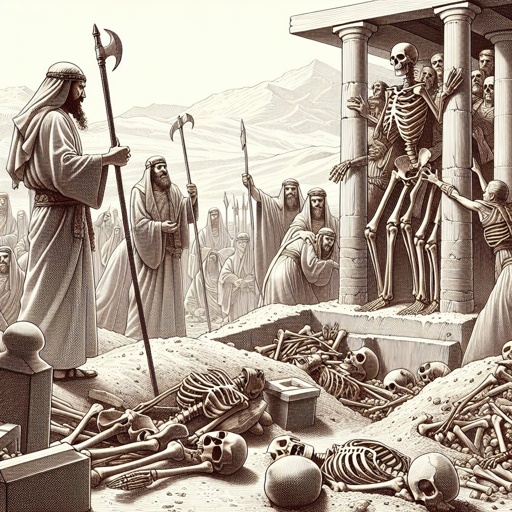
Jeremiah 8:1 - "At that time, saith the LORD, they shall bring out the bones of the kings of Judah, and the bones of his princes, and the bones of the priests, and the bones of the prophets, and the bones of the inhabitants of Jerusalem, out of their graves:"

Jeremiah 17:7-8

Jeremiah 17:7-8

Jeremiah 17:7-8

Jeremiah 17:7-8

Jeremiah 36:8 - "And Baruch the son of Neriah did according to all that Jeremiah the prophet commanded him, reading in the book the words of the LORD in the LORD'S house."

Jeremiah 13:8 - "Then the word of the LORD came unto me, saying,"

Jeremiah 8:20 - "The harvest is past, the summer is ended, and we are not saved."

Jeremiah 10:8 - "But they are altogether brutish and foolish: the stock is a doctrine of vanities."

"¶ Then came the word of the LORD unto Jeremiah in Tahpanhes, saying," - Jeremiah 43:8

Jeremiah 1:1 - "The words of Jeremiah the son of Hilkiah, of the priests that were in Anathoth in the land of Benjamin:"

Jeremiah 8:8 - "How do ye say, We are wise, and the law of the LORD is with us? Lo, certainly in vain made he it; the pen of the scribes is in vain."

Jeremiah 7:8 - "¶ Behold, ye trust in lying words, that cannot profit."

Jeremiah 34:8 - "¶ This is the word that came unto Jeremiah from the LORD, after that the king Zedekiah had made a covenant with all the people which were at Jerusalem, to proclaim liberty unto them;"

Jeremiah 8:15 - "We looked for peace, but no good came; and for a time of health, and behold trouble!"

Jeremiah 8:22 - "Is there no balm in Gilead; is there no physician there? why then is not the health of the daughter of my people recovered?"

Jeremiah 30:1 - "The word that came to Jeremiah from the LORD, saying,"

Jeremiah 14:1 - "The word of the LORD that came to Jeremiah concerning the dearth."

Jeremiah 38:8 - "Ebed-melech went forth out of the king's house, and spake to the king, saying,"

Jeremiah 37:8 - "And the Chaldeans shall come again, and fight against this city, and take it, and burn it with fire."

Jeremiah 1:7-8 - "But the LORD said to me, "Do not say, 'I am too young.' You must go to everyone I send you to and say whatever I command you. Do not be afraid of them, for I am with you and will rescue you," declares the LORD."

Jeremiah 7:1 - "The word that came to Jeremiah from the LORD, saying,"

Jeremiah 11:1 - "The word that came to Jeremiah from the LORD, saying,"

Jeremiah 16:8 - "Thou shalt not also go into the house of feasting, to sit with them to eat and to drink."

Jeremiah 18:1 - "The word which came to Jeremiah from the LORD, saying,"

Jeremiah 5:8 - "They were as fed horses in the morning: every one neighed after his neighbour's wife."

Jeremiah 25:8 - "¶ Therefore thus saith the LORD of hosts; Because ye have not heard my words,"