What does Jeremiah 20:11 mean?
"But the LORD is with me as a mighty terrible one: therefore my persecutors shall stumble, and they shall not prevail: they shall be greatly ashamed; for they shall not prosper: their everlasting confusion shall never be forgotten." - Jeremiah 20:11
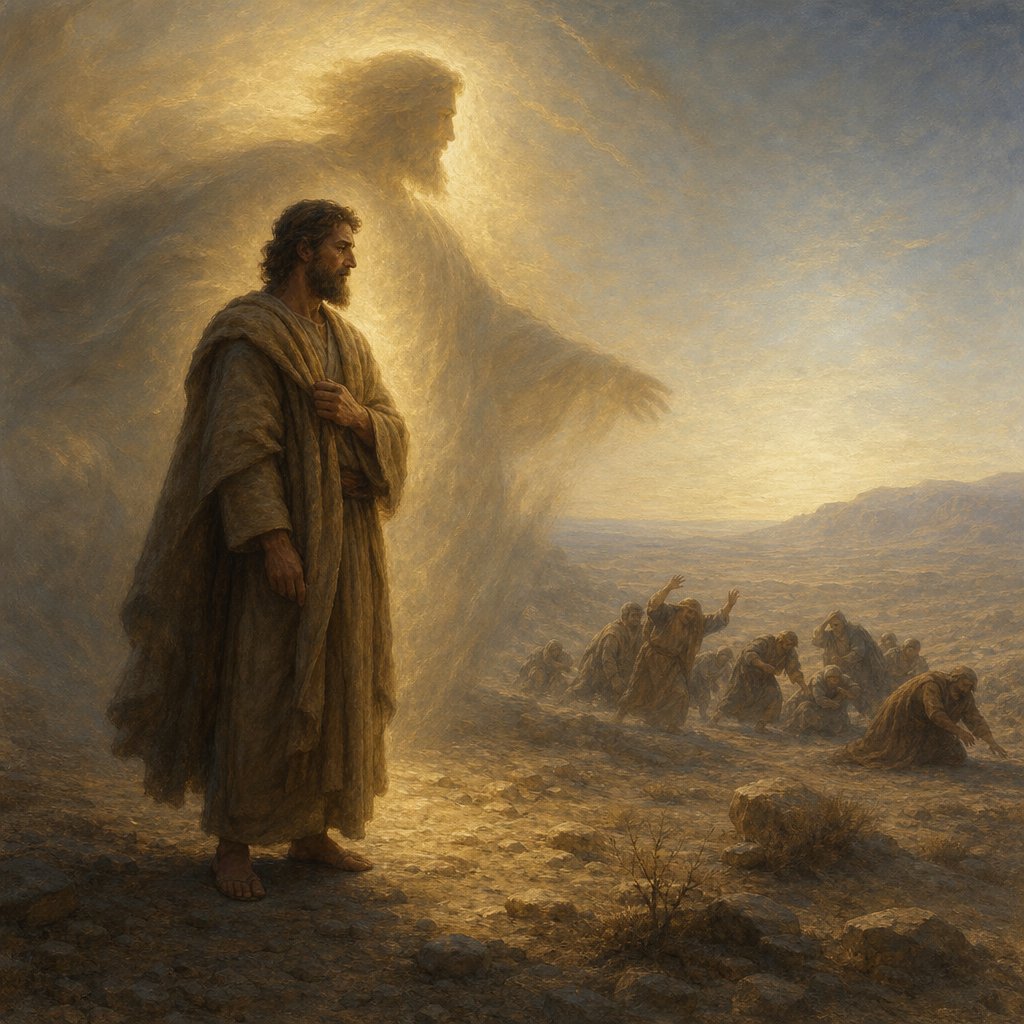
Jeremiah 20:11 in the King James Version stands as a sudden, steady beam of confidence spoken from the middle of distress: “But the LORD is with me as a mighty terrible one: therefore my persecutors shall stumble, and they shall not prevail: they shall be greatly ashamed; for they shall not prosper: their everlasting confusion shall never be forgotten.” Its meaning is best felt when it is heard as Jeremiah’s personal testimony in a moment when faith is not theoretical but embattled. The verse is not a calm proverb offered at a distance; it is a declaration wrested out of pressure, where the prophet’s outward circumstances argue one thing and his knowledge of God argues another.
The immediate context intensifies the force of the words. Jeremiah 20 opens with Jeremiah being struck and put in the stocks by Pashur the priest, an official figure who resists Jeremiah’s preaching. The prophet is publicly shamed, physically pained, and treated as a criminal. In that setting Jeremiah renames Pashur “Magormissabib,” “Fear round about,” and foretells judgment, and then Jeremiah turns inward to lament his calling, describing himself as a man of strife and reproach. Within the same chapter he confesses that whenever he speaks, he must cry “Violence and spoil,” and God’s word becomes to him “a reproach and a derision.” He even admits that he tried to refrain from speaking, but the word of God was “in mine heart as a burning fire shut up in my bones.” Jeremiah 20:11 comes right after he describes hearing the slanders and threats of “fear on every side,” when many watch for his halting and hope to prevail against him. In other words, verse 11 is the pivot where fear and accusation are answered, not by Jeremiah’s self-confidence, but by his conviction of God’s presence and power.
When Jeremiah says, “But the LORD is with me,” he is not claiming mere comfort; he is asserting covenant reality. The prophet is isolated socially, but not spiritually abandoned. The “with me” echoes the recurring biblical assurance that God’s servants may be opposed by men yet accompanied by God. The weight of the verse rests on that contrast: men may surround Jeremiah, but the LORD stands nearer; men may be “many,” but the LORD is sufficient. This is the fundamental theme of divine companionship in persecution: the prophet’s safety and vindication do not arise from favorable circumstances, but from the LORD’s nearness.
The phrase “as a mighty terrible one” is especially important in the KJV wording. “Mighty” emphasizes strength and ability to act; “terrible” in this older usage does not mean morally bad, but awe-inspiring, fear-causing to enemies, and overwhelming in majesty and judgment. Jeremiah is not saying God is “terrible” to him as an oppressor; he is saying that God is “terrible” to those who oppose God’s purposes. Symbolically, it presents the LORD as a warrior and defender, not in the sense of human rage, but in the sense of irresistible authority. Jeremiah is weak, yet his Companion is “mighty”; Jeremiah is threatened, yet his Protector is “terrible” to persecutors. The prophet’s courage is therefore not bravado; it is borrowed strength.
From that divine presence flows the outcome: “therefore my persecutors shall stumble, and they shall not prevail.” In the chapter Jeremiah’s enemies “watch for my halting,” hoping for Jeremiah to stumble morally, emotionally, or publicly. The verse reverses that expectation. The stumbling shifts from the prophet to the persecutors. The symbolism of “stumble” suggests more than a minor setback; it is the loss of footing, the failure of a pursued scheme, the collapse of a plan that looked secure. They “shall not prevail” asserts that opposition can be energetic and loud and still ultimately futile when it fights God’s word. The prophet may suffer, but his enemies cannot finally win against the message God has sent.
The next movement is shame: “they shall be greatly ashamed; for they shall not prosper.” In Jeremiah’s world, shame is not merely private embarrassment; it is public exposure, the unmasking of false confidence. Those who have treated Jeremiah as disgraceful will themselves become the spectacle of disgrace. “They shall not prosper” is more than financial or social failure. It is the failure of their cause. They will not succeed in silencing truth or overturning God’s declared judgment. In a book where many trusted in the appearance of stability—temple, city, office, tradition—this line insists that prosperity without obedience is not true security, and that what looks like success against a prophet may be judged as rebellion against the LORD.
The verse ends with a solemn, enduring note: “their everlasting confusion shall never be forgotten.” The language becomes almost judicial. Jeremiah’s persecutors are not merely corrected; they are assigned a lasting disgrace. “Confusion” in the KJV often carries the idea of dismay, ruin, and the collapse of proud intent. Calling it “everlasting” and saying it “shall never be forgotten” underscores the seriousness of resisting God’s revealed word and attacking the messenger because of the message. It also supplies Jeremiah with a sense of moral order: the wrong done to him is not invisible to heaven, and the world is not finally governed by the success of bullies or the popularity of lies. Even if Jeremiah’s sufferings are remembered as the shame of a hated prophet by his contemporaries, the LORD will write a different memory into history: the persecutors’ disgrace will stand as a warning and a testimony to divine justice.
Several themes converge in this single verse. There is the theme of prophetic suffering, where obedience to God invites hostility, misunderstanding, and institutional punishment, even from religious leaders. There is the theme of divine presence, the LORD “with” his servant not as a vague sentiment but as active defense. There is the theme of reversal, where those who expect the righteous to fall are made to fall themselves. There is the theme of vindication, in which God does not merely console the faithful but also exposes the emptiness of opposition. And there is the theme of remembrance, the idea that actions against God’s word leave a lasting mark, not because God is petty, but because truth and justice matter beyond the moment.
The significance of Jeremiah 20:11, then, is that it models faith under strain. It does not deny pain; the same chapter contains tears, complaint, and a sense of being overwhelmed by the burden of speaking. Yet in the midst of that turmoil Jeremiah anchors himself in who the LORD is. The verse teaches that courage can coexist with fear, and that the decisive factor is not the prophet’s emotional steadiness but the LORD’s steadfast presence. In KJV language, the LORD is “a mighty terrible one” precisely when his servant is being treated as weak and contemptible; that contrast is the source of Jeremiah’s confidence. The verse therefore functions as both personal testimony and theological statement: God’s word may be resisted, but God’s purpose stands; God’s messenger may be shamed, but God is not defeated; and those who persecute righteousness may appear to prevail for a time, but the LORD’s judgment, and the memory of it, will outlast them.
Have questions about Jeremiah 20:11?
Dive deeper into this scripture with Bible Chat — an AI-powered tool for exploring God's Word through conversation. Ask questions, get context, and grow in your understanding of the Bible.
Get Our Apps


Jeremiah 20:11 Artwork
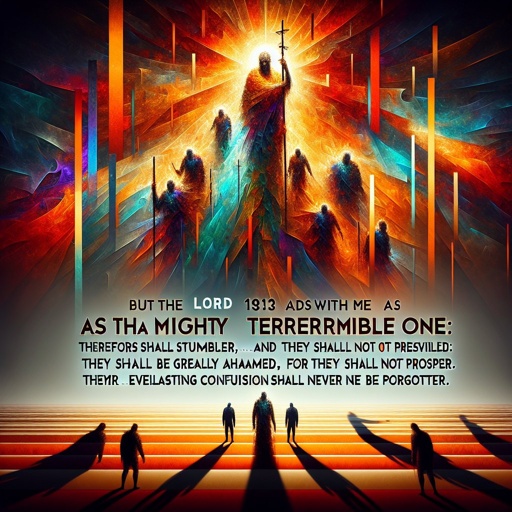
Jeremiah 20:11 - "But the LORD is with me as a mighty terrible one: therefore my persecutors shall stumble, and they shall not prevail: they shall be greatly ashamed; for they shall not prosper: their everlasting confusion shall never be forgotten."
"But the LORD is with me as a mighty terrible one: therefore my persecutors shall stumble, and they shall not prevail: they shall be greatly ashamed; for they shall not prosper: their everlasting confusion shall never be forgotten." - Jeremiah 20:11

Acts 20:11

Jeremiah 11:20 - "But, O LORD of hosts, that judgest righteously, that triest the reins and the heart, let me see thy vengeance on them: for unto thee have I revealed my cause."

Jeremiah 20:4

Jeremiah 11:1 - "The word that came to Jeremiah from the LORD, saying,"

Jeremiah 29:11-13

Jeremiah 29:11-13

Jeremiah 29:11-13

Jeremiah 29:11-13

Jeremiah 29:11

Jeremiah 20:2 - "Then Pashur smote Jeremiah the prophet, and put him in the stocks that were in the high gate of Benjamin, which was by the house of the LORD."

Jeremiah 20:3 - "And it came to pass on the morrow, that Pashur brought forth Jeremiah out of the stocks. Then said Jeremiah unto him, The LORD hath not called thy name Pashur, but Magor-missabib."

Jeremiah 29:11

Jeremiah 29:11

Jeremiah 29:11

Jeremiah 20:1 - "Now Pashur the son of Immer the priest, who was also chief governor in the house of the LORD, heard that Jeremiah prophesied these things."

Jeremiah 44:20 - "¶ Then Jeremiah said unto all the people, to the men, and to the women, and to all the people which had given him that answer, saying,"

Jeremiah 5:20 - "Declare this in the house of Jacob, and publish it in Judah, saying,"

Jeremiah 8:20 - "The harvest is past, the summer is ended, and we are not saved."

Jeremiah 39:11 - "¶ Now Nebuchadrezzar king of Babylon gave charge concerning Jeremiah to Nebuzar-adan the captain of the guard, saying,"

Jeremiah 16:20 - "Shall a man make gods unto himself, and they are no gods?"

Jeremiah 33:2-11

Jeremiah 33:2-11
Genesis 20-11

"The word that came to Jeremiah from the LORD, saying," - Jeremiah 11:1

Jeremiah 26:20 - "And there was also a man that prophesied in the name of the LORD, Urijah the son of Shemaiah of Kirjath-jearim, who prophesied against this city and against this land according to all the words of Jeremiah:"

Jeremiah 29:11 sticker elements

2 Chronicles 11:20

Jeremiah 46:20 - "Egypt is like a very fair heifer, but destruction cometh; it cometh out of the north."